


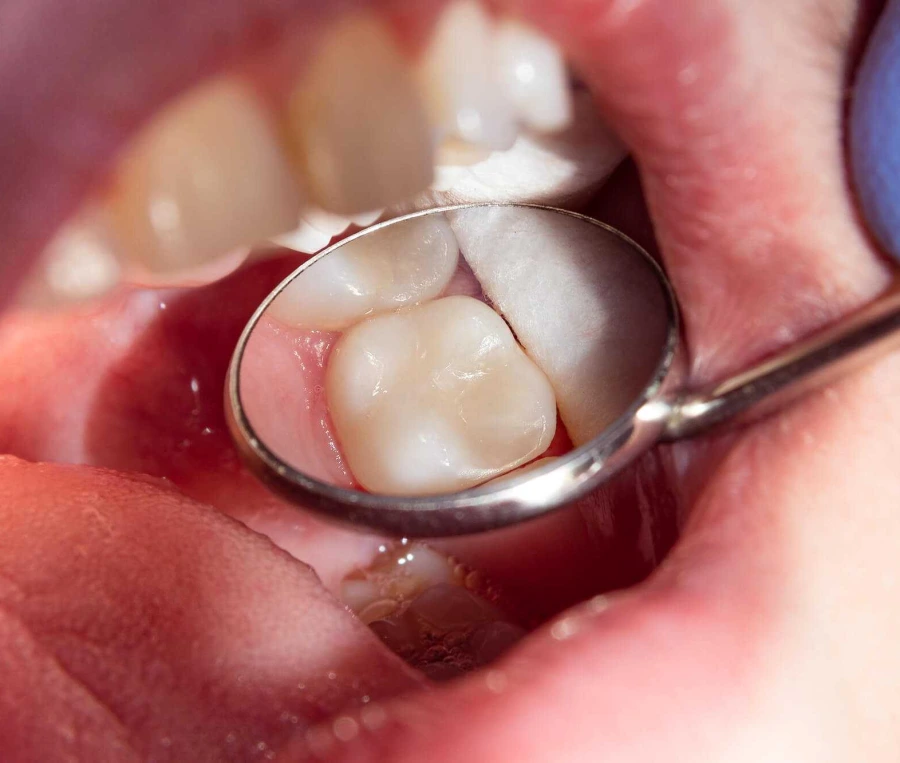
MTA Applications
Pulp and Root Treatment with MTA Applications
A controlled and safe treatment process is applied in tooth root canals and pulp tissue using biocompatible MTA material.
MTA (Mineral Trioxide Aggregate) applications are an endodontic method used to seal damaged areas at root tips, pulp tissue, or perforation sites and to promote healing. The aim is to preserve the structural integrity of the tooth and maintain its long-term function.
In the clinical process, the area to be treated, the structure of the tooth, and the current clinical condition are evaluated together. In accordance with current scientific protocols, MTA material is applied in a controlled manner, and post-treatment healing processes are regularly monitored.
MTA (Mineral Research and Explosion) procedures are planned taking into account the clinical condition of the tooth and the location of the damage. The procedure is determined individually for each patient.
Our Case Studies
Watch videos of real patient experiences and our treatment processes. Each case is presented with details before and after treatment.
Frequently Asked Questions About MTA Applications
You can find clear and up-to-date answers to the most frequently asked questions about treatments, appointment scheduling, pricing, and patient experiences.
What are MTA Applications? In Which Situations are MTA Applications Preferred?
MTA Applications involve the use of Mineral Trioxide Aggregate, a material in dentistry with high biocompatibility and sealing properties, in various endodontic and restorative procedures. Especially in pulp-capping treatments, perforation repairs, and root-end closures, MTA Applications stand out as an important option that supports biological healing.
Research conducted in recent years shows that in procedures performed with MTA Applications, hard tissue formation can be supported and a high level of apical sealing can be provided.
What are MTA Applications?
MTA Applications refer to the clinical use of Mineral Trioxide Aggregate material, which contains calcium silicate components. MTA is considered a revolutionary material in endodontics due to its ability to set in a moist environment and its biocompatible structure.
MTA Applications are especially preferred in areas that come into contact with the pulp. This is because the material can show a compatible reaction with surrounding tissues and encourage hard tissue formation. Thanks to this feature, it finds a place in both protective and restorative treatments. The results obtained with MTA Applications in the literature reveal that the material can exhibit strong performance in terms of long-term sealing and biological tolerance.
In Which Fields are MTA Applications Used?
MTA Applications can be used in many different areas of endodontics. The primary areas of use are:
- Direct pulp capping
- Apexification
- Perforation repair
- Regenerative endodontic treatment barrier
- Root-end filling (Retrograde filling)
Especially in apexification procedures performed on teeth with open apices, MTA Applications provide a secure completion of the canal filling by creating an artificial barrier at the root tip. Additionally, it can support a compatible healing process with periodontal tissues in perforation repairs.
How are MTA Applications Performed?
MTA Applications require different techniques depending on the region where they will be applied. First, it is important to clear the area of infection and control bleeding. The material is prepared by mixing its powder and liquid forms. The resulting viscous mixture is placed in the relevant area with the help of special carriers.
- Preparation of the Area
- MTA Mixing
- Placement
- Setting Process
- Disinfection and isolation
- Obtaining appropriate consistency
- Adaptation to the target area
- Formation of a biological barrier
Providing isolation during MTA Applications is of critical importance. This is because controlled moisture is necessary for the material to set correctly.
MTA Applications and Biological Properties
Thanks to its biocompatible structure, MTA Applications can create minimal inflammation in surrounding tissues. Calcium ion release is considered one of the factors that support hard tissue formation. Research reports that the formation of a dentin bridge can be observed after MTA Applications.
Advantages and Limitations of MTA Applications
MTA Applications offer many advantages:
- High biocompatibility
- Strong sealing ability
- Ability to set in a moist environment
- Potential to support hard tissue formation
However, it has limitations such as a long setting time and high cost. Although new-generation bioceramic materials show similar properties to MTA, MTA is still accepted as the reference material.
Difference Between MTA Applications and Traditional Materials
MTA Applications can provide better sealing compared to traditional calcium hydroxide-based materials. While calcium hydroxide materials may resorb over time, MTA Applications can create a more durable barrier. Therefore, it is more frequently preferred in apexification and perforation repairs.
Follow-up and Evaluation After MTA Applications
Regular clinical and radiographic follow-up is recommended after MTA Applications. The healing process is evaluated with imaging. Vitality tests can be applied to teeth with pulp capping. The absence of pathological lesions radiographically is a positive finding.
General Evaluation of MTA Applications
MTA Applications represent an important material application in modern endodontics with high biological compatibility and versatile areas of use. Scientific data show that procedures performed with MTA Applications can provide satisfactory results under appropriate conditions. However, success depends not only on the properties of the material but also on the correct indication and technical precision.