


Root Canal Retreatment
Reasons for Root Canal Recurrence and Treatment Process
A reassessment and planned treatment process is applied to teeth that have previously undergone root canal treatment.
Root canal re-treatment is a treatment approach applied to teeth that have previously received root canal treatment but where infection persists or recurs over time. The main goal is to clean the root canals again and preserve the function of the tooth in the mouth.
In the clinical process, a detailed radiological examination and clinical evaluation are performed. In accordance with current endodontic protocols, the status of the previous treatment is analyzed, and a controlled, predictable treatment plan is created for each patient.
A repeat root canal treatment is planned taking into account the current condition of the tooth and the root canal anatomy. The approach to treatment is determined individually for each patient.
Our Case Studies
Watch videos of real patient experiences and our treatment processes. Each case is presented with details before and after treatment.
Frequently Asked Questions About Root Canal Re-treatment
You can find clear and up-to-date answers to the most frequently asked questions about treatments, appointment scheduling, pricing, and patient experiences.
What is Root Canal Retreatment? Why is it Necessary and How Does the Process Proceed?
Root Canal Retreatment is a second endodontic intervention performed in cases where a previously performed root canal treatment fails or complications develop over time. Pain, sensitivity, or radiographic findings that may appear months or even years after the initial treatment may require re-evaluation of the tooth. At this point, Root Canal Retreatment is an important option considered in order to keep the tooth in the mouth without extracting it.
This procedure, also referred to as endodontic retreatment in dental literature, is based on the principle of removing the existing filling material, cleaning the root canals again, and refilling them. Thanks to modern imaging techniques and magnification systems, Root Canal Retreatment can offer more predictable results today. However, each case is evaluated within itself and personal differences are taken into account.
In Which Situations Does Root Canal Retreatment Come to the Forefront?
Root Canal Retreatment is generally considered if symptoms persist or reappear after the initial treatment. Especially symptoms such as pain during chewing, sensitivity to pressure in the tooth, or swelling in the gums bring up the possibility of an underlying infection.
However, in some cases, a lesion may be seen at the root tip on radiographs taken during routine check-ups without any significant pain. In such cases, Root Canal Retreatment is among the evaluation options. A missed canal within the canal, insufficient filling, or micro-leakage occurring over time may necessitate retreatment.
Prominent possible causes are as follows:
- Presence of bacteria remaining inside the canal
- Incomplete cleaning of the root canals
- Presence of broken instruments
- Development of new tooth decay
- Leakage of the tooth's upper restoration
How is Root Canal Retreatment Performed?
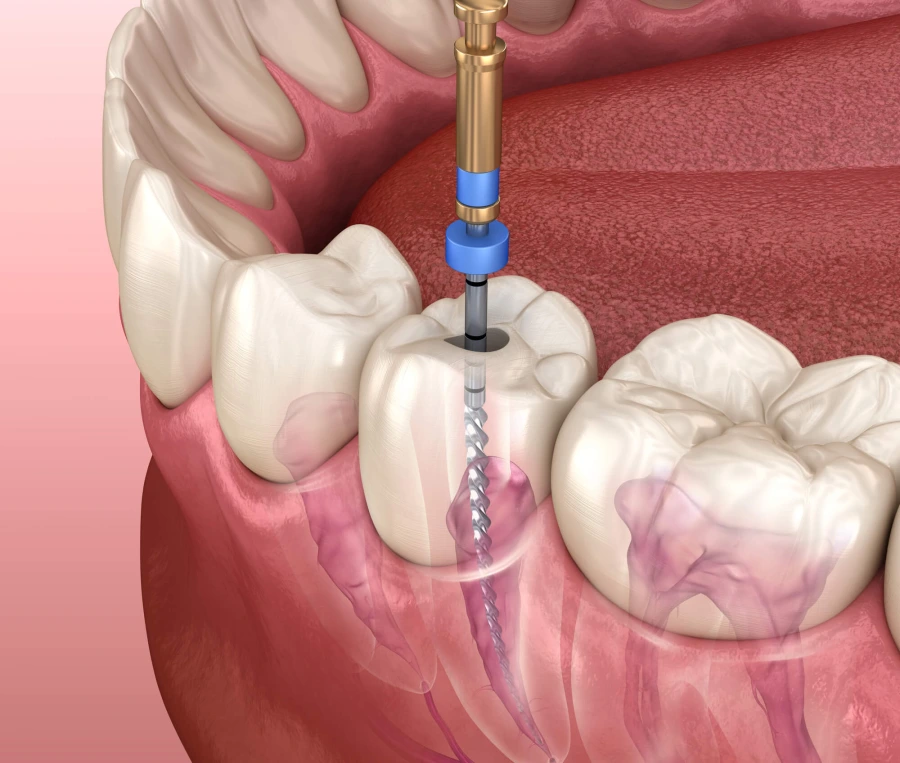
The process of Root Canal Retreatment is a more technical and attention-requiring procedure compared to the initial treatment. First, the filling or crown on the tooth is removed. Then, the old filling material in the root canals is removed with the help of special instruments.
Magnification systems and digital imaging methods play an important role at this stage. This is because a previously overlooked canal or anatomical variation can be detected during Root Canal Retreatment. The canal system is reshaped, disinfected, and filled with biocompatible filling materials. The duration of the procedure may vary depending on the root structure of the tooth and existing complications.
What is the Success Rate of Root Canal Retreatment?
The success rate of Root Canal Retreatment may vary according to the extent of the infection, the structural condition of the tooth, and the techniques applied. Root Canal Retreatment is a promising option, especially for teeth that do not have root fractures and have sufficient periodontal support.
- Root anatomy
- Infection level
- Restoration quality
- Patient's oral hygiene
- Determines treatment difficulty
- Affects healing time
- Determines long-term durability
- Affects the risk of re-infection
Is Root Canal Retreatment Painful?
Thanks to modern anesthesia techniques, significant pain is generally not felt during the procedure. However, slight sensitivity may occur after the treatment. This sensitivity mostly subsides within a few days. While the healing process of the tissues continues after Root Canal Retreatment, mild chewing discomfort may be observed.
Root Canal Retreatment or Tooth Extraction?
In the decision-making process, the root structure of the tooth, bone support, and restorative suitability are taken into consideration. Alternatives such as implants or bridges after tooth extraction can be evaluated. However, preserving the natural tooth is generally the priority approach from a biomechanical perspective. For this reason, Root Canal Retreatment is considered a conservative option in appropriate cases.
What Should Be Considered After Root Canal Retreatment?
- It is recommended not to delay the permanent restoration.
- It is important to pay attention to oral hygiene and not to neglect regular check-ups.
- Habits such as teeth grinding should be brought under control.
- Since the fragility of the tooth may increase, appropriate prosthetic planning can be made.
Scientific Perspective on Root Canal Retreatment
Root Canal Retreatment has become more predictable with developing technologies in the field of endodontics. Microscope-supported applications, ultrasonic instruments, and advanced irrigation systems strengthen intra-canal disinfection. It is stated in endodontic literature that retreatment offers significant advantages in terms of biological tissue preservation compared to tooth extraction.
Root Canal Retreatment Requires Conscious Evaluation
Root Canal Retreatment is an important approach aimed at saving the tooth in failed or complicated root canal treatments. Satisfactory results can be obtained when applied with the correct diagnosis, careful planning, and appropriate technique. The approach of preserving the natural tooth is one of the fundamental principles of modern dentistry.