


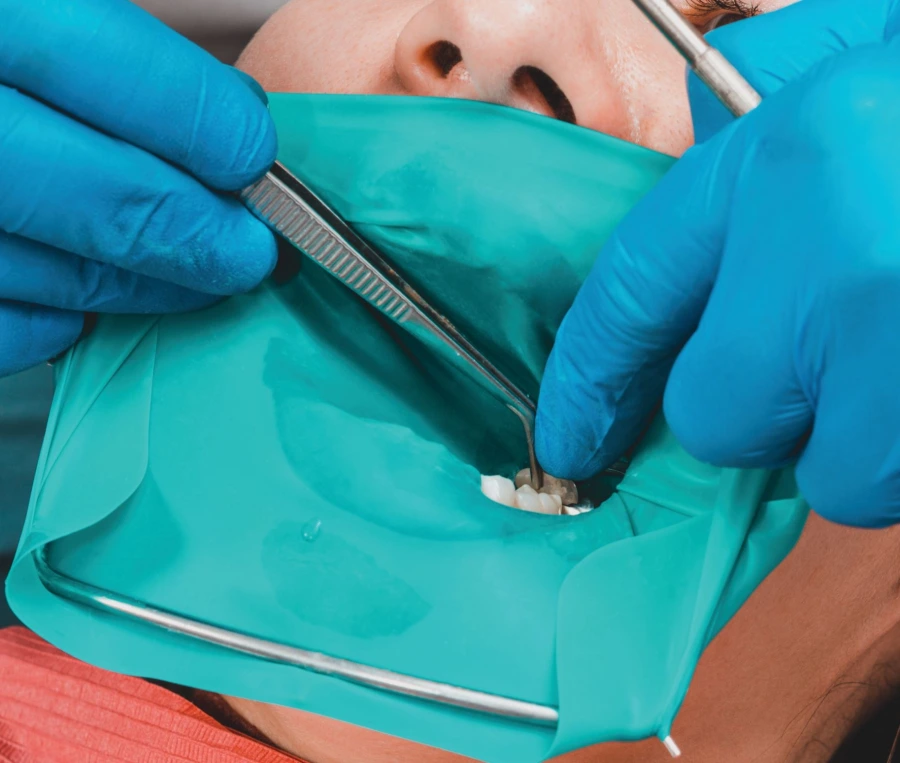
Root Canal Treatment with Rubber Dam
Root Canal Treatment Using Rubber Dam
During root canal treatment, a controlled application method is used that ensures the isolation of the treatment area.
Root canal treatment with a rubber dam is a method that isolates the tooth from the oral environment during treatment. This application helps protect the canal system from external factors and aims to maintain hygiene in the treatment area.
The use of a rubber dam in the clinical process supports the planned and safe execution of root canal treatment. In line with current endodontic approaches, the treatment area is isolated during the procedure, and each stage of the treatment is performed in a controlled manner.
The use of rubber dams is planned according to the clinical condition of the tooth and the requirements of the endodontic procedure to be performed. The decision regarding application is evaluated individually for each patient.
Our Case Studies
Watch videos of real patient experiences and our treatment processes. Each case is presented with details before and after treatment.
Frequently Asked Questions About Root Canal Treatment with Rubber Dams
You can find clear and up-to-date answers to the most frequently asked questions about treatments, appointment scheduling, pricing, and patient experiences.
What is Root Canal Treatment with Rubber Dam? The Scientific Importance of Isolation in Endodontics
Root Canal Treatment with Rubber Dam is a modern endodontic approach that ensures the root canal system is treated by being completely isolated from saliva and oral bacteria. Today, one of the most critical factors affecting endodontic success is a sterile working area. Therefore, Root Canal Treatment with Rubber Dam is not just a comfort application but a clinical necessity with a strong scientific basis.
When the causes of failure in root canal treatment are examined, microbial contamination is one of the most frequently encountered factors. Rubber dam isolation increases the effectiveness of intra-canal disinfection by separating the tooth from the oral environment.
Why is Root Canal Treatment with Rubber Dam Necessary?
Root Canal Treatment with Rubber Dam acts as an important barrier in terms of infection control. There are millions of bacteria in the oral environment, and it is possible for these microorganisms to re-enter the tooth while the root canals are open. If isolation is not provided, the treatment process may be biologically hindered.
Furthermore, it is undesirable for the solutions used during irrigation, especially strong disinfectants such as sodium hypochlorite, to come into contact with oral tissues. Root Canal Treatment with Rubber Dam prevents the uncontrolled spread of these chemicals. This situation is important for both safety and comfort. Scientific publications state that the risk of contamination in endodontic procedures performed without the use of a rubber dam is higher.
How is Root Canal Treatment with Rubber Dam Applied?
During Root Canal Treatment with Rubber Dam, first, a rubber sheet with a hole of appropriate diameter is placed around the tooth. Then, the tooth is fixed with the help of a metal or plastic clamp. Thus, the tooth is completely isolated and a dry working area is obtained.
This isolation increases the clinician's field of vision. Saliva, tongue, and cheek movements are brought under control. The application of Root Canal Treatment with Rubber Dam creates a more precise procedural environment when used in conjunction with microscopes or magnification systems. After isolation is achieved, the access cavity is opened, the canal length is determined, and the mechanical shaping stage is initiated.
Does Root Canal Treatment with Rubber Dam Affect the Success Rate?
Root Canal Treatment with Rubber Dam is one of the factors that indirectly affects treatment success. Success is related not only to mechanical cleaning but also to the control of the microbial load. If isolation is not provided, it is possible for new bacteria to be transported into the canal system.
- Bacterial Contamination
- Field of Vision
- Patient Safety
- Chemical Control
- Can be reduced
- Increases
- Rises
- Becomes safer
Does Root Canal Treatment with Rubber Dam Provide Comfort to the Patient?
Root Canal Treatment with Rubber Dam can offer advantages not only for clinical success but also for the patient experience. Water accumulation in the mouth during the procedure is reduced. The patient does not have to constantly swallow saliva. Additionally, the risk of small instruments or materials escaping into the throat is minimized. This situation provides significant comfort, especially for individuals with a strong gag reflex.
Root Canal Treatment with Rubber Dam and Infection Control
Root Canal Treatment with Rubber Dam is an important link in the infection control chain. Endodontic infections are generally polymicrobial and exhibit a biofilm structure. Thanks to isolation, the effectiveness of intra-canal disinfection is preserved. Especially in retreatment cases, preventing external contamination is of critical importance.
Is Root Canal Treatment with Rubber Dam Mandatory?
Root Canal Treatment with Rubber Dam is a practice recommended by many international endodontic associations. In some countries, this isolation method is accepted as a professional standard. What is important here is that the treatment is conducted in accordance with sterility, safety, and biological principles. Root Canal Treatment with Rubber Dam is a powerful tool that supports these principles.
How is Root Canal Treatment with Rubber Dam Shaping the Future?
Root Canal Treatment with Rubber Dam is becoming more integrated with digital endodontics. CAD/CAM supported restorations, dental microscopes, and advanced irrigation systems increase the importance of isolation. In the future, this application is expected to become more widespread with biocompatible materials and more ergonomic isolation systems.
Root Canal Treatment with Rubber Dam is the Foundation of Modern Endodontics
Root Canal Treatment with Rubber Dam offers significant biological and clinical advantages by providing a sterile working area. The potential to reduce microbial contamination, increase patient safety, and the technical ease it provides to the clinician have made this method one of the indispensables of modern endodontics. Considering the scientific basis of isolation, it holds an important place in contemporary dentistry.