

Clear Aligner Treatment in Children
Modern Clear Aligner Applications in Children
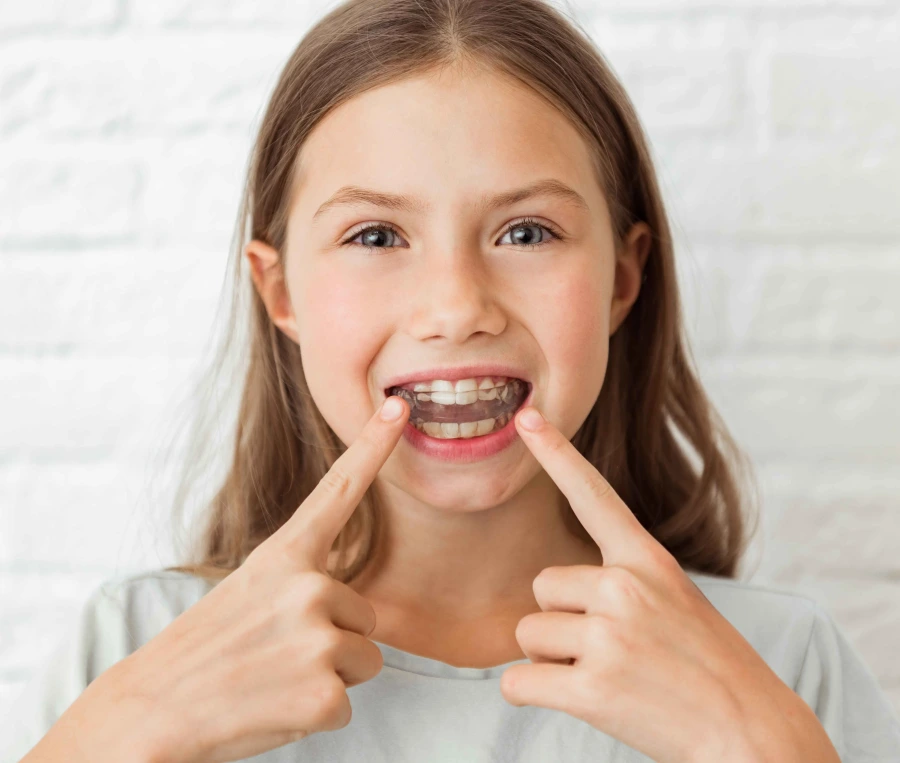
Early intervention with clear aligners supports the healthy development of your child's teeth and jaw structure.
Clear aligner treatment in children is an aesthetic and comfortable orthodontic approach that guides the natural development of teeth and jaw structure. This treatment uses clear, removable aligners instead of metal wires, allowing children to straighten their teeth without disrupting their daily lives. The goal is not only to correct tooth alignment but also to support the child's chewing function and speech skills.
Every child is different; therefore, our treatment process is based on individual assessment. During the initial examination, the child's oral structure and growth potential are analyzed in detail. The planning of clear aligners is done using current scientific techniques and evidence-based methods, prioritizing the child's comfort and compliance with treatment throughout the process.
Clear aligner treatment in children is planned individually according to each child's oral structure and developmental potential.
Our Case Studies
Watch videos of real patient experiences and our treatment processes. Each case is presented with details before and after treatment.
Frequently Asked Questions About Clear Aligner Treatment in Children
You can find clear and up-to-date answers to the most frequently asked questions about treatments, appointment scheduling, pricing, and patient experiences.
Orthodontic Treatment in Children: A Scientific Approach During the Growth and Development Period
Orthodontic Treatment in Children involves the evaluation and guidance of alignment and bite problems that arise during the period when dental and jaw development is actively continuing. Orthodontic analysis conducted at an early age aims not only to correct existing crowding but also to foresee skeletal and functional problems that may occur in the future. Therefore, Orthodontic Treatment in Children is considered a developmental intervention area beyond aesthetic expectations.
What is Orthodontic Treatment in Children?
Orthodontic Treatment in Children includes preventive, guiding, and corrective applications aimed at supporting the development of teeth and jaws in the ideal position. This treatment does not consist solely of fixed braces. Functional appliances, expansion devices, and clear aligner systems can also be part of the process.
Biological bone remodeling lies at the core of orthodontic treatment. Controlled forces applied cause reshaping in the alveolar bone. Since the bone structure is more flexible during childhood, the growth potential can provide an advantage for the treatment. However, not every developmental difference requires intervention. The decision for Orthodontic Treatment in Children is made after detailed clinical and radiographic analysis.
What Problems Does Orthodontic Treatment in Children Cover?
Orthodontic Treatment in Children covers the management of problems of both dental and skeletal origin. Common conditions include:
- Dental crowding
- Spacing between teeth
- Crossbite
- Deep bite
- Open bite
- Jaw disharmony (malocclusion)
Especially crossbite cases noticed at an early age can be corrected in a more controlled manner when intervened during the growth period. Scientific research shows that early orthodontic evaluations can reduce the severity of advanced disorders in some cases. At this point, Orthodontic Treatment in Children aims not just to solve the current problem but to balance the direction of development.
When Should Orthodontic Treatment in Children Begin?
The first orthodontic examination for Orthodontic Treatment in Children is generally recommended around the age of 7. At this age, the mixed dentition period begins, and both primary and permanent teeth are present in the mouth together. The treatment process can be planned in two stages: early-term interceptive treatment and fixed orthodontic treatment after permanent dentition. Functional appliances applied in the early period may aim to guide jaw development.
Methods of Orthodontic Treatment in Children
Orthodontic Treatment in Children can be applied with different appliance systems. The choice depends on the type and severity of the problem.
- Removable appliance
- Expansion appliance
- Functional appliance
- Fixed brackets
- Clear aligners
- Mild crowding
- Maxillary narrowness
- Jaw disharmony
- Detailed alignment
- Mild to moderate cases
- Tooth guidance
- Arch expansion
- Growth guidance
- Tooth positioning
- Aesthetic correction
How Does the Orthodontic Treatment Process in Children Proceed?
Orthodontic Treatment in Children consists of the following stages: Clinical examination and photo analysis, radiographic examination, digital measurements and model analysis, creation of the treatment plan, active treatment process, and the retention period. The active treatment duration can vary between an average of 12 to 24 months. Regular check-ups ensure the monitoring of tooth movement and jaw development.
Relationship Between Orthodontic Treatment in Children and Growth/Development
Orthodontic Treatment in Children is closely related to growth spurts. Especially the rapid growth phase during adolescence can offer an opportunity for guiding jaw development. Functional appliances aim to balance the relationship between the upper and lower jaws. When the growth period ends, the potential for skeletal change decreases. Therefore, timing is of critical importance.
Retention and Stability After Orthodontic Treatment in Children
After active orthodontic correction is completed, Orthodontic Treatment in Children moves to the retention stage. In this stage, the aim is to maintain the new positions of the teeth. Retention appliances can be fixed or removable. Since growth continues in children, long-term follow-up is important. Regular check-ups and the reinforcement process support the permanent success of the treatment.
Orthodontic Treatment in Children is an Investment in the Future
Orthodontic Treatment in Children is a scientific process that is not limited to resolving aesthetic concerns but aims for functional and developmental balance. Early evaluation, correct timing, and individual planning are the cornerstones of the treatment. The same approach is not suitable for every child. Orthodontic Treatment in Children is a strategic intervention area for a healthy bite, balanced jaw development, and long-term oral health.