


Braces Treatment in Children
Braces Treatment for Children: A Planned and Comfortable Approach
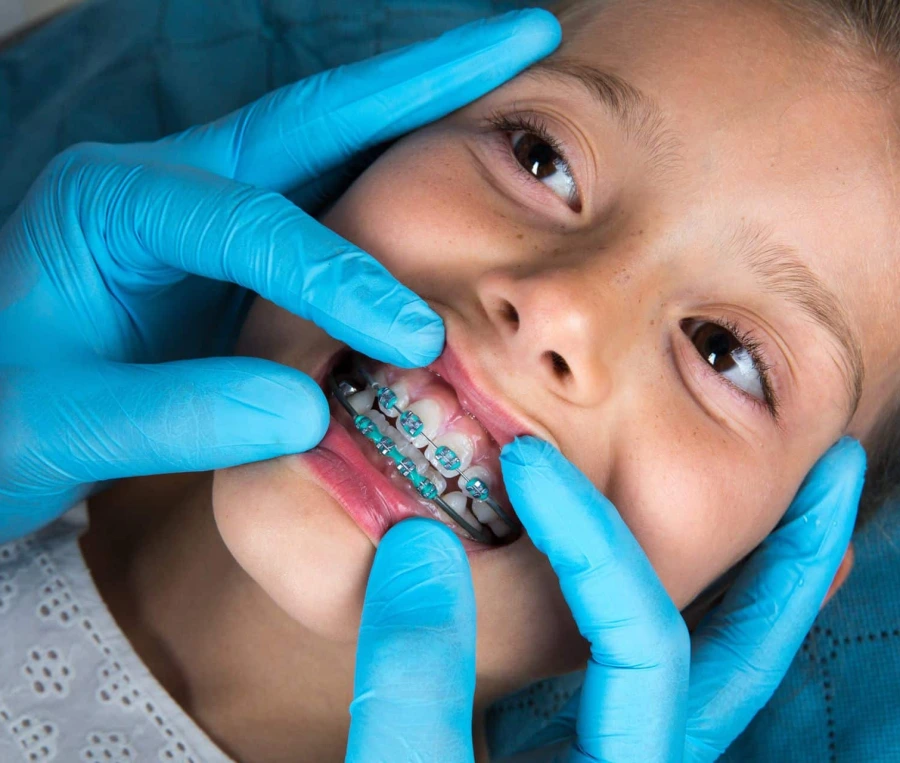
Braces treatment with braces is a safe and systematic orthodontic method that supports your child's tooth alignment and jaw development.
In children, orthodontic treatment with braces is an orthodontic application that supports the child's oral functions and aesthetics in the long term by ensuring the correct alignment of teeth. During the treatment process, the positioning of the teeth is planned taking into account the child's growth potential. The goal is not only to straighten the teeth but also to develop chewing, speech, and jaw coordination in a balanced way.
Every child's oral structure and developmental rate are different. Therefore, the treatment process is based on individual assessment. In the initial examination, the teeth and jaw structure are analyzed in detail, planning is done using evidence-based methods, and the child's comfort is prioritized throughout the process. Treatment steps are carried out within the framework of a clear plan shared with the family.
Orthodontic treatment is planned and implemented specifically for each child, according to their oral structure and individual development.
Our Case Studies
Watch videos of real patient experiences and our treatment processes. Each case is presented with details before and after treatment.
Frequently Asked Questions About Braces Treatment in Children
You can find clear and up-to-date answers to the most frequently asked questions about treatments, appointment scheduling, pricing, and patient experiences.
Orthodontic Braces for Children: Orthodontic Balance and Scientific Approach During the Growth Period
Orthodontic Braces for Children is one of the most common orthodontic methods used to correct crowding, jaw disharmony, and malocclusions seen in individuals during their developmental years. Orthodontic problems diagnosed early can be guided more controlledly by utilizing the growth potential. Therefore, Orthodontic Braces for Children is evaluated not only as an aesthetic application but also as a functional and developmental intervention.
What is Orthodontic Braces for Children?
Orthodontic Braces for Children is a fixed orthodontic appliance system aimed at guiding teeth and jaws to their ideal positions. This system, consisting of brackets, archwires, and auxiliary elastics, achieves movement by applying controlled and continuous force to the teeth.
Tooth movement is made possible through the biological response occurring in the periodontal ligament and alveolar bone. The light forces applied allow the bone to remodel. This process can be more dynamic in children during their growth years. However, not every child starts treatment at the same age. The most suitable time for Orthodontic Braces for Children is determined based on the dentition period, jaw development, and the type of orthodontic problem.
For Which Problems are Orthodontic Braces for Children Applied?
Orthodontic Braces for Children can be used in the management of both dental and skeletal problems. The most common conditions are:
- Dental crowding
- Spacing between teeth
- Anterior open bite
- Deep bite
- Crossbite
- Jaw disharmony (malocclusion)
Anomalies noticed especially during the mixed dentition period can be brought under control through growth guidance. Scientific studies show that orthodontic interventions performed in the early period can reduce the need for future surgery in some cases. However, not every malocclusion requires fixed brackets. The decision for Orthodontic Braces for Children is made after detailed clinical and radiographic analysis.
When Should Orthodontic Braces for Children Begin?
The ideal starting time for Orthodontic Braces for Children depends on the child's growth and development stage. Generally, the first orthodontic evaluation performed around the age of 7 helps in the early detection of potential problems. The treatment process can be planned in two stages: early-term orthopedic intervention and fixed orthodontic treatment after permanent dentition. Early intervention aims to utilize growth potential in cases such as jaw narrowness or skeletal disharmony.
How Does the Orthodontic Braces Process in Children Proceed?
Orthodontic Braces for Children generally consists of the following stages:
- Examination
- Planning
- Bracket placement
- Active treatment
- Retention
- Clinical and radiographic analysis
- Digital measurement and analysis
- Fixed appliance application
- Monthly controls
- Reinforcement appliance
- Diagnosis
- Treatment strategy
- Initiation of force
- Tooth movement
- Stability
The active treatment duration can generally vary between 12 to 24 months. Controls are usually performed at intervals of 4 to 6 weeks. During these appointments, wires are adjusted and tooth movement is evaluated.
Relationship Between Orthodontic Braces and Oral Hygiene in Children
Oral hygiene is of great importance during Orthodontic Braces for Children. Brackets and wires can create a base for plaque accumulation. In case of inadequate cleaning, gum problems and white spot lesions can be seen. Therefore, the use of orthodontic toothbrushes, interdental brush support, and regular dentist check-ups are recommended during the treatment process. Hygiene habits can directly affect the success of the treatment.
Retention Process After Orthodontic Braces for Children
After active treatment is completed, the retention stage begins. In this period, the aim is to maintain the new positions of the teeth. Retention appliances can be fixed or removable. Since growth continues, regular follow-up is important. Because teeth have a biological memory, they may show a tendency to return to their former positions.
Advantages and Psychosocial Effects of Orthodontic Braces for Children
Orthodontic Braces for Children can provide not only functional improvement but also aesthetic and psychological gains. Properly aligned teeth can contribute to the development of the child's self-confidence. Additionally, a correct bite relationship can positively affect chewing function, speech clarity, and temporomandibular balance.
Orthodontic Braces for Children Require Scientific Planning
Orthodontic Braces for Children is a systematic orthodontic approach aimed at guiding tooth and jaw development during the growth period. Early diagnosis, correct planning, and regular follow-up form the basis of treatment success. The same treatment protocol is not applicable for every child. Individual analysis and application based on scientific principles support long-term functional and aesthetic balance. Consequently, Orthodontic Braces for Children means not only tooth alignment but also carrying a healthy oral structure into the future.