


Placeholder Applications
Space Maintainer Applications that Preserve Tooth Alignment in Children
Following the premature loss of primary teeth, planned interventions are implemented to preserve tooth alignment.
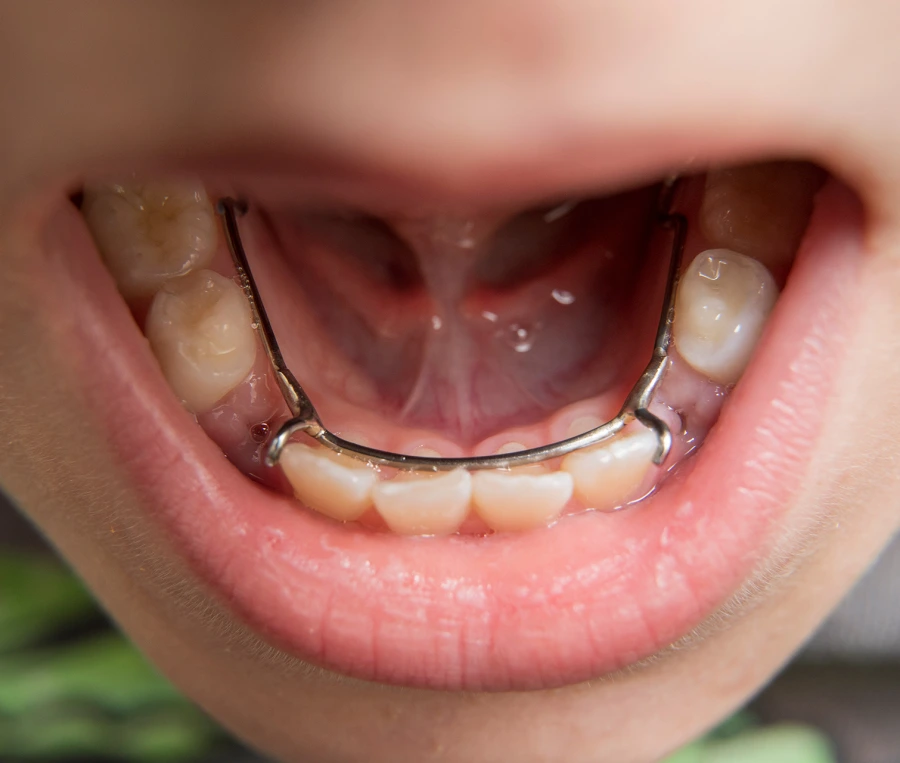
Space maintainer applications are preventive treatments aimed at preserving the necessary space for permanent teeth in cases of premature loss of primary teeth. These applications aim to prevent space loss that could negatively affect the eruption direction of teeth and jaw development.
During the clinical planning process, the child's age, tooth development status, and the location of the lost tooth are evaluated. In line with current pedodontic approaches, the most suitable solution is determined from among fixed or removable space maintainer options, and the process is monitored through regular follow-ups.
Space maintainer applications are planned according to each child's dental development process and clinical needs. The type of space maintainer to be used and the follow-up interval are determined individually.
Our Case Studies
Watch videos of real patient experiences and our treatment processes. Each case is presented with details before and after treatment.
Frequently Asked Questions About Placeholder Applications
You can find clear and up-to-date answers to the most frequently asked questions about treatments, appointment scheduling, pricing, and patient experiences.
Space Maintainer Applications: Space Protection and Orthodontic Balance in Early Tooth Loss
Space Maintainer Applications refer to preventive orthodontic approaches aimed at preventing space loss that may occur after the early loss of primary teeth. The early extraction of primary teeth during childhood due to trauma, caries, or infection can affect the eruption path of the underlying permanent teeth. At this point, Space Maintainer Applications stand out as an important treatment option aiming to preserve arch integrity and reduce the risk of future crowding.
What are Space Maintainer Applications and Why Might They Be Necessary?
Space Maintainer Applications are fixed or removable appliance systems applied to preserve the gap created by an early lost primary tooth. Primary teeth do not only play a role in chewing function; they also guide the permanent teeth to erupt in the correct position.
After early tooth loss, adjacent teeth may tilt toward the gap. This situation can reduce the arch length and increase the need for orthodontic treatment in the future. Space Maintainer Applications are a preventive treatment approach that can help prevent this space loss. However, not every early tooth loss necessitates a space maintainer. The decision is made based on the child's age, tooth eruption timing, and arch analysis.
In Which Situations are Space Maintainer Applications Preferred?
Space Maintainer Applications are generally evaluated in the following clinical situations:
- Early loss of primary molars
- Tooth extraction as a result of trauma
- Teeth that cannot be restoratively saved due to extensive caries
- Risk of midline shift as a result of unilateral early loss
Especially the early loss of the second primary molar can cause the first permanent molar to move forward. This movement can narrow the space reserved for the permanent premolar. Scientific studies show that it is rare for space loss occurring in the early period to be regained spontaneously.
Types of Space Maintainer Applications
Space Maintainer Applications are examined in two main groups: fixed and removable. Which type will be preferred depends on the number of teeth lost, the cooperation of the child, and the arch structure.
Fixed Space Maintainers
Fixed systems such as band and loop appliances, Lingual arches, and Distal shoe appliances cannot be removed by the patient and are generally preferred for single tooth losses. Especially the band and loop is among the most frequently used Space Maintainer Applications.
Removable Space Maintainers
These are acrylic plate systems and prosthesis-like structures preferred in multiple tooth losses. Removable systems can provide advantages in terms of cleaning, but the child's responsibility for regular use is critical.
- Patient compliance
- Cleaning
- Area of use
- Less dependent
- More careful maintenance
- Single loss
- High dependency
- Easily removable
- Multiple loss
Planning Process for Space Maintainer Applications
While planning Space Maintainer Applications, not only the existing gap but also the eruption time of the underlying permanent tooth is evaluated. Radiographic analysis shows the developmental level of the tooth germ. During the planning stage, the following parameters are evaluated:
- Arch length analysis
- Permanent tooth eruption schedule
- Occlusal relationship
- Oral hygiene level
Follow-up of Space Maintainer Applications and Possible Complications
Treatment is not completed only by placing the appliance; it requires regular check-ups. Situations such as appliance breakage, band loosening, gum irritation, or plaque accumulation due to inadequate cleaning are monitored. Controls are generally planned at intervals of 3 to 6 months. The space maintainer is removed when the permanent tooth erupts.
Relationship Between Space Maintainer Applications and Orthodontic Future
Space Maintainer Applications can help reduce the risk of future crowding and impacted teeth. The goal is to preserve the existing space. Correct space management performed in the early period can reduce the need for fixed orthodontic treatment or shorten the treatment duration.
Why are Space Maintainer Applications a Preventive Investment?
Space Maintainer Applications are a science-based preventive approach aimed at preventing space loss that may occur after early primary tooth loss. Although every early tooth loss does not automatically require a space maintainer, it can contribute to orthodontic balance in the long term when planned with the correct indication. When planned with scientific analysis and individual evaluation, it provides valuable protection in terms of both function and development.