


What Causes Toothache at Night? How to Relieve It and Emergency Solutions
Gülüşünüzü ertelemeyin. Uzman hekimlerimizle tedavi seçeneklerini görüşmek için hemen yazın.
WhatsAppA dental issue that manifests only as mild sensitivity during the day or remains completely quiescent can abruptly transform into an agonizing, throbbing crisis the moment you lie down and rest your head on a pillow. Representing one of the most common reasons for emergency dental visits, a nighttime toothache severely disrupts both physical well-being and psychological stability.
Why does dental pain that seems manageable throughout daylight hours escalate so dramatically at night? The physiological answer lies in the body's natural circadian rhythms, increased cranial blood pressure in a recumbent position, and the unyielding anatomical confines of the dental pulp chamber. This comprehensive clinical guide explores what causes nighttime toothache, provides immediate steps for toothache at night what to do and details definitive nighttime toothache treatment procedures.
Table of Content
- What Causes Nighttime Toothache?
- Why Does Tooth Pain Worsen at Night?
- Toothache at Night What to Do: Emergency Home Relief Steps
- Dangerous Mistakes to Avoid During a Nighttime Toothache
- Pregnancy Nighttime Toothache: Safe Emergency Protocols
- Definitive Nighttime Toothache Treatment: Clinical Solutions
- Comparative Matrix: Symptoms vs. Probable Diagnosis
- Frequently Asked Questions
What Causes Nighttime Toothache?
In oral pathology and endodontics, identifying what causes nighttime toothache or why toothache at night initiates points to several deep-seated dental conditions:
- Acute Irreversible Pulpitis (Nerve Inflammation): Deep decay penetrates enamel and dentin, infecting the vascularized dental pulp chamber. The inflamed pulp attempts to swell, but because it is encased within rigid dentin walls, extreme hydraulic pressure builds up within the tooth.
- Periapical Abscess (Root-Tip Infection): A necrotic tooth develops a collection of purulent exudate (pus) at its root apex, exerting severe pressure on alveolar bone and the periosteum.
- Nocturnal Bruxism (Teeth Grinding): Unconscious, heavy clenching and grinding during sleep overloads the periodontal ligament fibers surrounding the roots, triggering diffuse, aching pain across multiple teeth.
- Cracked Tooth Syndrome: Micro-fractures beneath existing restorations expand under nocturnal thermal shifts or jaw clenching, stimulating deep sensory nerves.
- Pericoronitis of Impacted Third Molars: Acute soft tissue inflammation around partially erupted wisdom teeth that intensifies as bacterial exudate builds up under the gum flap overnight.
Why Does Tooth Pain Worsen at Night?
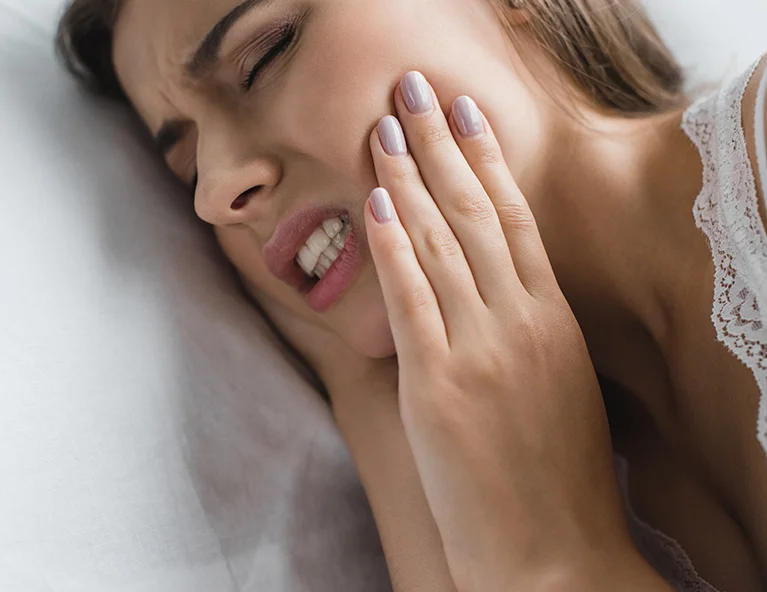
Patients frequently ask: why does tooth pain worsen at night? The nocturnal escalation of dental pain is driven by three primary physiological mechanisms:
- Recumbent Posture & Increased Cranial Blood Flow: Standing or sitting allows gravity to pull blood toward the lower extremities. Lying down shifts blood volume toward the head, elevating cephalic blood pressure. This surge engorges the micro-vessels inside the inflamed dental pulp, exponentially amplifying throbbing, pulse-synchronous pain.
- Nocturnal Drop in Cortisol Levels: Cortisol, the body's endogenous anti-inflammatory hormone, naturally decreases to its circadian nadir during nighttime hours. With diminished natural anti-inflammatory signaling, inflammatory cascades within the tooth peak unchecked.
- Absence of Daytime Distractions: During the day, occupational and sensory inputs help the central nervous system filter out background pain signals. In the stillness of the night, sensory focus shifts entirely to the throbbing tooth, lowering the subjective pain threshold.
Toothache at Night What to Do: Emergency Home Relief Steps
When professional dental care is unavailable in the middle of the night, follow these emergency measures for toothache at night emergency relief:
1. Elevate Your Head (Double Pillow Strategy)
Avoid lying flat. Prop your head up using two or three pillows to maintain a 45-degree angle. This simple positional adjustment lowers cranial blood pressure, providing immediate reduction in throbbing pulpal pressure.
2. Rinse with Warm Salt Water
Dissolve half a teaspoon of salt in a glass of lukewarm water and gently swish for 60 seconds. Salt water reduces soft tissue edema via osmotic gradients and flushes out trapped acidic food debris.
3. Take Over-the-Counter Analgesics
If not medically contraindicated, take an over-the-counter non-steroidal anti-inflammatory drug (NSAID) such as ibuprofen or naproxen sodium, or acetaminophen, with a full glass of water.
4. Controlled Application of Clove Oil
Clove oil contains Eugenol, a potent natural anesthetic and antimicrobial agent. Place a single drop on a tiny cotton pellet and apply it strictly inside the cavity. Never leave clove oil resting against the gums, as it can cause severe chemical mucosal burns.
5. External Cold Compress
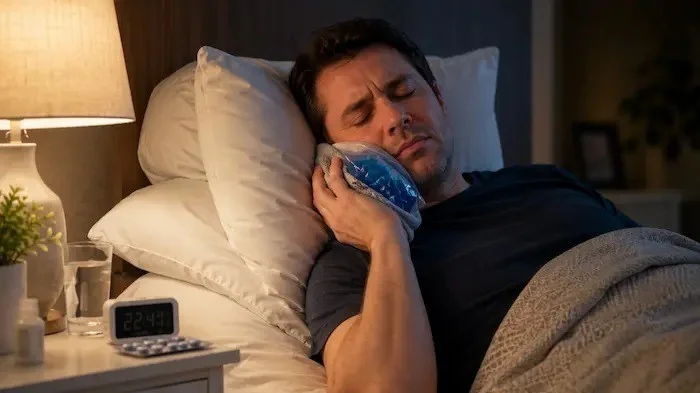
Apply an ice pack wrapped in a cloth to the outside of your cheek for 10-minute intervals. Cold induces vasoconstriction, reducing blood flow to the localized inflammatory site and dulling nerve conduction.
Dangerous Mistakes to Avoid During a Nighttime Toothache
Outdated home remedies frequently cause irreversible soft tissue burns and clinical complications:
- Placing Aspirin or Alcohol Directly on the Tooth: Never do this! Aspirin is acetylsalicylic acid; placing it against oral tissues causes severe chemical burns (aspirin burn), creating painful mucosal ulcerations without relieving deep pulpal pain.
- Applying Heat Packs to the Cheek: Hot compresses accelerate bacterial proliferation and draw pus toward external facial spaces, causing massive facial swelling.
- Probing the Tooth with Sharp Objects: Using pins or needles to pick at a cavity risks perforating the pulp chamber and driving bacteria deep into alveolar bone.
Pregnancy Nighttime Toothache: Safe Emergency Protocols
Hormonal surges during pregnancy (elevated estrogen and progesterone) exacerbate gingival vascular permeability, predisposing expectant mothers to acute dental flare-ups. Key rules for pregnancy nighttime toothache include:
- Avoid Unprescribed Medications: Never take random analgesics or antibiotics during pregnancy. Many NSAIDs are strictly contraindicated, especially in the first and third trimesters.
- Safe Home Measures: Utilize warm salt water rinses, elevate the head with extra pillows, and apply external cold compresses.
- Approved Analgesics: Acetaminophen (paracetamol) is generally considered the safest analgesic during pregnancy when approved by your obstetrician and dentist.
- Do Not Delay Emergency Care: Severe dental infection poses far greater physiological stress to both mother and baby than routine dental treatment. Emergency pulpal decompression and root canal treatment can be performed safely under local anesthesia, particularly during the second trimester.
Definitive Nighttime Toothache Treatment: Clinical Solutions
Home remedies only provide temporary relief until morning. Permanent resolution requires professional nighttime toothache treatment in a dental clinic:
- Root Canal Therapy (Endodontics): The inflamed, infected pulpal tissue is extirpated, the root canals are mechanically cleaned, disinfected, and obturated with biocompatible gutta-percha. This saves the natural tooth with a success rate exceeding 95%.
- Emergency Pulpotomy / Decompression: In emergency clinics, the pulp chamber is accessed under local anesthesia to vent internal pressure and place a sedative dressing, providing instant relief.
- Surgical Extraction: Indicated when a tooth has suffered unrestorable crown-root fractures or severe periodontal bone loss.
- Custom Nightguard Therapy: If nighttime pain originates from bruxism, a custom-fitted occlusal splint is fabricated to cushion masticatory loads.
Comparative Matrix: Symptoms vs. Probable Diagnosis
Identify the potential source of your nocturnal tooth pain below:
|
Pain Characteristics |
Primary Triggers |
Probable Clinical Diagnosis |
Definitive Clinical Treatment |
|
Severe, throbbing, constant |
Lying flat, hot liquids |
Acute Irreversible Pulpitis |
Root Canal Treatment |
|
Sharp pain on biting/pressure |
Touching teeth together |
Acute Periapical Abscess |
Drainage + Endodontics / Extraction |
|
Dull morning jaw/temple ache |
Waking up from sleep |
Bruxism (Teeth Grinding) |
Custom Nightguard (Splint) |
|
Brief sensitivity to cold/sweets |
Cold water, sweet foods |
Enamel/Dentin Caries |
Composite Dental Filling |
Frequently Asked Questions
Why does a toothache seem to disappear or improve during the day?
Standing upright reduces cranial blood pressure via gravity, lowering hydraulic pressure inside the tooth's pulp chamber. Furthermore, daytime cortisol levels are higher, and daily sensory stimuli help the brain filter out background pain signals. However, the underlying bacterial infection remains active.
Why does my nighttime toothache persist even after taking painkillers?
In severe irreversible pulpitis, intra-pulpal tissue pressure is so high that local micro-circulation collapses, preventing systemic analgesics from reaching therapeutic concentrations within the closed tooth. The only definitive solution is for a dentist to mechanically open the pulp chamber and vent the pressure.
Does placing alcohol or whiskey on the tooth relieve pain?
No. Alcohol cannot penetrate hard enamel or dentin to reach the inflamed nerve. Applying high-proof alcohol burns the delicate oral mucosa, causing tissue necrosis and painful chemical ulcers alongside the existing toothache.
Will taking antibiotics immediately stop a nighttime toothache?
No. Antibiotics are not painkillers; they take 24 to 48 hours to achieve systemic bacterial suppression. Furthermore, in necrotic or severely inflamed pulps with compromised blood flow, antibiotics cannot reach the interior of the tooth. Antibiotics must only be taken when prescribed by a dentist.
Yazar Hakkında