



Everything You Need to Know About Wisdom Tooth Extraction
Don't put off your smile. Message us now to discuss your treatment options with our expert dentists.
WhatsAppOne of the most significant milestones many of us encounter in our oral health journey is the arrival of the third molars, commonly known as wisdom teeth. While some of us never even feel their presence, for others, they can be the source of unbearable pain and gum swelling. Especially in individuals with a narrow jaw structure, the pressure these teeth exert while erupting can disrupt the entire balance of the mouth. At this point, a wisdom tooth extraction is not just a necessity but a strategic step taken to protect the health of the other teeth.
Wisdom tooth extraction is one of the most inquired about and sometimes anxiety-inducing surgical procedures in dental health. Thanks to modern anesthesia techniques and specialized maxillofacial surgery approaches, these operations are completed quite comfortably and painlessly today. The care shown by the patient after a wisdom tooth extraction affects the healing speed just as much as the success of the operation itself. Proper care, clot preservation, and adherence to the dentist’s advice are the most fundamental elements ensuring a smooth transition through the process.
Table of Content
- What is a Wisdom Tooth? Why Doesn't Everyone Get Them?
- Symptoms of Wisdom Teeth: How Do You Know It's Time for Extraction?
- How is an Impacted Wisdom Tooth Extraction Performed? The Step-by-Step Operation
- Recovery Timeline After Wisdom Tooth Extraction
- What Should Nutrition Be Like After Wisdom Tooth Extraction?
- Complications and Things to Watch Out For
- FAQ
What is a Wisdom Tooth? Why Doesn't Everyone Get Them?
As our dietary habits changed through the evolutionary process, the human jaw gradually became smaller. The third molars, which our ancestors needed to chew tough, fibrous foods, have often become non-functional in the modern human's soft diet. These teeth usually begin to appear at the very back of the dental row between the ages of 17 and 25. However, when there is insufficient room in the jawbone, the tooth either tries to emerge at an incorrect angle or remains completely trapped beneath the bone.
Some lucky individuals never develop wisdom teeth at all; this is entirely a genetic situation. In others, the teeth emerge at a perfectly healthy angle and participate in the chewing function. The problematic cases are usually those where the tooth cannot fully erupt, meaning it remains "impacted." An impacted wisdom tooth extraction is a surgical procedure that must be meticulously planned according to the tooth's position, root structure, and relationship with neighboring teeth.
Symptoms of Wisdom Teeth: How Do You Know It's Time for Extraction?
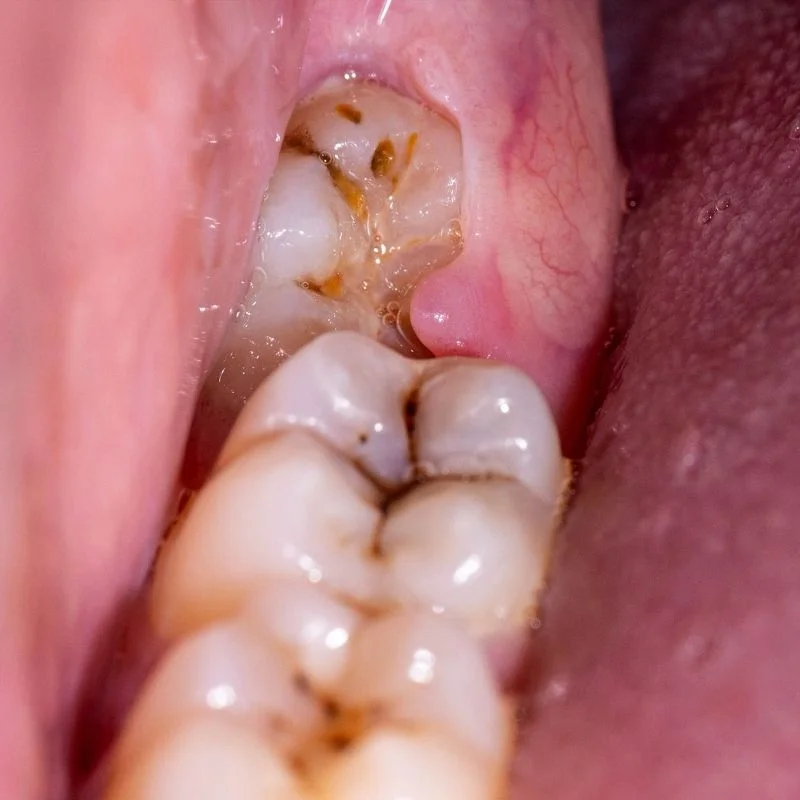
The idea that every wisdom tooth must be extracted is a misconception. If the tooth has emerged at the correct angle, can be cleaned, and does not harm neighboring teeth, it can remain in place. However, these teeth are often prone to problems that progress silently.
The following symptoms may indicate that it is time to see a maxillofacial surgeon:
- Jaw and Gum Pain: Feeling a throbbing or pressure-like pain in the area where the tooth is trying to emerge.
- Gum Swelling and Redness: Sensitivity resulting from the inflammation of the gum tissue over the tooth.
- Difficulty Opening the Mouth: Being unable to open the mouth fully due to pressure hitting the jaw joint and muscles.
- Bad Breath and Taste: Infection resulting from the inability to clean food debris accumulating around partially impacted teeth.
- Dental Crowding: Disruption of the alignment by pushing the front teeth.
Sometimes, even if there are no symptoms, panoramic X-ray check-ups may reveal that the tooth is damaging the root of the neighboring tooth or leading to cyst formation. In such cases, intervention before the problem grows is the healthiest path.
How is an Impacted Wisdom Tooth Extraction Performed? The Step-by-Step Operation
In modern dentistry, a wisdom tooth surgery is a very comfortable process for the patient, contrary to popular belief. The success of the operation is directly related to the experience of the dentist and the technologies used. The process generally follows these steps:
- X-ray and Planning: The distance of the tooth to nerve canals and the root structure are examined with a panoramic X-ray or, if necessary, 3D tomography.
- Anesthesia: The area is completely numbed. In addition to local anesthesia, sedation options are also offered for patients with extreme anxiety.
- Surgical Intervention: If the tooth is impacted, a small incision is made in the gum. The bone tissue over the tooth is removed. Often, the tooth is extracted by dividing it into pieces to avoid damaging surrounding tissues.
- Cleaning and Suturing: The area is disinfected, and stitches are applied to accelerate healing.
So, how long does a wisdom tooth extraction take? A normal extraction can take 15–20 minutes, while a complicated impacted tooth case can take 45–60 minutes. The important thing is completing the procedure in a tissue-friendly manner rather than the duration itself.
Recovery Timeline After Wisdom Tooth Extraction
The most critical phase of the healing process begins the moment you stand up from the operation chair. The first few days after a wisdom tooth extraction is a period when your body works intensely to repair the area.
The First 24 Hours: Bleeding and Clot Control
The number one rule of the first day is to protect the forming blood clot. This clot is a natural barrier that protects the bone and nerves in the empty tooth socket.
- Gauze Usage: Firmly bite the gauze pad placed by your dentist for 30–45 minutes.
- Do Not Spit: Spitting, even if there is a taste of blood in your mouth, can displace the clot and increase the risk of bleeding after extraction.
- Smoking and Alcohol: Smoking during the first 24 hours (ideally for 3 days) stops healing and can lead to a painful condition called "alveolitis" (dry socket).
Subsequent Days: Swelling and Edema Management
Swelling after a wisdom tooth extraction usually peaks on the second day of the operation and begins to decrease from the third day. This is a completely normal tissue reaction.
- Cold Compress: Applying ice from the outside during the first 24 hours can minimize swelling.
- Oral Hygiene: You can start tooth brushing procedures the day after the operation. However, you should avoid brushing the extraction site for the first few days and use gentle movements.
What Should Nutrition Be Like After Wisdom Tooth Extraction?
Nutrition during the recovery period is important for both protecting the area and gaining bodily resistance. When choosing meals, you should focus on room-temperature and soft foods.
- The First 24 Hours: Non-grainy soups, yogurt, pudding, or pureed fruits should be consumed. Very hot or very cold drinks should be avoided.
- Do Not Use Straws: Drinking something with a straw creates a vacuum effect in the mouth, which can dislodge the clot.
- Subsequent Days: You can gradually transition to foods that do not require chewing, such as boiled vegetables, pasta, or rice. Taking care to chew on the other side will protect the area.
Complications and Things to Watch Out For
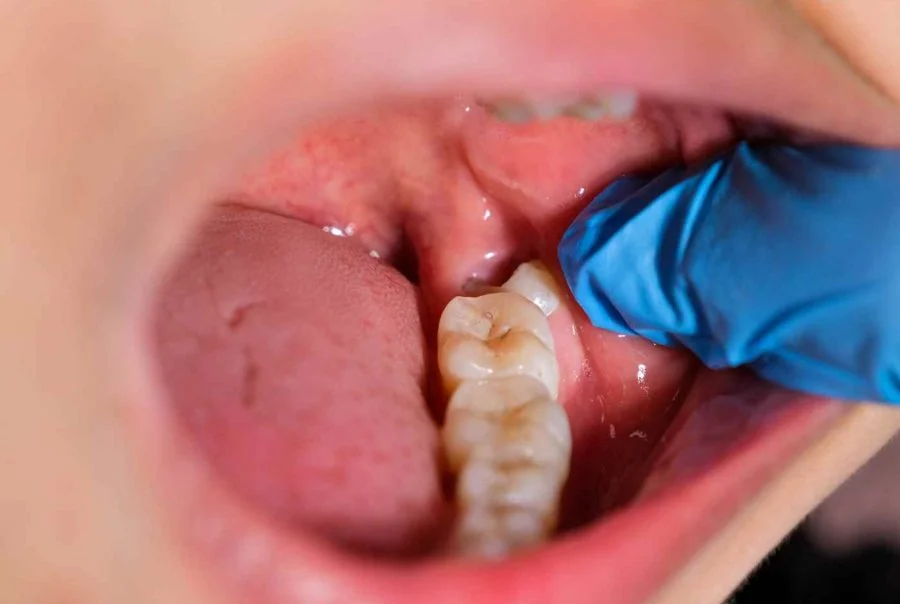
As with any surgical procedure, there are some risks in wisdom tooth operations. However, under the control of a specialist dentist, these risks are minimized.
- Pain after wisdom tooth extraction: A mild ache that can be controlled with painkillers for the first few days is normal. If you wonder how long the pain lasts after an impacted extraction, the answer is usually 3–5 days. Cases exceeding this duration require a check-up.
- Difficulty Swallowing: Difficulty swallowing or a slight irritation in the throat may be experienced, especially after a lower wisdom tooth extraction. This usually resolves on its own within a few days.
- Signs of Infection: Excessive heat increase in the area, bad odor, high fever, and weakness are among the signs of infection. In this case, antibiotic treatment may be required.
|
Stage |
What to Expect? |
What to Do? |
|
Operation Day |
Numbness, mild oozing bleeding |
Bite the gauze, never spit, do not use straws |
|
Days 2 - 3 |
Peak of swelling and edema |
Cold compress, soft foods, medication follow-up |
|
Days 4 - 7 |
Reduction in pain, receding swelling |
Warm saltwater rinse, normal brushing (gently) |
|
End of Week 1 |
Removal of stitches (if any) |
Go for a dentist check-up |
FAQ
Is wisdom tooth extraction difficult?
Thanks to modern local anesthesia methods, you do not feel any pain during the procedure. The degree of difficulty depends on whether the tooth is impacted, but for a specialist maxillofacial surgeon, this is a routine procedure.
How many days does it take for swelling to subside?
Swelling peaks on the 2nd and 3rd days and begins to recede from the 5th day. It usually disappears completely at the end of one week.
Will an impacted tooth tilt other teeth if not extracted?
Yes, teeth that cannot erupt in narrow jaws can push the front teeth, leading to crowding and orthodontic disorders.
When can I eat after a wisdom tooth extraction?
You can start eating room-temperature, soft foods once the effect of the anesthesia has completely worn off (approximately 2–3 hours).
What happens if a wisdom tooth is not extracted?
Risks such as inflammation, decay in neighboring teeth, cyst formation in the jawbone, and severe pain increase.
About the Author