


Can Veneers Be Whitened? What UK Patients Should Know
Don't put off your smile. Message us now to discuss your treatment options with our expert dentists.
WhatsAppIf you have veneers and are wondering whether teeth whitening can brighten them up, you are not alone. It is one of the most common questions patients ask before and after getting veneers, and the answer is more nuanced than most online guides suggest. The short version: standard whitening treatments do not work on veneer materials the way they work on natural enamel. But that is not the end of the story.
Table Of Contents
- What Exactly Are Dental Veneers?
- Why Do Veneers Appear to Change Colour?
- Can You Whiten Porcelain Veneers?
- Can Composite Veneers Be Whitened?
- Professional Cleaning and Polishing: What It Can and Cannot Do
- What to Do When Your Veneers No Longer Match Your Teeth
- The Smart Approach: Whiten Before Veneers, Not After
- How to Keep Veneers Looking Bright Long-Term
- Getting New Veneers Abroad: What UK Patients Should Know
What Exactly Are Dental Veneers?
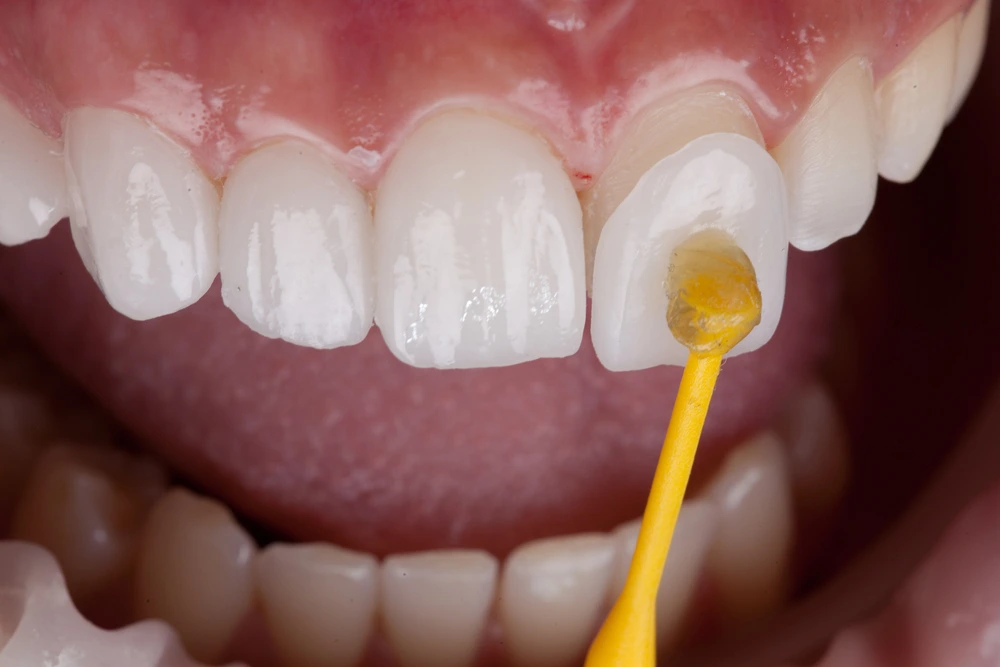
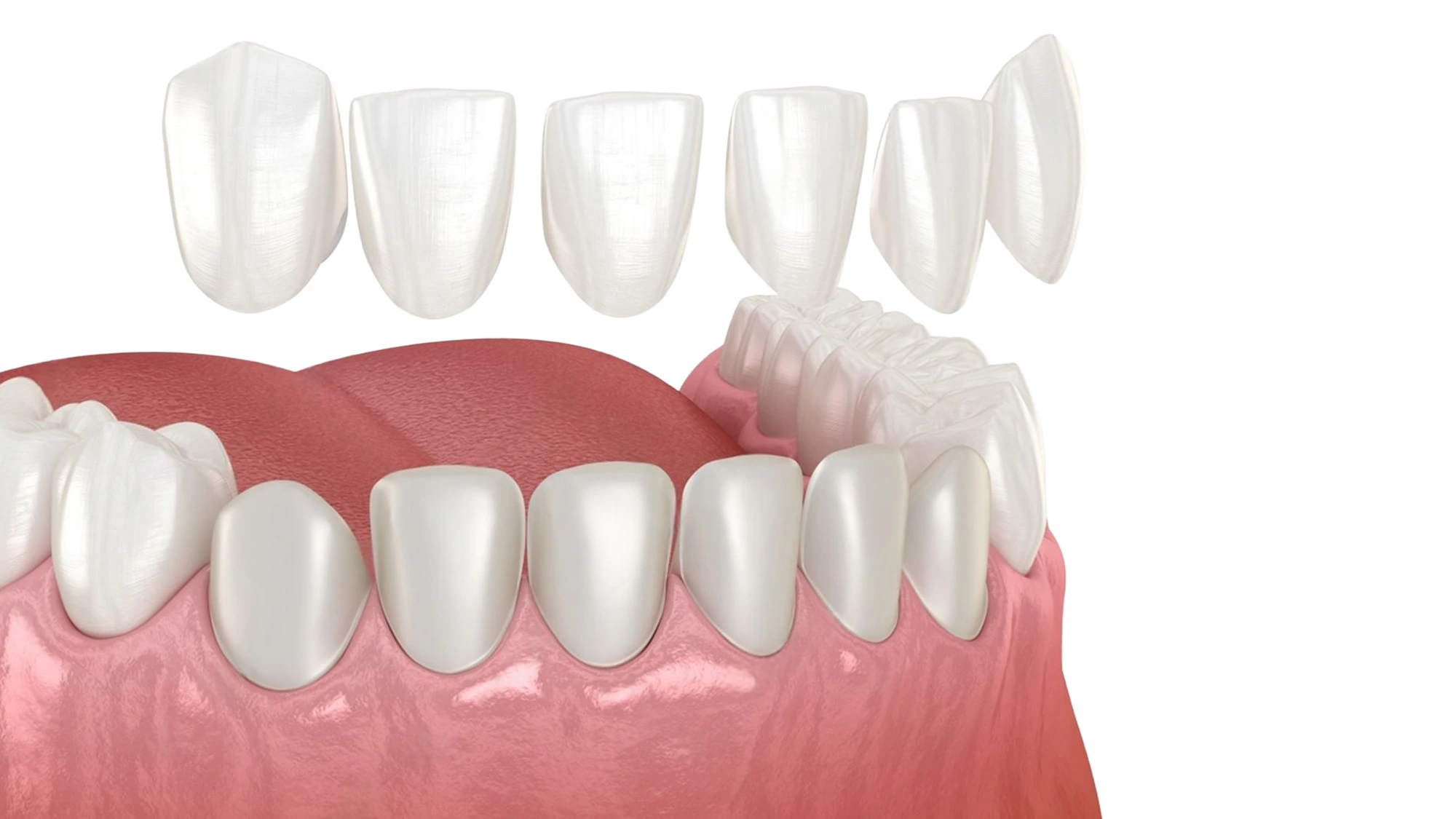
Dental veneers are thin shells bonded to the front surface of teeth. Most are made from either porcelain (also called ceramic) or composite resin. Their primary job is aesthetic: covering chips, gaps, stains, and uneven shapes to create a uniform, attractive smile.
Porcelain veneers are typically fabricated in a laboratory from high-quality dental ceramic. They are usually 0.3 to 0.7 mm thick - barely thicker than a contact lens - and are bonded onto a lightly prepared tooth surface. Composite veneers, by contrast, are built directly onto the tooth using tooth-coloured resin, often in a single appointment.
Both types can deliver impressive aesthetic results. But when it comes to whitening, they behave in completely different ways from natural teeth. Understanding why requires a quick look at what they are made of at a structural level. This is also why so many patients are surprised when standard whitening products simply do not produce the results they expected - on veneers, the rules are different.
Why Do Veneers Appear to Change Colour?
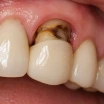
Here is something worth knowing before we get to whitening: the colour change patients notice in their veneers is often not happening inside the veneer material itself. Several other things can cause a veneer to look darker or more yellow over time.
The most common culprits are:
- Staining at the margins. The thin line where the veneer meets the gum and surrounding tooth structure can accumulate plaque, pigments from food and drink, and mineral deposits. This creates a dark or discoloured border that makes the whole veneer look duller.
- Colour shift in the underlying tooth. If the natural tooth underneath the veneer darkens - due to ageing, trauma, or old restorations - this can show through, especially on thinner veneers.
- Surface wear and micro-scratches. Over years of use, the polished glaze on a porcelain veneer can wear down. A rougher surface catches staining particles more easily than a smooth, well-glazed one.
- Discolouration of the luting cement. The adhesive used to bond the veneer to the tooth can discolour slightly over time, becoming visible especially at the edges.
So when a patient says their veneers look yellowed or dull, the actual problem may be external staining, cement discolouration, or changes in the tooth below - rather than the veneer material itself changing shade. This distinction matters enormously, because different causes call for different solutions.
A dentist who simply recommends whitening without examining the source of the discolouration may be giving advice that misses the point entirely.
Can You Whiten Porcelain Veneers?
The direct answer is no, not in any clinically meaningful way.
Teeth whitening gels - whether professional or over-the-counter - work by using hydrogen peroxide or carbamide peroxide to penetrate the porous structure of natural enamel and break down pigmented molecules. Porcelain is a dense, vitrified ceramic material. It does not have the microscopic porosity that allows bleaching agents to penetrate and produce colour change.
Apply a whitening gel to a porcelain veneer and very little happens to the porcelain colour. Research published in journals including the Journal of Prosthetic Dentistry and reviewed by the National Library of Medicine has consistently found that bleaching agents produce minimal measurable colour change in ceramic restorations. What they can do, particularly with aggressive or prolonged application, is affect the surface finish - increasing micro-roughness, which may paradoxically make the veneer more prone to staining in the future.
There is also one indirect effect worth understanding. If whitening is applied to the natural teeth surrounding a veneer, those teeth may lighten, creating a mismatch where the veneer now looks comparatively darker. This is a common reason why dentists recommend carrying out any desired whitening before veneers are placed, not after.
If your porcelain veneers look dull, whitening gel is unlikely to help. A proper clinical assessment will almost always identify more effective options.
Can Composite Veneers Be Whitened?
Composite resin behaves differently from porcelain, and the answer here is a little more complicated - though still largely no.
Composite is a polymer-based material containing filler particles. It is more porous than porcelain and more susceptible to water absorption, which is partly why composite veneers tend to stain and discolour more readily over time. You might expect this greater porosity to make composite more responsive to whitening agents.
In practice, the results are unreliable. Some laboratory studies have reported a small lightening effect on composite surfaces after exposure to bleaching gels, but this is often accompanied by an increase in surface roughness. Rougher surfaces attract and retain more staining particles. So even a temporary brightening effect may be followed by faster re-staining, leaving patients worse off in the medium term than before they started.
Professional composite polishing - physically smoothing and buffing the surface - tends to produce more predictable and longer-lasting improvements to composite veneer appearance than bleaching does. For older or heavily discoloured composite veneers, replacement is often the cleaner solution.
The takeaway for patients with composite veneers is this: speak to your dentist about polishing and surface refinement before reaching for whitening products. The results are typically more consistent and carry fewer risks to the veneer surface.
Professional Cleaning and Polishing: What It Can and Cannot Do
One of the most useful interventions for tired-looking veneers is professional cleaning and polishing. This is not whitening, but it can make a significant visible difference - and it is worth understanding why.
During a professional cleaning appointment, a dental hygienist or dentist can:
- Remove plaque, tartar, and staining deposits from veneer surfaces and margins
- Polish the veneer surface to restore some of its original gloss and reflectivity
- Re-glaze or re-polish composite veneers if appropriate
- Clean around the gum-veneer junction where marginal staining tends to collect
- Check the integrity of the veneer bonding and examine any problem areas
The limitation is that cleaning and polishing addresses surface appearance only. If the problem lies deeper - in the underlying tooth, the luting cement layer, or intrinsic discolouration within an older veneer - then surface polishing will not resolve it. And if the veneer has aged significantly, worn down, or developed micro-cracks that harbour staining, replacement becomes a more realistic consideration.
According to the British Dental Association, regular dental check-ups are an important part of maintaining oral health and preserving dental restorations. For patients with veneers, these visits also provide an opportunity to monitor veneer condition and address small concerns before they become larger problems.
What to Do When Your Veneers No Longer Match Your Teeth
A colour mismatch between veneers and natural teeth is one of the most common aesthetic complaints dentists encounter. It usually happens in one of two scenarios.
The first: natural teeth darken over time. Ageing, dietary habits, certain medications, and gradual thinning of enamel can cause natural teeth to shift towards a more yellow or grey tone. If the veneers remain stable while the surrounding teeth darken, the veneers can start to look oddly bright or out of place.
The second scenario is the reverse. The patient whitens their natural teeth - or wants to - and the veneers no longer match the new, brighter shade. This situation catches many patients off guard.
Depending on the severity and cause of the mismatch, a dentist may suggest:
- Controlled whitening of natural teeth to a matching shade. If the veneers are in good condition and the natural teeth have only darkened slightly, a measured whitening protocol can bring the two into alignment without touching the veneers themselves.
- Whitening natural teeth first, then replacing the veneers. This is the preferred sequence when someone wants a full smile refresh. Natural teeth are whitened to the desired new shade, then new veneers are fabricated to match. The veneers are not whitened - they are redesigned.
- Composite bonding adjustments. Small modifications to composite bonded areas can sometimes address minor shade discrepancies without full veneer replacement.
- Full smile redesign. When multiple restorations are involved and overall harmony has broken down, a comprehensive smile design approach may offer the most durable and visually cohesive outcome.
There is no universal right answer. The appropriate route depends on the materials used, the extent of the mismatch, the age and condition of the restorations, and what the patient actually wants to achieve.
The Smart Approach: Whiten Before Veneers, Not After
If you are planning to get veneers and you also want whiter teeth, the sequence matters. Whitening first, then placing veneers, is the standard clinical recommendation - and for good reason.
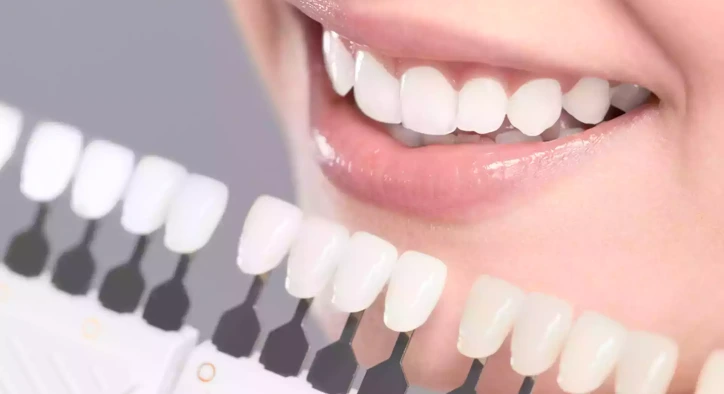
When natural teeth are whitened before veneer placement, the dentist uses the new shade as the baseline. The veneers are then fabricated to match - and ideally complement - the freshly whitened surrounding teeth. The result is a harmonious, natural-looking smile from day one.
If you try to whiten after veneers are placed, the natural teeth may lighten while the veneers remain the same shade, creating an obvious mismatch. The older the veneers, the more pronounced this contrast tends to become over time.
At our clinic in İstanbul, patients planning laminate veneers or zirconium crowns are often advised to complete teeth whitening as the first step in their treatment plan. This adds a short preparatory stage to the process but produces significantly better long-term results. Shade selection becomes more predictable, the final smile looks cohesive, and patients feel confident that what they see immediately after treatment will still look right a year or two later.
How to Keep Veneers Looking Bright Long-Term
Prevention is considerably easier than correction. Once your veneers are placed and the shade is right, consistent daily habits extend the life of that result.
What genuinely helps:
- Use a non-abrasive toothpaste. Many whitening toothpastes and products containing charcoal or baking soda rely on abrasives that gradually scratch veneer surfaces. Micro-scratches accumulate staining particles more readily over time. A gentle, low-RDA toothpaste is a better long-term choice for anyone with veneers.
- Brush with a soft-bristled toothbrush. Hard bristles and vigorous scrubbing wear down the surface glaze of porcelain and roughen composite. Gentle circular or sweeping motions clean just as effectively and are kinder to restorations.
- Rinse after consuming staining foods or drinks. Coffee, tea, red wine, tomato-based sauces, and certain berries are the main culprits. You do not need to eliminate them - simply rinsing with water promptly after consuming them reduces pigment contact time with the veneer surface.
- Avoid tobacco. Nicotine and tar compounds are among the most stubborn staining agents and affect both natural teeth and veneer bonding margins significantly over time.
- Wear a night guard if you grind your teeth. Bruxism places considerable stress on veneers and can fracture them or wear down the glazed surface. A well-fitted night guard protects the restorations. Our clinic can advise on suitable protective options during your consultation.
- Attend regular dental check-ups. Professional cleaning every six months removes deposits at veneer margins before they become entrenched. A dentist can also monitor the condition of the veneers and address small issues before they escalate.
None of these habits are complicated. But patients who follow them consistently notice a real difference in how long their veneers hold their original appearance - and avoid the disappointment of premature replacement.
Getting New Veneers Abroad: What UK Patients Should Know
For many patients in the UK, the question of veneers is not just about whitening existing ones - it is about starting fresh. Whether current veneers have aged significantly or a patient has never had veneers and wants a completely new smile, the cost of cosmetic dental treatment in the UK can put the goal out of reach.
Dental tourism to Turkey - particularly to cities like İstanbul, Istanbul, and Izmir - has grown substantially among UK patients over recent years. The reasons are practical. A full set of porcelain veneers that might cost between 700 and 1,000 GBP per tooth in the UK can be considerably more affordable at a clinic in Turkey offering comparable materials and clinical standards. Many patients offset the cost of flights and accommodation and still make meaningful savings.
But affordability alone should not be the deciding factor. Quality, accreditation, aftercare, and communication matter just as much. When considering treatment abroad, it is worth asking:
- Is the clinic staffed by qualified, registered dentists with verifiable credentials and documented experience?
- Is there a detailed, written treatment plan with clear information on the materials being used?
- What happens if something needs attention after you return home? Is there a clear protocol for follow-up or local correction?
- Are the dental materials - whether E.max ceramic, zirconia, or other ceramics - from reputable manufacturers with established track records?
At Avrupa Saglik Dis in İstanbul, our team works with a range of international patients including many from the UK and Germany. We use high-quality ceramic and zirconia materials for veneers and crowns, and shade matching is carried out carefully to produce natural-looking results. If you are considering a smile design treatment or laminate veneers, our clinical team can provide a detailed assessment and personalised treatment plan. You can also read patient reviews and view before and after cases to get a realistic picture of what outcomes look like.
The NHS website is a useful resource for UK patients weighing up treatment options at home versus abroad, including guidance on what questions to ask before committing to any dental treatment overseas.
Frequently Asked Questions
Can whitening toothpaste lighten the shade of veneers?
Whitening toothpastes use mild abrasives to remove surface stains from natural enamel. On veneers, particularly porcelain ones, these abrasives cannot change the underlying shade of the veneer material and may gradually damage the glazed surface over time. A scratched surface is more prone to picking up staining particles. For veneer maintenance, a non-abrasive toothpaste is a better long-term choice.
Will teeth whitening damage my existing veneers?
Professional whitening applied to natural teeth should not significantly damage well-bonded porcelain veneers, but it will not whiten them either. Applied directly and aggressively to composite veneers, bleaching agents may increase surface roughness. If you have existing veneers and are considering whitening, speak to your dentist before starting any treatment. The goal is usually to whiten natural teeth while minimising impact on the restorations themselves.
How long do veneers typically last before needing replacement?
High-quality porcelain veneers, placed and maintained well, can last 10 to 20 years or longer. Composite veneers generally have a shorter lifespan of around 5 to 10 years, partly because they are more susceptible to staining and surface wear. Lifestyle factors - particularly tooth grinding, abrasive toothpaste use, and frequent consumption of staining foods and drinks - can affect longevity significantly.
What is the most effective way to remove stains from veneers?
External surface stains on veneers respond well to professional cleaning and polishing. A hygienist can remove accumulated plaque, tartar, and pigment deposits and restore some of the original surface gloss. For composite veneers with deeper discolouration, re-polishing or re-contouring may help. Severely stained or aged veneers may need to be replaced to achieve a noticeably better outcome.
Should I whiten my teeth before getting veneers?
Yes - this is the standard clinical recommendation. Whitening natural teeth first allows the dentist to match the veneer shade to your desired tooth colour rather than your current one. This produces a much more harmonious final result. If you whiten after veneers are placed, the natural teeth may lighten while the veneers remain the same shade, creating a visible mismatch that can be difficult to resolve without replacing the veneers.
Can polishing make veneers look whiter?
Professional polishing can restore surface gloss and remove dull surface stains, making veneers look noticeably brighter and fresher. It does not change the underlying shade of the veneer material, but removing accumulated deposits and restoring the reflective surface can produce a meaningful aesthetic improvement. This is particularly effective for composite veneers that have lost their original lustre through everyday wear.
About the Author