


Why Does Teeth Aaching Occur? Does It Go Away on Its Own?
Don't put off your smile. Message us now to discuss your treatment options with our expert dentists.
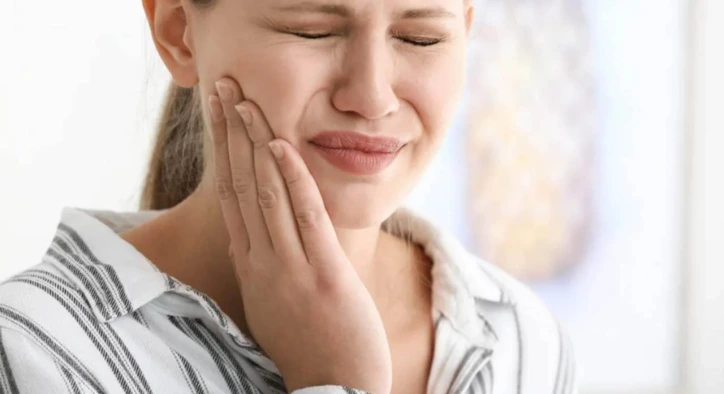
WhatsAppOral and dental health is one of the leading factors that directly determine our daily life standards, from dining comfort to speech patterns. Although the tooth structure looks like a very hard and durable mineral tissue from the outside, it actually contains extremely sensitive living tissues and nerve networks inside. When this delicate balance is disrupted, one of the most common protective signals is the complaint of teeth aching. That sharp ache that suddenly appears during a warm tea in the morning or a glass of water consumed to cool off during the day is the clearest indicator that something is not going right in the tooth.
As Avrupa Sağlık Diş, we observe in our clinical processes that patients mostly evaluate these aches as a temporary condition and delay consulting a dentist. However, while teeth aching can be resolved with simple preventive measures in the early period, it can pave the way for problems requiring more complex surgical interventions when neglected. Correctly understanding the source behind teeth aching is the most critical step to be taken both to lead a pain-free life and to prevent the risks of tooth loss.
Table of Content
What is Tooth Aching?
In clinical literature, this condition is mostly defined as tooth sensitivity or dentin hypersensitivity. In a healthy tooth, there is enamel, the hardest mineral layer of the body, which protects the crown part visible inside the mouth. Immediately beneath the enamel lies a softer layer called "dentin," which contains thousands of microscopic fluid channels (dentin tubules). These micro-channels connect directly to the living nerve tissue (pulp) at the center of the tooth.
When the integrity of the tooth enamel is disrupted for any reason or when the gums recede downward, these micro-channels become open to the oral environment. After this stage, every hot, cold, sweet, or sour stimulus taken into the mouth triggers the fluid movement in these channels and is transmitted directly to the tooth nerve like the sensation of a sharp electric shock. Especially in cases of lower front teeth aching or front tooth sensitivity, patients may state that even the cold air entering when taking a deep breath triggers this ache.
Why Do Teeth Ache? Top 5 Causes
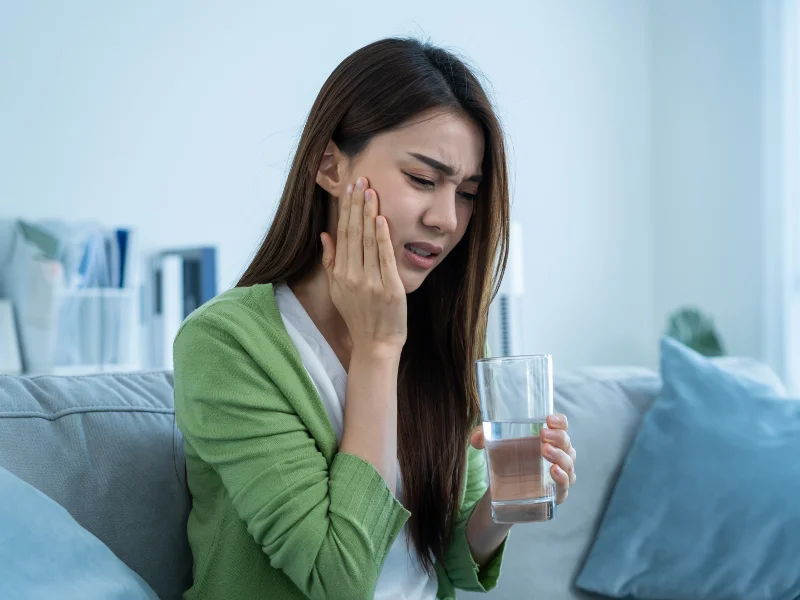
After understanding the mechanism of sensitivity, it is necessary to look at the ways this picture emerges. In our clinical examinations, instead of giving a single answer to the question of why teeth aching occurs, we decide by examining the patient's daily habits and intraoral anatomy.
1. Tooth Enamel Erosion and Incorrect Brushing
Choosing brushes with very hard bristles to clean the teeth better and scrubbing the brush against the tooth with hard horizontal movements is one of the biggest mistakes made. This faulty application wears down the protective enamel layer like sandpaper over time. As the enamel thins, the underlying yellowish dentin layer is exposed, and a widespread sensitivity can begin in the tooth. Especially in patients who present with the complaint of all teeth aching, such aggressive brushing habits are generally detected.
2. Gum Recession and Exposure of Root Surfaces
There is no protective enamel layer on the root parts of the teeth; root surfaces are covered with cementum, which is a softer tissue. Tartar accumulation, periodontal diseases, or gum sensitivity and recessions developing due to aging leave the root surfaces completely defenseless. When the roots are exposed, the consumption of a liquid at room temperature, which would not normally cause an ache, can turn into a complaint of teeth aching while drinking water.
3. Hidden Cavities and Leaking Old Fillings
Interproximal cavities that remain between two teeth and are not noticed when looking from the outside melt the enamel from the inside out and approach the nerves. Similarly, micro-leakage may start over time at the margins of old fillings that have remained in the mouth for many years. Liquids and bacteria leaking between the filling and the tooth tissue can cause aches in the depths. This situation can evolve over time into a picture of persistent teeth aching, causing chronic inflammation of the nerve tissue inside the tooth.
4. Teeth Grinding (Bruxism) and Micro-Cracks
Due to the intense pace brought by daily life, cases of teeth aching from stress experienced without being aware of it are quite common. Stress can lead to excessive clenching or grinding of the teeth (bruxism) while sleeping at night. This uncontrolled vertical force to which the teeth are exposed creates invisible micro-cracks in the enamel layer. These cracks flex with every chewing movement, stimulating the nerves and causing aches in the tooth.
5. Unconscious Use of Whitening Toothpastes
Constantly using whitening toothpastes that are sold in markets and contain high amounts of abrasive particles to have a whiter smile can disrupt enamel integrity. In addition, acid-containing whitening gels applied unconsciously at home outside of physician control can also excessively open the dental tubules, starting a sudden hot and cold teeth aching attack.
What is Good for Tooth Aching? Practical Recommendations for Home
When the aching complaint starts suddenly and you do not have time to go to the clinic, it is natural to search for what is good for teeth aching to reduce the inflammation inside the mouth and alleviate the ache. Some protective steps that can be applied in the home environment can increase your comfort:
- Selecting Sensitivity-Relieving Toothpastes: Special sensitivity toothpastes containing potassium nitrate or fluoride can prevent the transmission of the ache to the nerves by closing the mouth of the dentin channels like a microscopic lid when used regularly.
- Changing the Brushing Technique: Hard brushes should be abandoned, and ultra-soft bristled brushes should be switched to. The brush should be held at a 45-degree angle to the tooth, and cleaning should be done with circular and sweeping movements without applying pressure to the tooth.
- Waiting After Acidic Foods: Teeth should not be brushed immediately after consuming acidic foods such as oranges, lemons, and tomatoes. Acid temporarily softens the enamel; brushing at that moment accelerates erosion. The mouth should only be rinsed with water, and at least 30 minutes should be waited for brushing.
- Rinsing with Lukewarm Water: In sensitivity periods, very cold or very hot drinks should be avoided, and water at room temperature should be preferred for intraoral cleaning. Patients frequently ask how teeth aching passes when drinking cold water; the first step at home is to protect the tooth from sudden temperature changes.
How is Professional Tooth Sensitivity Treatment Performed?
Applications made at home provide only a superficial and temporary relief. If the underlying cause of the sensitivity is a cavity, structural enamel loss, or deep gum recession, the answer to the question of how to permanently cure teeth aching can only be given in a professional dental clinic. The treatments applied for tooth sensitivity are generally as follows:
- Fluoride Varnish Application: Can deeply block open channels.
- Laser Desensitization: Can painlessly soothe nerve endings.
- Aesthetic Composite Fillings: Can close worn neck regions with a barrier.
If the aching stems from gum recession, the exposed root surfaces are covered with special aesthetic composite materials (bonding agents), completely cutting off their connection with the outside world. In advanced cases of teeth grinding, custom nightguards are prepared for the patient, or the uncontrolled loads coming to the tooth are alleviated with masseter botox application performed on the chewing muscles. In this way, the deepening of micro-cracks is prevented, and the aching can be avoided.
When to Go to the Doctor? Is Persistent Tooth Aching Dangerous?

Not every tooth ache stays at the same level. Aches that start with a hot or cold stimulus and pass within 1–2 seconds after the stimulus is removed are generally sensitivities at the initial level. However, if the ache extends to minutes even though the stimulus is removed, or if it turns into a self-throbbing pain, this indicates that a dangerous stage has been passed.
Persistent teeth aching can be a sign that the pulp chamber inside the tooth is irreversibly inflamed (irreversible pulpitis). At this stage, painkillers or sensitivity toothpastes may remain completely ineffective. If the aching has reached a severity that wakes you up from sleep at night, it becomes mandatory to perform a root canal treatment or a deep filling replacement process without losing time. Applying to a clinic in the early period can save the tooth from going to root canal treatment, allowing it to be rescued with simpler methods.
|
Complaint Experienced |
Possible Anatomical Cause |
Clinical Solution Method |
|
Sudden, short ache only in the cold |
Initial level enamel erosion |
Fluoride application / Sensitivity Toothpaste |
|
Wedge-shaped notches at the tooth necks |
Hard brushing (Servical abrasion) |
Aesthetic Composite Filling |
|
Long-lasting ache when eating sweet or sour |
Hidden interproximal cavity or leaking filling |
Filling Replacement / Cavity Cleaning |
|
Throbbing that starts out of nowhere at night |
Advanced nerve inflammation (Pulpitis) |
Root Canal Treatment (Endodontics) |
FAQ: Frequently Asked Questions
Is tooth aching after a filling normal and how long does it last?
Yes, it is completely normal to see hot and cold sensitivities in the tooth for 2 to 4 weeks, especially following the cleaning of deep cavities. The nerve tissue inside the tooth repairs itself during this process, and the ache decreases and disappears over time.
Why does tooth aching occur when eating sweets?
Sweet or excessively sugary foods change the osmotic pressure inside the mouth. If there are exposed dentin channels or an initial-level cavity in the tooth, the sugary liquid passes rapidly through these channels, directly stimulating the nerve endings and leading to a sharp ache.
Does tooth aching go away on its own?
Mild mucosal irritations that occur after the consumption of an acidic food can pass on their own. However, teeth aching caused by structural and anatomical reasons such as enamel erosion, cavities, or gum recession does not heal on its own without a professional dental intervention.
Why does a tooth ache out of nowhere?
A tooth aching or throbbing out of nowhere without a distinct hot-cold stimulus generally indicates that the living nerve chamber (pulp) inside the tooth is under infection. This situation is mostly the harbinger of an advanced cavity or a deep crack in the tooth and may require urgent treatment.
About the Author