


What Is Sedation? How Is Dental Treatment Performed Under Sedation?
Don't put off your smile. Message us now to discuss your treatment options with our expert dentists.
WhatsAppEven though modern dental technology advances rapidly every single day, a massive portion of society still battles intense dental anxiety (phobia) rooted in historical negative experiences. Many patients choose to live with agonizing tooth pain or severe aesthetic defects for years simply because the mere thought of sitting in a clinical chair triggers intense panic.
Similarly, performing procedures on patients with an overactive gag reflex or individuals with special needs can be highly challenging under standard conditions. To help our patients bypass this psychological wall and experience their treatments in a completely stress-free, peaceful environment, sedation stands out as the most preferred clinical pathway. This comprehensive guide covers everything regarding sedation stages, types, and safety criteria.
Table of Content
- What Is Sedation and Is Sedation a Sedative?
- What Is Sedation Anesthesia?
- What Is the Difference Between Sedation and General Anesthesia?
- What Are the Different Structural Levels of Sedation?
- How Is Sedation Applied?
- When Is Dental Treatment with Sedation Recommended?
- Critical Rules to Follow After Sedation
- Is Sedation Anesthesia Risky?
- What Do Dental Sedation Patients Experience?
- Frequently Asked Questions
What Is Sedation and Is Sedation a Sedative?
In medical terms, the definitive answer to what is sedation is a controlled, drug-induced semi-sleep state that selectively depresses the central nervous system to eliminate feelings of fear, anxiety, and stress. But, as our patients frequently query, is sedation a sedative? Yes, dental sedation is essentially an advanced pharmacological configuration of targeted sedatives.
Instead of shutting down the brain entirely, the specialized compounds ease the patient into a deep state of total relaxation and peace. The individual remains semi-conscious and can respond to simple physical cues like "open your mouth," but they are fully insulated from dental panic.
What Is Sedation Anesthesia?

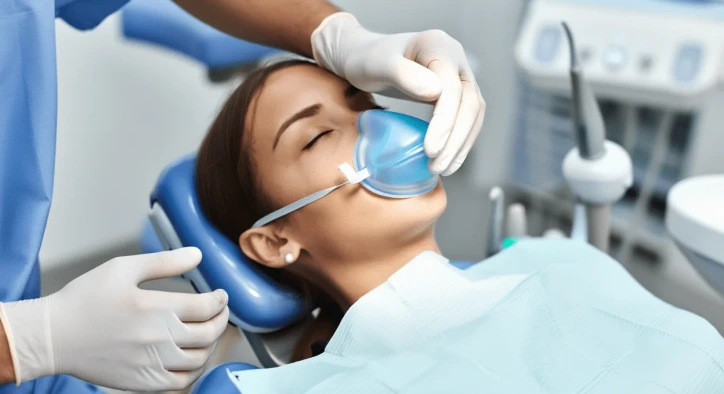
While patients often refer to this clinical pathway as sedation anesthesia, it is structurally separate from full general anesthesia. The procedure is executed directly by a certified anesthesiologist who calculates customized drug dosages based on the patient's body mass, age, and systemic history, delivering them via an intravenous (IV) line or an inhalation mask. The primary clinical advantage of dental sedation is its profound effect on time perception.
A complex 2-to-3-hour oral surgery (such as multiple dental implant placements or surgical 20th wisdom teeth extractions) feels like it lasted only 10 to 15 minutes to the patient. Known as "retrograde amnesia," this temporary block ensures the individual retains zero memory of clinical drilling noises, pressure, or injections afterwards.
What Is the Difference Between Sedation and General Anesthesia?
Resolving the structural difference between sedation and general anesthesia is critical, as these two modalities operate on entirely distinct biological tiers:
- Respiratory Maintenance: Under general anesthesia, the patient's natural breathing is entirely stopped, requiring an advanced breathing machine. Under sedation, the patient maintains their own airway naturally, breathing fully on their own.
- Consciousness Level: General anesthesia induces a deep state of total unconsciousness where the patient cannot respond to any physical stimuli. Sedation creates a semi-conscious twilight sleep; you hear and follow basic operational guidance from the surgeon.
- Clinical Recovery Window: Waking up fully from general anesthesia and discharging from a hospital setting requires multiple hours. Following dental sedation, patients become fully alert within 15–20 minutes and can be safely discharged shortly after.
- Procedural Matching: General anesthesia is reserved for major, invasive hospital surgeries, whereas sedation is the ideal match for same-day outpatient clinical dental modifications.
What Are the Different Structural Levels of Sedation?
Sedation depths are customized systematically based on individual patient anxiety scales and the overall scope of the dental surgery.
What Is Mild Sedation? (Conscious Sedation)
Answering what is mild sedation, this pathway utilizes an inhalation mask supplying nitrous oxide (commonly known as laughing gas) or mild oral sedatives. The patient remains completely awake and answers questions logically, but their internal stress, muscle tension, and rapid heart rate are entirely dissolved.
What Is Deep Sedation?
Answering what is deep sedation, this level relies on introducing targeted sedatives directly through an intravenous (IV) line. The patient slips into a deep sleep state where they become completely unaware of their surrounding environment, and their individual pain threshold is elevated to its maximum point. This is highly preferred for advanced bone grafting or full-mouth restorations.
How Is Sedation Applied?
The sedation workflow is executed inside sterilized surgical suites overseen by a certified anesthesiologist following these precise steps:
- Structural Pre-Assessment: The anesthesiologist evaluates your systemic profile, active allergies, and current medications. Patients are strictly required to observe a full fasting window for at least 6 to 8 hours prior to the appointment.
- Establishing IV Access: Once positioned comfortably on the surgical suite bed, a small intravenous line is secured in the patient's arm by the anesthesiologist.
- Patient Monitoring: Digital sensors are attached to monitor heart rate, blood pressure, and oxygen saturation continuously throughout the entire surgery.
- Introducing Sedatives and Twilight Sleep: The specialized sedative compounds are introduced slowly into the bloodstream. Within 1 to 2 minutes, the patient's eyelids grow heavy, and they slide into a peaceful twilight sleep.
- Local Anesthesia Integration: Sedation alone does not fully arrest physical pain signals; it primarily neutralizes conscious awareness. Therefore, once the patient is asleep, our dental specialist administers standard local anesthesia to the targeted quadrants. Because the patient is asleep, they never feel these needles.
- Executing the Dental Modifications: While the individual is sleeping comfortably, our dental specialists efficiently carry out implants, complex root canals, or cosmetic preparations.
When Is Dental Treatment with Sedation Recommended?
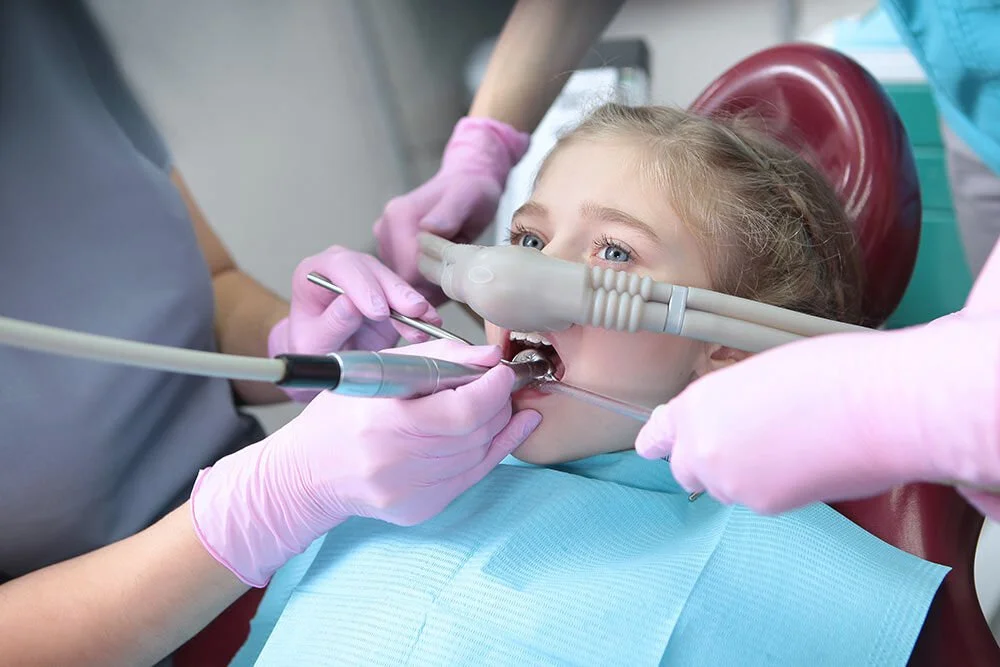
Dental treatment with sedation serves as a vital clinical tool to ensure patient compliance and safety under these specific scenarios:
- For individuals struggling with extreme, unmanageable dental phobia or needle panic,
- When patients suffer from a severe gag or vomiting reflex triggered by dental instruments touching oral tissues,
- For pediatric or adult patients with physical or developmental disabilities who cannot remain still in the chair,
- When consolidating multiple complex treatments into a single extended appointment,
- To prevent sudden spikes in blood pressure (hypertensive patients) by completely neutralizing emotional stress.
Critical Rules to Follow After Sedation
As the sedative agents are gradually metabolized by the liver, your physical coordination and reaction speeds require time to return to baseline. After sedation, patients must carefully track these recovery guidelines:
- Companion Requirement: Patients should absolutely not be sent home alone after leaving the clinic, as they may experience drowsiness or mild dizziness. A companion must be present.
- Driving Prohibited: Driving a motor vehicle or operating machinery requiring concentration is strictly prohibited for the first 24 hours after the procedure.
- Alcohol and Drug Consumption: To avoid interaction with residual sedative medications in the body, alcohol should not be consumed for the first 24 hours, and muscle relaxants should not be used without the doctor's knowledge.
- Rest: Spend the first day resting at home instead of going to work. Focus on eating light, liquid, and warm foods.
Is Sedation Anesthesia Risky?
Safety is a paramount concern for our international patients evaluating oral surgery options. So, is sedation anesthesia risky?
Clinical data confirms that when administered by a certified anesthesiologist who constantly tracks vitals via digital telemetry inside a fully equipped clinical facility, sedation is exceptionally safe, with near-zero risk profiles. Because drug levels can be modified second-by-second to match patient responses, its overall complication rate is vastly lower than general anesthesia.
What Do Dental Sedation Patients Experience?
Reviewing clinical tracking data, dental sedation patients consistently report a high level of satisfaction regarding their appointments. The universal feedback among individuals who previously skipped the dentist for decades is that they only remember the initial tiny pinch of the IV line. The next conscious memory they retain is waking up with their multi-unit implants or dental crowns fully completed, having felt zero vibrational drilling noises, pressure, or sharp sensations.
Frequently Asked Questions
Is performing dental treatments under sedation safe for young children?
Yes, it is highly safe. In pediatric dentistry (pedodontics), sedation is frequently utilized for children who exhibit unmanageable combativeness or those requiring full-mouth restorations due to severe early childhood caries. Preventing early dental trauma is vital for a child’s long-term psychological health.
Exactly how many hours must I fast before a dental sedation session?
Adult patients must remain completely fasting for at least 6 to 8 hours before the procedure. This means absolutely no solid food, snacks, juices or water can be consumed to ensure safe airway management during sleep.
Does a patient experience dreams while under deep dental sedation?
Yes, the vast majority of patients under deep conscious sedation report experiencing their treatment window as a highly pleasant, deep, and comforting dream cycle, waking up feeling thoroughly refreshed as if they just had a deep nap.
Can intravenous dental sedation be performed if I currently have a cold or flu?
If a patient has severe nasal congestion, a heavy productive cough, or active respiratory fluid buildup due to the flu, sedation must be postponed. Because the patient must maintain their own airway naturally, clear nasal passages are mandatory. The procedure is safely rescheduled once the respiratory tract is completely healed.
About the Author