


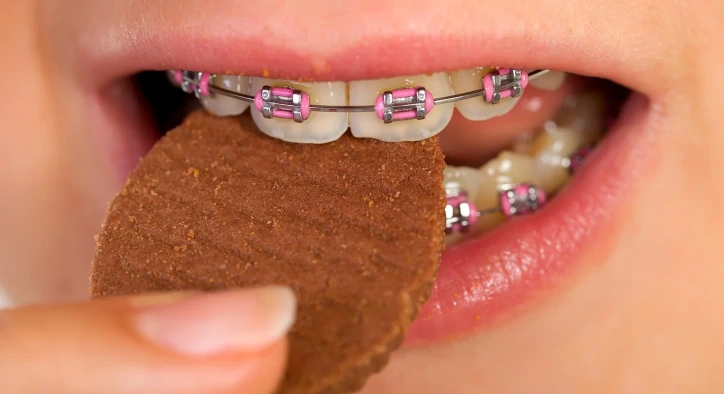
Eating with Braces Guide: What to Eat, What to Avoid & Week 1
Don't put off your smile. Message us now to discuss your treatment options with our expert dentists.
WhatsAppOrthodontic therapy using fixed appliances (braces) represents the gold standard for correcting dental crowding, restoring ideal arch relationships, and establishing aesthetic smile parameters. However, bonding brackets and engaging archwires onto tooth enamel immediately alters intraoral mechanics, plaque retention, and masticatory forces. Following the initial bonding appointment, the primary concern for patients is mastering the rules of eating with braces.
Fixed appliances alter how chewing forces are distributed across periodontal structures. Inappropriate dietary choices can shear off brackets, distort archwires, extend total treatment duration by months, and trigger acute masticatory discomfort. Conversely, adhering to proper dietary guidelines ensures a smooth, efficient, and comfortable treatment journey. This comprehensive clinical guide covers does braces stop you from eating, addresses are braces removed when eating, and details practical techniques on how to eat with braces.
Table of Content
- Does Braces Stop You from Eating?
- Are Braces Removed When Eating?
- How Long After Getting Braces Can You Eat?
- What to Eat the First Week of Braces: Soft Food Recommendations
- What Not to Eat with Braces: High-Risk Foods List
- How to Eat with Braces: Masticatory Techniques
- Managing Pain When Eating with Braces
- Safe vs. Prohibited Foods for Braces
- Frequently Asked Questions
Does Braces Stop You from Eating?
A primary concern voiced by prospective orthodontic patients is: does braces stop you from eating?
From a clinical standpoint, the answer is no; braces do not stop you from eating. Patients can comfortably consume a balanced, nutrient-dense diet containing all necessary proteins, carbohydrates, fats, vitamins, and minerals throughout active treatment. However, braces require modifying food preparation and consumption techniques. By making simple dietary adjustments, complete nutritional function is fully maintained.
Are Braces Removed When Eating?
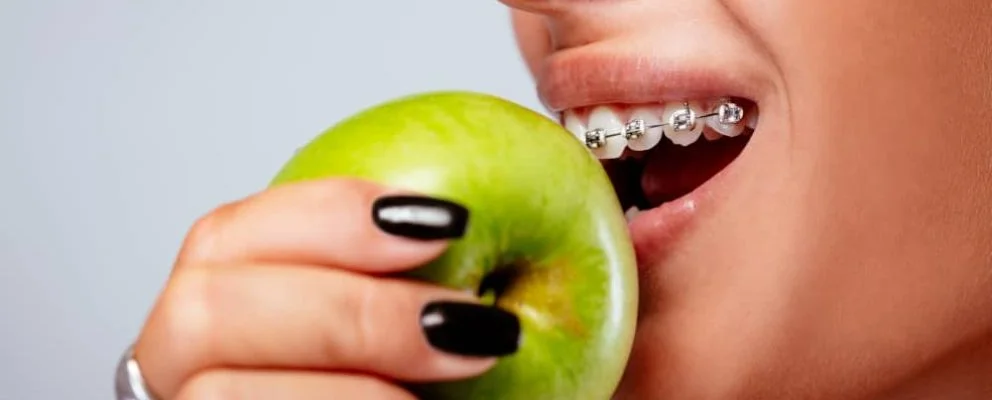
Patients frequently ask: are braces removed when eating?
The answer depends entirely on the type of orthodontic appliance being utilized:
- Fixed Braces (Metal or Ceramic Brackets): Fixed brackets are bonded to enamel using composite resin adhesives. Therefore, fixed braces are NOT removed when eating; all meals are consumed with the appliances in place.
- Clear Aligners (Invisalign, etc.): When undergoing treatment with removable clear aligners, the trays are removed before eating meals or drinking hot/colored beverages, and reinserted after brushing.
How Long After Getting Braces Can You Eat?
Patients routinely ask their orthodontist: how long after getting braces can you eat?
Modern light-cured composite resins used to bond brackets harden instantly upon exposure to curing lights. Therefore, patients can eat immediately (within 1 to 2 hours) following their bonding appointment. However, because mild dental tenderness begins within a few hours, it is best to start with soft, lukewarm foods for the first few meals.
What to Eat the First Week of Braces: Soft Food Recommendations
When archwires are engaged, they deliver physiological forces that trigger mild, temporary inflammation within the periodontal ligament (PDL). This initial biological response causes tooth tenderness under masticatory pressure. Therefore, knowing what to eat the first week of braces is vital for comfort.
Ideal First-Week Soft Food List:
- Soups & Broths: Lukewarm lentil, tomato, vegetable, or chicken broths (avoid piping hot temperatures).
- Purees & Soft Vegetables: Mashed potatoes, steamed squash, soft carrots, cauliflower, and mashed avocado.
- Protein Sources: Tender ground meats, soft meatballs, scrambled eggs, poached fish, and soft cheeses.
- Dairy & Cold Desserts: Smooth yogurt, kefir, puddings, smoothies, and ice cream (cold temperatures help soothe initial periodontal inflammation).
- Grains & Pastas: Well-cooked pasta, noodles, soft rice, and oatmeal.
What Not to Eat with Braces: High-Risk Foods List
Over 90% of emergency bracket debonding episodes stem from improper dietary choices. Every broken bracket halts tooth movement and adds 3 to 4 weeks to overall treatment time. Here is the clinical rationale behind what not to eat with braces:
- Hard Nuts & Seeds: Whole almonds, hazelnuts, walnuts, peanuts, and pumpkin seeds (exert direct point-loading that shears brackets off enamel).
- Sticky & Chewy Sweets: Chewing gum, caramels, taffy, gummy candies, and licorice (wrap around brackets and archwires, making hygiene impossible and bending wires).
- Hard Fruits & Vegetables Eaten Whole: Biting directly into whole apples, raw carrots, pears, or corn on the cob. (These are not banned entirely; they must be cut into small, bite-sized pieces and chewed with back molars).
- Hard Crusts & Crunchy Snacks: Hard pizza crusts, bagels, pretzels, taco shells, and ice cubes.
- Pitted Foods: Whole olives, cherries, and plums (biting unexpectedly into a pit can break a bracket; remove pits before eating).
- Sugary & Carbonated Beverages: Colas, sodas, and energy drinks (degrade bracket adhesive and create permanent white-spot enamel decalcification lesions).
How to Eat with Braces: Masticatory Techniques
Mastering how to eat with braces requires adapting daily chewing habits. Key clinical eating with braces tips include:
- Never Biting with Front Teeth: Do not bite directly into burritos, sandwiches, burgers, or fruit with your incisors. Cut all foods into small, bite-sized portions using a knife and fork.
- Chew Exclusively with Back Molars: Place cut portions directly onto posterior molar surfaces for grinding.
- Chew Slowly and Deliberately: Rapid chewing increases the risk of accidentally biting down on a hard piece of food or bracket.
- Prepare Foods Thoughtfully: Strip corn off the cob, remove meat from bones, and slice all firm fruits into thin wedges.
Managing Pain When Eating with Braces

Experiencing mild pain when eating with braces during the first 3 to 4 days following initial bonding or routine wire adjustments is a normal biological response. This discomfort stems from temporary compression of the periodontal ligament space.
Strategies to Relieve Pain When Eating:
- Cold Drinks & Ice Cream: Cold temperatures temporarily soften heat-activated NiTi archwires, reducing force delivery and soothing inflamed periodontal tissues.
- Over-the-Counter Analgesics: Acetaminophen-based analgesics can be used for severe tenderness if approved by your doctor (avoid excessive NSAIDs like Ibuprofen if possible, as they can slightly slow rate of orthodontic tooth movement).
- Apply Orthodontic Relief Wax: If brackets rub against mucosal tissue while chewing, place a small pea-sized piece of orthodontic wax over the sharp bracket to eliminate mechanical friction.
Safe vs. Prohibited Foods for Braces
Use this dietary comparison table as a daily reference guide:
|
Food Category |
High-Risk / Prohibited Form |
Safe & Recommended Form |
|
Fruits |
Whole apples, raw pears (Biting directly) |
Cut into small, thin slices or grated |
|
Vegetables |
Raw carrots, corn on the cob |
Steamed/boiled vegetables, loose corn kernels |
|
Meats & Proteins |
Bone-in ribs, tough steaks, jerky |
Ground meat, soft meatballs, poached fish, shredded chicken |
|
Breads & Grains |
Crusty French bread, bagels, hard pizza crusts |
Soft sandwich bread, cooked pasta, soft rice |
|
Nuts & Seeds |
Whole almonds, hazelnuts, peanuts |
Smooth peanut butter, ground nut powders in smoothies |
|
Snacks & Sweets |
Caramels, gummy candies, chewing gum, chips |
Smooth puddings, yogurt, applesauce, ice cream |
Frequently Asked Questions
What should I do immediately after eating with braces?
You must brush your teeth after every meal and snack. Trapped food debris around brackets fosters rapid plaque accumulation, leading to decalcification (white spots), gingival enlargement, and halitosis. Use interdental brushes (proxabrush) and a water flosser to thoroughly clean beneath archwires and around bracket bases.
What should I do if a bracket breaks while eating?
If a bracket comes loose while eating, save the loose piece if it detaches and contact your orthodontist to schedule a repair appointment. If a loose wire pokes your cheek, apply a small piece of orthodontic wax over the wire tip or gently tuck it away using a sterile Q-tip. Never leave a broken bracket unaddressed, as tooth movement stops on that tooth.
Can patients with aesthetic ceramic or sapphire brackets eat foods that stain?
Clear ceramic and sapphire bracket bodies do not stain. However, the clear elastic ligatures (ties) holding the archwire can absorb pigments from turmeric, curry, mustard, red wine, coffee, and tobacco, turning yellow. Rinse or brush immediately after consuming pigmented items. Stained elastic ties are replaced with fresh ones at each monthly adjustment.
How many days after getting braces can I return to a regular soft-food diet?
Periodontal sensitivity peaks within 24 to 48 hours and subsides significantly within 3 to 7 days. Most patients transition comfortably to a standard soft-food diet by the end of the first week.
About the Author