


Embedded Canine Tooth Guide: Surgery, Extraction and Braces Process
Don't put off your smile. Message us now to discuss your treatment options with our expert dentists.
WhatsAppIn human oral anatomy, the canine teeth positioned at the corners of the dental arch serve as the aesthetic pillars of a smile while providing exceptional mechanical strength due to their long root architecture. Canines do not merely tear food; they govern "canine guidance," a critical biomechanical mechanism that protects the temporomandibular joint (TMJ) during lateral jaw movements. However, due to dental arch crowding, delayed or premature loss of primary teeth, ectopic eruption pathways, or genetic factors, these crucial teeth sometimes fail to erupt and remain trapped deep within the jawbone or beneath the gingiva.
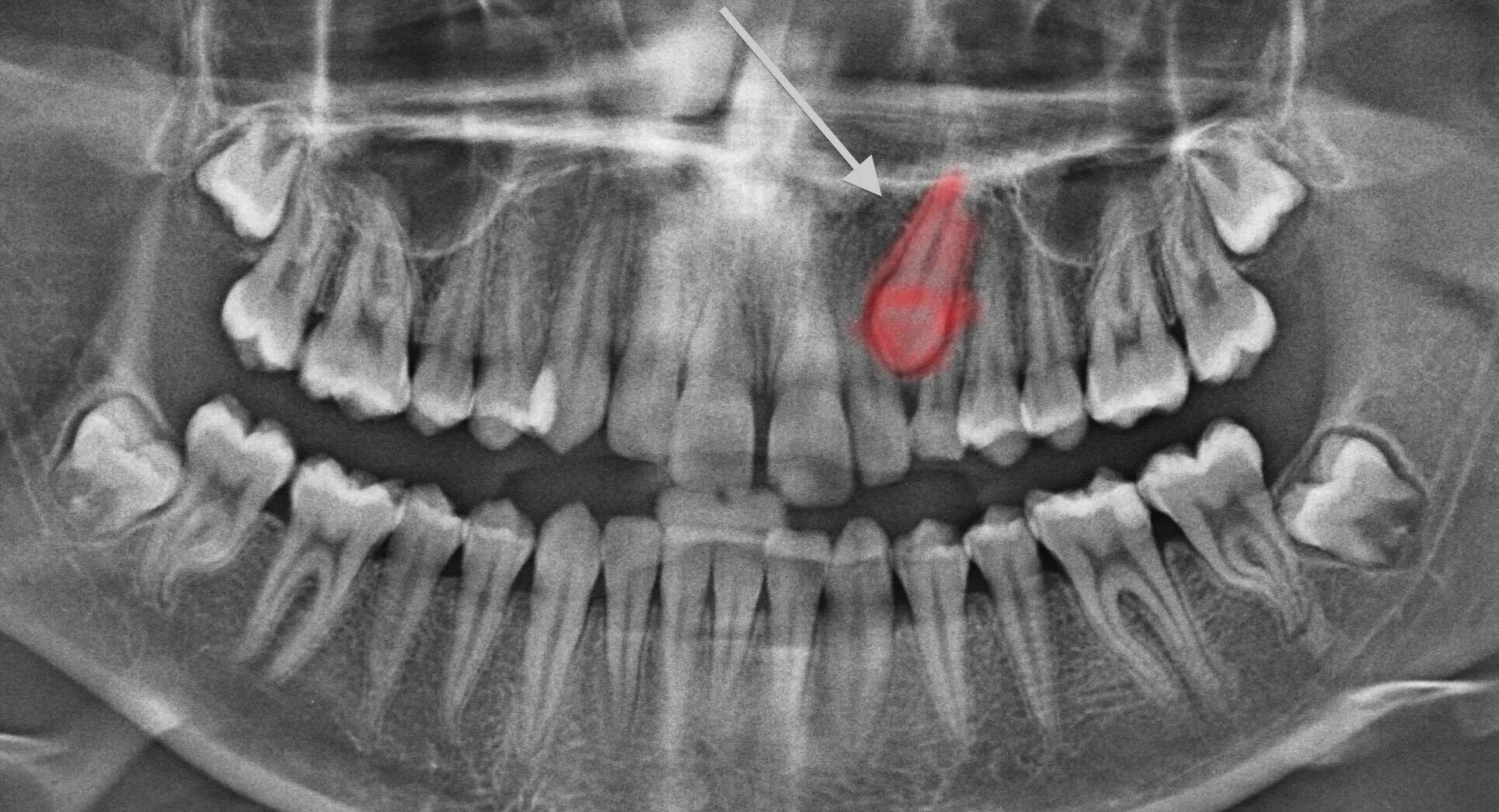
In clinical dentistry, this condition is termed an embedded canine tooth (impacted canine). Second only to third molars, maxillary canines are the most frequently impacted teeth in the human skeleton. Whether a primary canine persists in the arch while the permanent canine remains embedded palatally or labially, this anomaly requires meticulous interdisciplinary management. This comprehensive master guide covers embedded canine tooth treatment workflows, addresses does an embedded canine tooth erupt on its own, analyzes how long does orthodontic traction take for an embedded canine tooth, details embedded canine tooth surgery and embedded canine tooth extraction, and outlines what happens if an embedded canine tooth is not extracted.
Table of Content
- What is an Embedded Canine Tooth?
- Does an Embedded Canine Tooth Erupt on Its Own? Etiology
- Embedded Canine Tooth Treatment Options
- How Long Does Orthodontic Traction Take for an Embedded Canine Tooth?
- Surgical Protocols: Embedded Canine Tooth Surgery and Extraction
- Risks of Omission: What Happens If an Embedded Canine Tooth Is Not Extracted?
- Guidelines for Recovery: After Embedded Canine Tooth Surgery
- Comparative Matrix: Surgical Exposure vs. Extraction
- Frequently Asked Questions
What is an Embedded Canine Tooth?
In orthodontic and oral surgery literature, the clinical definition of an embedded canine tooth is this: A canine tooth that has completed its root development but fails to erupt into its ideal position within the dental arch past its normal eruption window (typically ages 10 to 13) due to physical barriers, crowding, or severe ectopic angulation.
Canine teeth support the facial aesthetics of the "canine eminence," maintaining lip fullness and smile symmetry. When a canine remains embedded, its intraosseous presence can exert pressure on the roots of neighboring lateral incisors, causing severe root resorption or dental crowding.
Does an Embedded Canine Tooth Erupt on Its Own? Etiology
A question frequently presented by patients and parents is: does an embedded canine tooth erupt on its own?
From a biological standpoint, once the normal eruption window (ages 10 to 13) has passed, the root apex has closed, and the surrounding bone has dense mineralization, the answer to does an embedded canine tooth erupt on its own is unfortunately no. An embedded canine that has lost its eruptive force or is angulated horizontally within the palatal bone cannot guide itself into the arch without combined surgical and orthodontic intervention.
Causes of Canine Impaction
- Dental Arch Crowding: Inadequate jaw growth leading to insufficient space along the dental arch.
- Retention of Primary Canines: Failure of primary canine roots to resorb, blocking the eruption pathway.
- Genetic Factors: Familial history of impacted teeth or skeletal palatal constriction.
- Anatomical Barriers: Dense bone matrices, odontogenic cysts, or supernumerary teeth blocking eruption.
Embedded Canine Tooth Treatment Options
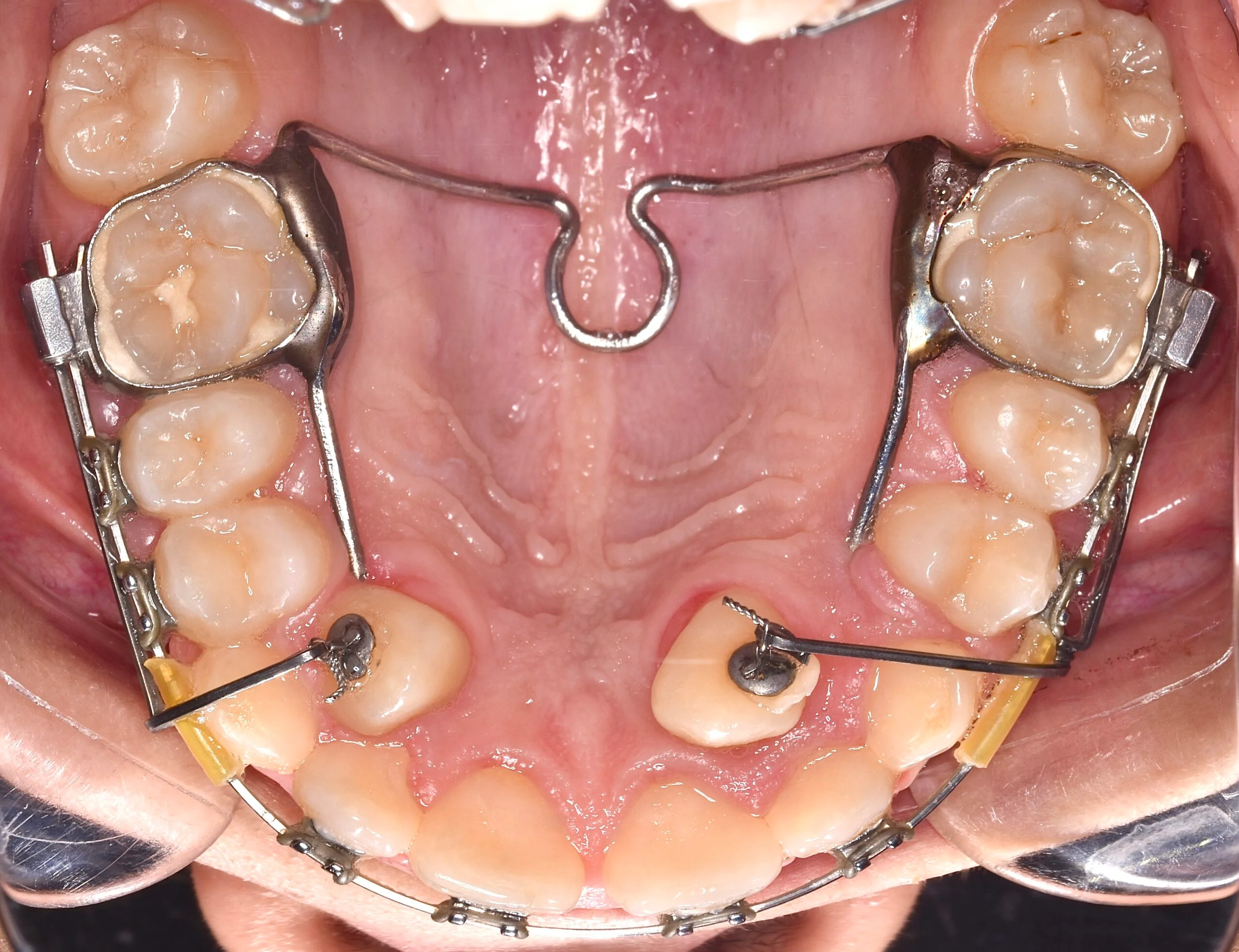
Depending on patient age, impaction depth, ectopic angulation, and proximity to adjacent tooth roots, three primary embedded canine tooth treatment pathways are utilized:
1. Surgical Exposure and Orthodontic Traction
If the canine's angulation is favorable and the patient is young, the gold-standard treatment is surgical exposure combined with orthodontic traction. An oral surgeon exposes the crown of the embedded tooth by removing overlying bone. An orthodontic bracket with a small chain is bonded to the tooth. The orthodontist applies controlled traction forces to guide the tooth into the arch over several months.
2. Embedded Canine Tooth Extraction
If the canine is embedded deep within the bone, angulated horizontally, ankylosed (fused to the bone), or causing severe root resorption of adjacent teeth, a surgical embedded canine tooth extraction is indicated.
3. Monitoring and Radiographic Observation
If the embedded tooth presents no cystic changes, poses no threat to adjacent roots, and the patient declines active treatment, the tooth may be observed via annual panoramic radiographs.
How Long Does Orthodontic Traction Take for an Embedded Canine Tooth?
When orthodontic traction is selected, patients frequently ask: how long does orthodontic traction take for an embedded canine tooth?
- Total Orthodontic Timeline: Surgically exposing an embedded canine and guiding it completely into the arch typically takes 18 to 30 months (1.5 to 2.5 years) of comprehensive orthodontic treatment.
- Traction Phase: The initial phase of moving the tooth out of the bone to the gingival margin takes approximately 6 to 12 months, while the remaining time focuses on alignment and bite mechanics.
- Prognostic Variables: Patient age (younger patients exhibit higher bone turnover, resulting in faster tooth movement), impaction depth, and bone density.
Surgical Protocols: Embedded Canine Tooth Surgery and Extraction
Our clinical protocols for embedded canine tooth surgery and embedded canine tooth extraction are executed painlessly through these structured steps:
A. Surgical Exposure for Orthodontic Traction
- 3D Volumetric Mapping: A 3D CBCT scan maps whether the impacted canine is located palatally or labially.
- Local Anesthesia: The surgical site is fully numbed using local anesthetics.
- Bone Removal and Bonding: A small mucoperiosteal flap is reflected, and overlying bone is removed to expose the crown. An orthodontic bracket connected to a gold chain is bonded to the crown. The flap is sutured, leaving the chain extending into the oral cavity.
B. Surgical Extraction: How Is an Embedded Canine Tooth Extracted?
So, how is an embedded canine tooth extracted?
When extraction is indicated, the surgeon reflects a flap under local anesthesia and removes overlying bone. To protect adjacent roots and preserve alveolar bone, the tooth is sectioned into smaller pieces using specialized surgical burs (sectional extraction) and carefully removed. The socket is curetted, packed with a bone graft if needed, and closed with sutures.
Risks of Omission: What Happens If an Embedded Canine Tooth Is Not Extracted?
When patients delay care out of surgical anxiety, evaluating what happens if an embedded canine tooth is not extracted reveals several significant biological risks:
- Resorption of Adjacent Roots: An embedded canine can press against the roots of neighboring lateral and central incisors, causing permanent root resorption and potential loss of healthy teeth.
- Dentigerous Cyst Formation: The follicle surrounding the crown of an embedded tooth can fill with fluid, expanding into a large dentigerous cyst that resorbs surrounding jawbone.
- Arch Malocclusion and Crowding: Pressure exerted by an impacted tooth can cause crowding and misalignment across the entire arch.
- Recurrent Infections: Partially erupted canines trap bacteria under the gum tissue, leading to localized pericoronitis, pain, and facial swelling.
Guidelines for Recovery: After Embedded Canine Tooth Surgery
To ensure comfortable healing after embedded canine tooth surgery, adhere to these guidelines:
- Cold Compress: Apply external ice packs over the cheek for 10 minute intervals during the first 24 hours to minimize facial swelling.
- Dietary Care: Maintain a soft, lukewarm diet for the first 48 hours. Avoid hot, spicy, acidic, or crunchy foods, and chew on the unoperated side.
- Oral Hygiene: Use prescribed chlorhexidine mouthwashes starting the day after surgery. Brush unoperated teeth normally while avoiding direct trauma to the suture line.
- Protect the Sutures: Avoid pulling your lips or cheeks outward to inspect the surgical site, as this can disrupt the suture line.
Comparative Matrix: Surgical Exposure vs. Extraction
Compare the clinical pathways of both treatment options below:
|
Technical Criteria |
Surgical Exposure & Orthodontic Traction |
Embedded Canine Tooth Extraction |
|
Primary Clinical Goal |
Guide the natural canine into the arch |
Remove the problematic embedded tooth |
|
Average Treatment Duration |
18 to 30 Months (Orthodontic phase) |
Single 30-to-45-minute surgical session |
|
Preserves Natural Tooth Sequence? |
Yes (Natural canine occupies its proper space) |
No (May require a future dental implant) |
|
Ideal Patient Age |
Younger patients (Ages 12 to 25) |
Older adults or ankylosed cases |
|
Adjacent Root Considerations |
Carefully monitored during traction |
Adjacent roots protected during removal |
|
Post-Operative Recovery |
7 to 10 Days (Suture clearance phase) |
7 to 10 Days |
Frequently Asked Questions
Will I feel pain during embedded canine tooth surgery?
No. High-potency local anesthetics fully numb the jawbone and soft tissues, ensuring you feel no pain during surgery. You will feel only light tactile pressure or instrument vibrations; pain signals are biologically blocked.
My primary canine is still firm at age 14. Could a permanent tooth be embedded beneath it?
Yes, this is very likely. If a primary canine has not shed or loosened by age 13 or 14, the underlying permanent canine is frequently embedded or misaligned within the jawbone. A panoramic X-ray should be taken promptly to confirm the diagnosis.
How is the space restored if an embedded canine tooth is extracted?
If an embedded canine cannot be aligned orthodontically and is extracted, the resulting space can be closed orthodontically by shifting adjacent teeth or restored using a dental implant to rebuild natural aesthetics and chewing function.
When are sutures removed after embedded canine surgery?
If non-resorbable micro-sutures were placed, they are gently and painlessly removed by your surgeon 7 to 10 days after surgery.
About the Author