


Jaw Clicking: Causes, Chewing Popping, Exercises & Relief
Don't put off your smile. Message us now to discuss your treatment options with our expert dentists.
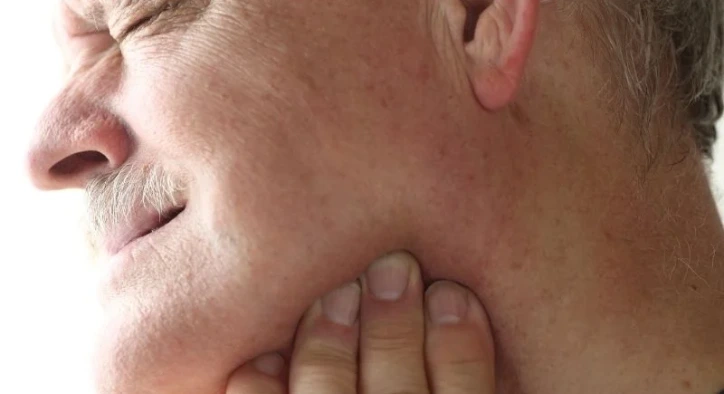
WhatsAppBiomechanically, the most complex, hard-working, and bilaterally coordinated joint complex in the human body is the temporomandibular joint (TMJ). Positioned bilaterally anterior to the external auditory canals, this hinge-sliding joint comprises the mandibular condyle, the temporal articular fossa, and an interposed fibrocartilaginous articular disc that cushions mechanical contact. In a physiologically stable joint, speaking, mastication, and deglutition occur smoothly and silently. However, when collateral anchoring ligaments loosen or stretch, the disc displaces, typically anteromedially. As the mandible moves, the condyle translates over the thick posterior rim of this displaced disc, producing an audible click, snap, or pop widely recognized as jaw clicking.
While many individuals overlook occasional early clicks, joint instability can advance into chronic pain, open or closed joint locking, and reduced mouth opening.
Table of Content
- What Is Jaw Clicking?
- What Causes Jaw Clicking?
- Jaw Clicking When Eating: Functional Chewing Stress
- Jaw Clicking When Yawning and Joint Locking Risks
- Jaw Clicking When Opening Mouth: Reciprocal Patterns
- Can Jaw Clicking Be Treated?
- Jaw Clicking Exercises: Controlled Physical Therapy
- Jaw Clicking Treatment: Clinical Care Protocols
- Comparative Matrix: Stages of TMJ Internal Derangement
- Frequently Asked Questions
What Is Jaw Clicking?
Acoustic sounds originating from the temporomandibular joint reflect specific internal stages of joint dysfunction:
- Reciprocal Click: A crisp, distinct clicking sound heard upon opening and closing. This indicates an anterior disc displacement with reduction: the disc slips off the condyle at rest, but pops back into normal anatomical position during mandibular depression. This represents an early, highly treatable stage.
- Dull Thud or Pop: A lower-frequency, resonating sound occurring during wide mandibular excursion, such as taking a large bite. It indicates hypermobility, where ligaments permit the condyle to translate near or beyond the articular eminence.
- Crepitus (Grating / Gravel Sound): A dry, grinding, or crackling noise resembling footsteps on gravel. This sound indicates progressive loss or perforation of the articular disc, where denuded condylar and temporal bone surfaces rub directly together, characteristic of degenerative osteoarthritis.
What Causes Jaw Clicking?
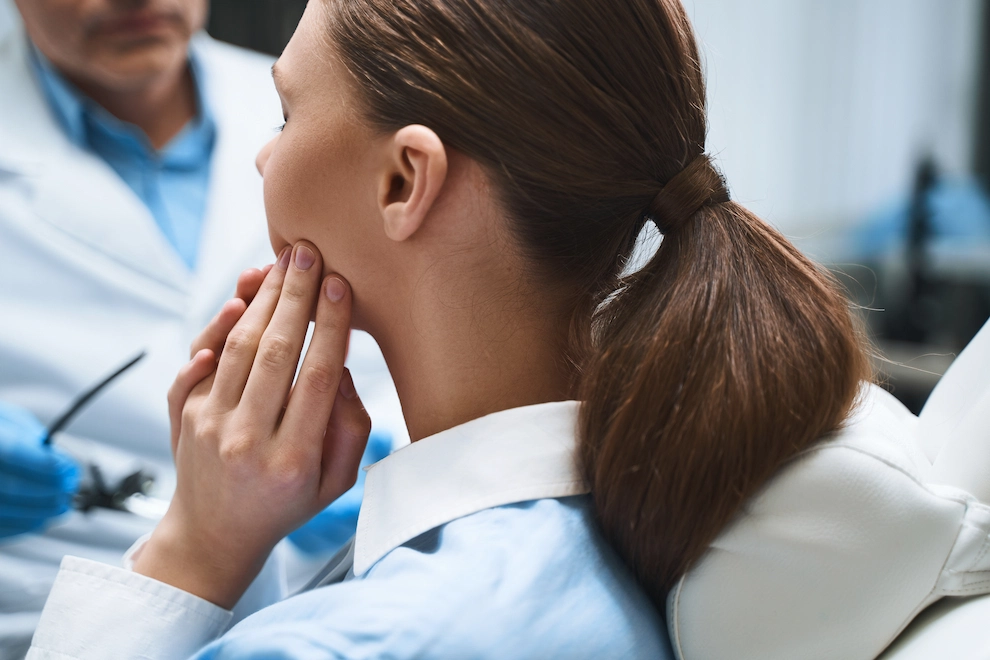
Identifying what causes jaw clicking involves evaluating six primary contributing factors:
- Nocturnal Bruxism and Clenching: Involuntary clenching or grinding during sleep generates excessive sustained loads on the TMJ capsule, stretching the retrodiscal tissues and allowing the disc to slip anteriorly.
- Malocclusion and Posterior Tooth Loss: Losing posterior premolars or molars disrupts vertical occlusal stops, shifting masticatory force distribution and seating condyles deeper into the glenoid fossa.
- Macrotrauma and Microtrauma: Direct impacts to the jaw, motor vehicle accidents, whiplash, or prolonged open-mouth procedures (such as complicated third molar extractions under general anesthesia) can strain joint ligaments.
- Forward Head Posture: Extended screen time with a forward head posture tightens cervical musculature and pulls the suprahyoid muscles, seating the mandible in a retruded position.
- Habitual Unilateral Chewing and Hard Foods: Continuously chewing gum, hard crusts, or ice on one side exerts asymmetrical mechanical wear on that joint.
- Stress and Hyperactive Pterygoid Spasms: Chronic emotional anxiety leads to hyperactivity in the superior belly of the lateral pterygoid muscle, which inserts into the articular disc and pulls it anteriorly.
Jaw Clicking When Eating: Functional Chewing Stress
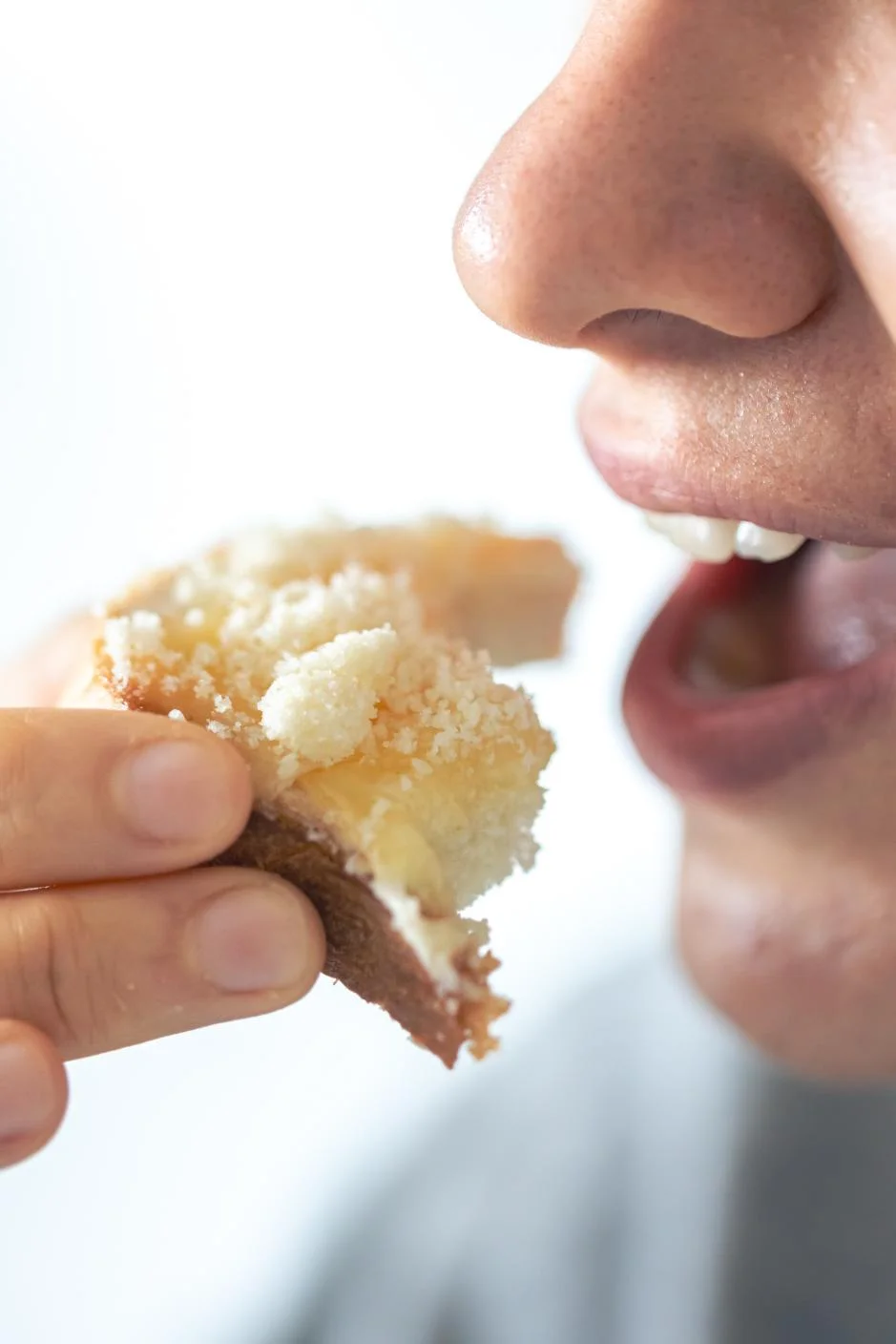
A common everyday complaint is jaw clicking when eating:
- Normal chewing involves dynamic multidirectional translation and lateral rotation.
- If the disc is displaced, the condyle clicks across the disc band with each chewing stroke, creating repetitive popping sounds.
- When chewing clicks are accompanied by acute preauricular pain, the vascular, innervated retrodiscal tissue behind the disc is being compressed between opposing bone surfaces. Patients should switch to a softer diet and avoid chewing tough foods.
Jaw Clicking When Yawning and Joint Locking Risks
Experiencing jaw clicking when yawning is an important clinical warning:
- Yawning forces the mandible to its maximal functional translation limit.
- When structural ligaments are loose, wide opening produces a loud pop as the condylar head translates over the articular eminence.
- The chief clinical risk is open locking (subluxation), where the condyle translates forward and cannot return behind the eminence, leaving the patient unable to close their mouth. When yawning, placing a hand under the chin helps prevent excessive opening.
Jaw Clicking When Opening Mouth: Reciprocal Patterns
Noticing jaw clicking when opening mouth and jaw clicking when opening and closing mouth confirms reciprocal disc displacement:
- Opening Phase: As the condyle translates forward, it jumps over the posterior rim of the anteriorly displaced disc with a click, restoring normal alignment during wide opening.
- Closing Phase: As the mandible retrudes, the disc slips anteriorly again with a softer second click.
- Without intervention, the disc can permanently deform and fail to reduce. In this stage, clicking sounds stop, but the patient develops closed lock, unable to open the mouth wider than one to two fingers. The disappearance of clicking without clinical care often signals progression to closed locking rather than healing.
Can Jaw Clicking Be Treated?
Addressing the central question: can jaw clicking be treated?
Yes, early to moderate TMJ disc displacements can be successfully managed without surgery in eighty to ninety percent of cases.
Primary therapeutic objectives include:
- Restoring physiological disc-condyle relationships and reducing mechanical friction.
- Relaxing spastic masticatory muscles and eliminating associated myofascial pain.
- Halting degenerative micro-trauma before irreversible bone-on-bone crepitus develops.
Jaw Clicking Exercises: Controlled Physical Therapy
Performing targeted jaw clicking exercises at home helps retrain coordinated musculature:
1. Tongue-Up Guided Opening (The Rocabado Technique)
- Rest the tip of your tongue against the roof of your mouth, just behind the upper front teeth.
- Keeping the tongue in contact with the palate, open your mouth slowly and close it, staying within a pain-free range without clicking.
- This limits the condyle to pure rotation, avoiding anterior translation that stresses the disc. Perform six repetitions, six times daily.
2. Isometric Resistant Opening
- Place your thumb underneath your chin.
- Apply gentle upward resistance while slowly opening your mouth against the thumb. Hold for three seconds, then relax. This trains the submental and digastric muscle groups symmetrically.
3. Mirror Alignment Training
- Stand before a mirror and open your mouth slowly, watching to ensure the jaw travels in a straight vertical line without deviating to the left or right.
Jaw Clicking Treatment: Clinical Care Protocols
Comprehensive care for jaw clicking treatment and treatment for jaw clicking when opening mouth involves five progressive stages:
1. Custom Occlusal Splints (Night Guards)
Fabricating a rigid acrylic stabilization or anterior repositioning splint is the standard conservative approach. The splint unloads the joint space, prevents nighttime clenching, and positions the condyle comfortably beneath the disc.
2. Masseter and Pterygoid Botulinum Toxin Injections
When severe bruxism drives joint clicks, injecting small units of botulinum toxin into hyperactive masseter and temporalis muscle bellies reduces involuntary contraction forces, relieving stress on the disc.
3. TMJ Arthrocentesis (Joint Lavage)
When chronic clicks transition to joint locking or persistent inflammation:
- Under local anesthesia, two micro-cannulas enter the superior joint compartment.
- Sterile saline flushes out inflammatory cytokines and breaks micro-adhesions.
- High-molecular-weight hyaluronic acid is injected to lubricate the joint surfaces.
4. Pharmacotherapy and Moist Heat
Muscle relaxants, NSAIDs, and warm moist heat packs help break acute muscular cycles.
5. Open TMJ Surgery (Arthroplasty - Last Resort)
Open surgical disc repair (discopexy) or joint reconstruction is reserved for severe structural disc tears or bony ankylosis unresponsive to conservative therapy.
Comparative Matrix: Stages of TMJ Internal Derangement
|
Stage of Derangement |
Clinical Sound |
Pain & Range of Motion |
Primary Clinical Approach |
|
Stage 1: Early Reduction |
Crisp single or reciprocal click |
Minimal pain, full mouth opening |
Exercises + Soft Diet + Occlusal Splint |
|
Stage 2: Chronic Hypermobility |
Loud, popping dull thud |
Intermittent pain while chewing |
Hard Occlusal Splint + Botox Therapy |
|
Stage 3: Closed Lock (No Click) |
Sound disappears; disc locked ahead |
Severe restriction (under 25 mm) |
Arthrocentesis + Joint Manipulation |
|
Stage 4: Degenerative Crepitus |
Continuous gravel or sand grinding |
Chronic joint ache, morning stiffness |
Hyaluronic Acid Lavage + Surgery |
Frequently Asked Questions
My jaw clicks every time I chew, but it doesn't hurt; do I still need treatment?
Painless clicking indicates early displacement of the articular disc. While immediate invasive surgery is unnecessary, adopting a soft diet, stopping gum chewing, and learning proper jaw exercises can prevent progression to painful disc displacement or closed locking.
Will a clicking jaw heal and disappear on its own?
Stretched or torn joint ligaments cannot spontaneously tighten back to their original tension without clinical support. Left unmanaged, clicking typically continues or worsens, and if the click suddenly vanishes while mouth opening becomes severely limited, the disc may have progressed to a closed lock.
Can TMJ clicking cause tension headaches or ringing in the ears (tinnitus)?
Yes. The temporomandibular joint sits adjacent to the ear canal, sharing common cranial nerve pathways (trigeminal and auriculotemporal nerves). Muscle spasms and inflammation in the TMJ often refer pain to the temples as tension headaches, and can trigger tinnitus or ear fullness.
Is chewing gum bad for a clicking jaw?
Yes. Chewing gum places continuous, repetitive shear stress on the disc and tightens the lateral pterygoid muscles. This aggravates clicking and accelerates ligament stretching; individuals with jaw clicking should avoid gum chewing.
About the Author