


Pain After a Filling: Causes, Duration, Relief & Normalcy
Don't put off your smile. Message us now to discuss your treatment options with our expert dentists.
WhatsAppExcavating carious dental tissue and rebuilding coronal architecture using modern composite resin, glass ionomer, or ceramic inlays represents one of the foundational restorative services in modern operative dentistry. Patients typically seek treatment to eliminate an existing toothache or restore a fractured crown. Administering local anesthesia ensures a comfortable, pain-free chairside appointment. However, as local anesthesia wears off several hours post-treatment, developing a lingering ache, sharp cold sensitivity, or acute biting tenderness can provoke understandable concern.
In clinical practice, one of the most frequent post-operative consultations involves pain after a filling. Patients routinely ask: is there pain after a filling, is pain after a filling normal, what physiological factors provoke this tooth pain after a filling, clinically how long does pain after a filling last, can I take painkillers for pain after a filling, why does pain after a cosmetic filling develop on anterior incisors, and how should clinicians address pain after a temporary root canal filling? This clinical guide explores pulpal pathophysiology, polymerization dynamics, occlusal interferences, and evidence-based relief strategies.
Table of Content
- Is There Pain After a Filling? Is It Normal?
- What Causes Tooth Pain After a Filling?
- How Long Does Pain After a Filling Last? Recovery Timeline
- Pain After a Cosmetic Filling: Anterior Restoration Dynamics
- Pain After a Temporary Root Canal Filling
- Can I Take Painkillers for Pain After a Filling?
- How to Relieve Pain After a Filling: In-Office and Home Solutions
- Comparative Matrix: Normal Post-Operative Sensitivity vs. Pathological Complications
- Frequently Asked Questions
Is There Pain After a Filling? Is It Normal?
Addressing the common inquiries: is there pain after a filling and is pain after a filling normal?
Yes, experiencing mild to moderate sensitivity or transient soreness following a newly placed restoration is a recognized, normal physiological response.
Biological drivers behind expected post-operative discomfort include:
- Mechanical Preparation Trauma: Removing deep decay requires high-speed rotary diamonds and carbide burs working in close proximity to the vital dental pulp. The pulp responds to mechanical instrumentation with transient inflammatory hyperemia.
- Thermal and Vibrational Shock: Friction generated during cavity preparation induces micro-thermal changes within dentinal tubules, shifting intratubular fluid columns.
- Adhesive Chemistry: Total-etch phosphoric acid conditioning and hydrophilic bonding primers temporarily alter dentinal osmotic pressure, transiently sensitizing peripheral A-delta pulpal nerve fibers.
What Causes Tooth Pain After a Filling?
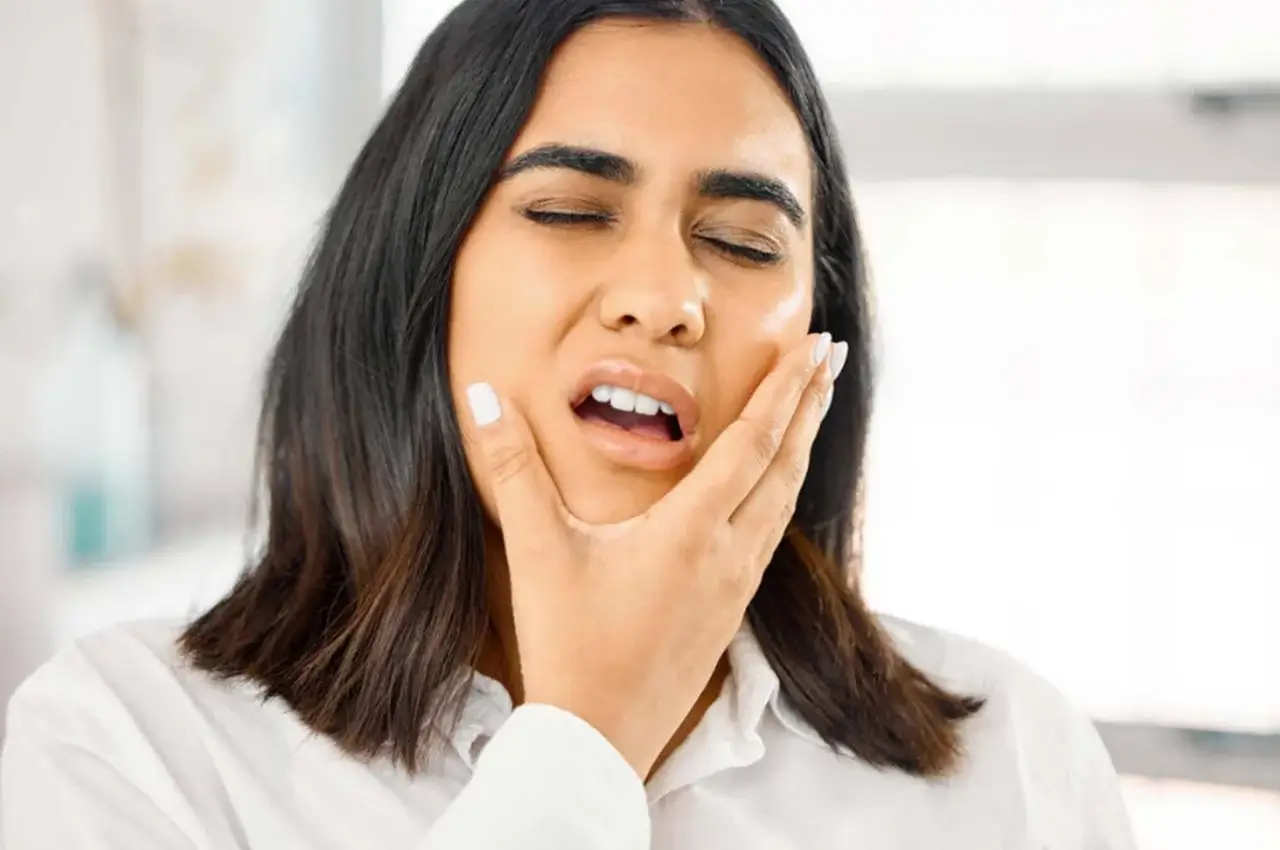
Evaluating tooth pain after a filling involves identifying several common technical and physiological factors:
- Occlusal High Spots (Premature Contact): Because restorative adjustments occur while the patient is under local anesthesia, biting perception is temporarily impaired. Even a discrepancy of a fraction of a millimeter means opposing teeth collide with the filling first during mastication. This localized hyper-occlusion strains the periodontal ligament space, producing sharp, shock-like tenderness when chewing.
- Proximity to Vital Pulpal Tissue (Deep Caries): When decay approaches the pulp chamber, baseline chronic inflammation is already present. Even after meticulous caries removal and placing protective biocompatible liners, the injured pulp requires time to lay down tertiary reparative dentin.
- Composite Polymerization Shrinkage Stress: Resin composites undergo volumetric shrinkage of two to three percent during blue-light photopolymerization. In high C-factor cavities, this contraction pulls opposing cavity walls inward, flexing cuspal enamel and inducing continuous inward hydrostatic tension.
- Thermal Conduction Without Adequate Base: Deep cavities restored without thermal barrier bases (such as resin-modified glass ionomers) transmit extreme cold or hot temperatures directly to pulpal tissues.
- Gingival Papillary Trauma: Interproximal sectional matrix bands, contact rings, and wooden wedges used to establish anatomical contacts can bruise interdental gingival papillae, mimicking deep tooth pain.
How Long Does Pain After a Filling Last? Recovery Timeline
A common question is: how long does pain after a filling last? Clinical recovery typically progresses through defined phases:
- Initial Forty-Eight Hours: Sensation peaks as procedural anesthesia dissipates, combining needle insertion soreness with acute pulpal hyperemia.
- One to Two Weeks: Temperature sensitivity provoked by ice water or hot liquids gradually subsides, resolving within seconds of stimulus removal as pulpal circulation stabilizes.
- Three to Four Weeks: In extensive restorations involving deep dentin, final remineralization and complete symptom resolution may take two to four weeks.
- Persistent or Worsening Discomfort: If severe, spontaneous throbbing pain persists beyond two weeks or wakes you from sleep, the condition has exceeded typical physiological recovery limits.
Pain After a Cosmetic Filling: Anterior Restoration Dynamics
Experiencing pain after a cosmetic filling on anterior incisors involves specific clinical considerations:
- Aesthetic composite bonding requires selective enamel and dentin acid-etching to maximize resin tag micromechanical retention.
- If hybrid layers are slightly disrupted or hydrophilic dentin primers do not seal exposed tubules completely, ambient air movement or cool liquids stimulate exposed fluid tubules, triggering transient stinging.
- Incisal edge composite additions endure high shearing forces during anterior incisal guidance, creating localized flexure stress across the adhesive interface during the initial post-operative days.
Pain After a Temporary Root Canal Filling
Experiencing pain after a temporary root canal filling between endodontic visits involves different biological mechanisms:
- Mechanical Instrumentation Trauma: Cleaning necrotic pulp tissue with rotary endodontic files near the root terminus irritates the apical periodontal ligament, inducing localized apical periodontitis.
- Masticatory Loading on Inflamed Apical Tissue: Biting down compresses the inflamed apical periodontal ligament against surrounding alveolar bone, triggering sharp, localized discomfort.
- Intracanal Antimicrobial Vapor Pressure: Placing intracanal medicaments (such as calcium hydroxide) can produce mild gaseous expansion as antimicrobial action neutralizes bacteria. This soreness is self-limiting and resolves within two to three days.
Can I Take Painkillers for Pain After a Filling?
Patients experiencing post-treatment soreness frequently ask: can I take painkillers for pain after a filling?
- Yes, Clinically Approved for Short-Term Relief: Over-the-counter anti-inflammatory analgesics, such as ibuprofen or acetaminophen, provide reliable relief for post-operative tooth soreness.
- Targeting Pulpal Inflammation: Non-steroidal anti-inflammatory drugs (NSAIDs) such as ibuprofen inhibit prostaglandin synthesis, dampening reversible pulpal hyperemia and speeding recovery.
- Dosage Guidance: Analgesics should serve only as a short-term aid during the first few days. Taking pain medication for weeks can mask occlusal interferences or advancing irreversible pulpitis.
How to Relieve Pain After a Filling: In-Office and Home Solutions
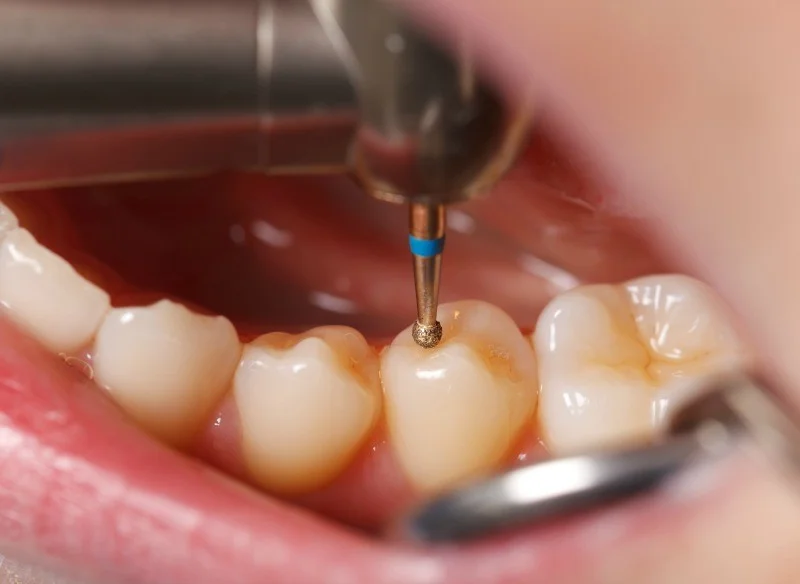
Evidence-based protocols to manage and eliminate restorative discomfort:
1. Occlusal Adjustment (The Primary Treatment)
If discomfort occurs exclusively during chewing, biting, or tapping teeth together, an occlusal high spot is the most likely cause. The clinician uses thin articulating paper to identify the contact point, gently recontouring the restoration with a fine finishing bur in seconds. Once hyper-occlusion is eliminated, ligament inflammation resolves within days.
2. Desensitizing Toothpastes and Topical Fluoride
When temperature sensitivity predominates, brushing with dentifrices containing potassium nitrate, stannous fluoride, or arginine helps occlude exposed dentinal tubules, blunting fluid movement toward sensory nerve endings.
3. Transitioning to Endodontic Therapy (Irreversible Scenarios)
If deep bacterial infiltration has progressed to irreversible pulpitis, characterized by spontaneous, lingering nocturnal throbbing, the pulp cannot self-repair. The restoration must be reopened to perform root canal therapy, saving the tooth from extraction.
Comparative Matrix: Normal Post-Operative Sensitivity vs. Pathological Complications
|
Diagnostic Criteria |
Normal Physiological Sensitivity |
Pathological Complication |
|
Symptom Nature |
Brief zing to cold or hot liquids |
Spontaneous, unprovoked throbbing ache |
|
Mastication Reaction |
Mild awareness under heavy bite |
Sharp, shock-like pain upon chewing |
|
Duration of Stimulus |
Clears within 2 to 3 seconds |
Lingers for minutes or awakens from sleep |
|
Clinical Progression |
Steadily diminishes over days |
Steadily escalates, resistant to analgesics |
|
Primary Etiology |
Reversible pulpal hyperemia |
Occlusal high spot or irreversible pulpitis |
|
Indicated Treatment |
Observation, desensitizing paste |
Occlusal adjustment or root canal therapy |
Frequently Asked Questions
How soon can I safely eat after receiving a new dental filling?
With light-cured composite resin or ceramic restorations, the restorative material reaches full polymerization immediately, allowing chewing right away. However, you must wait until local anesthesia completely wears off (typically two to four hours) before chewing solid foods to avoid accidentally biting your desensitized lips, cheeks, or tongue.
Can I apply aspirin or alcohol directly against an aching filled tooth?
No. Placing crushed aspirin tablets, rubbing alcohol, or garlic cloves directly against gingival margins causes caustic chemical burns and mucosal necrosis. It provides no pulpal relief and creates painful oral ulcerations.
Will an elevated, high filling wear down on its own through chewing?
No. Modern composite resins and dental ceramics are engineered to resist occlusal wear. An occlusal high spot will not wear down safely; instead, it traumatizes the periodontal ligament, risks fracturing opposing enamel, and strains the temporomandibular joint. High spots must be adjusted by your dentist.
Why do sweet foods cause a sharp twinge in my new filling?
Sweet, sugary foods create an osmotic pressure differential along microscopic gaps or patent dentinal tubules. This osmotic gradient draws fluid outward through the tubules, mechanically stimulating odontoblastic processes and triggering a transient twinge.
About the Author