


Should a Gum Abscess Be Drained? Causes, Remedies, and Treatment
Don't put off your smile. Message us now to discuss your treatment options with our expert dentists.
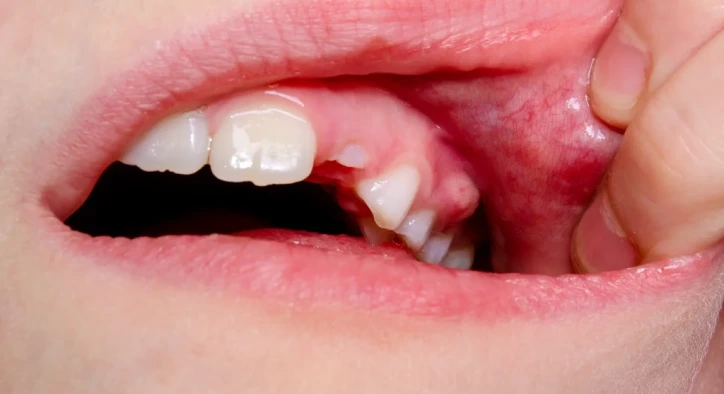
WhatsAppOne of the most alarming, intensely painful dental emergencies is the sudden appearance of a localized, fluctuant swelling filled with purulent exudate along the gingival margin. When pathogenic bacteria breach the subgingival sulcus or necrotic pulpal chamber, they multiply rapidly, triggering a massive migration of host immune leukocytes. The resulting accumulation of dead neutrophils, lysed tissue cellular debris, and viable anaerobic pathogens forms a walled-off pus collection. Clinically classified as a gingival or periodontal abscess, this acute condition is commonly known as a gum abscess or gum boil.
Confronted with a tender, yellowish swelling producing severe throbbing discomfort, patients are often tempted to lance the lesion with a household needle or squeeze it forcefully. However, evaluating should a gum abscess be drained at home reveals substantial medical hazards.
Table of Content
- Should a Gum Abscess Be Drained at Home?
- What Causes a Gum Abscess?
- Clinical Symptoms of a Gum Abscess
- Does a Gum Abscess Heal with Antibiotics?
- What to Do If a Gum Abscess Pops Spontaneously
- How Does a Gum Abscess Heal? Professional Clinical Treatments
- What Is Good for a Gum Abscess? Temporary Home Relief
- Comparative Matrix: Periodontal Abscess vs. Periapical Abscess
- Frequently Asked Questions
Should a Gum Abscess Be Drained at Home?
The fundamental question asked by patients in distress is: Should a gum abscess be drained domestically?
No, an intraoral gum abscess must NEVER be lanced, pierced, or popped at home using needles, fingers, or unsterile tools.
Understanding the severe risks of popping a gum abscess at home involves four critical clinical factors:
- Dissemination into Facial Fascial Planes: Squeezing a fluctuant abscess exerts inward hydraulic pressure, forcing virulent bacteria deeper into the medullary spaces of the alveolar bone, facial muscular spaces, and blood vessels. This can precipitate systemic sepsis or life-threatening Ludwig's angina.
- Secondary Superinfection: Household implements (safety pins, sewing needles) are contaminated with non-oral microorganisms. Introducing these pathogens into denuded soft tissues induces aggressive secondary bacterial infections.
- Irreversible Periodontal Laceration: Uncontrolled puncturing slices through the delicate junctional epithelium and periodontal ligament fibers, driving permanent bone and gum loss.
- Failure to Eliminate the Etiological Source: Draining pus at home provides only temporary pressure relief; the underlying nidus, such as subgingival calculus or a necrotic pulp, remains completely untreated. Within days, the abscess recurs with greater severity.
What Causes a Gum Abscess?
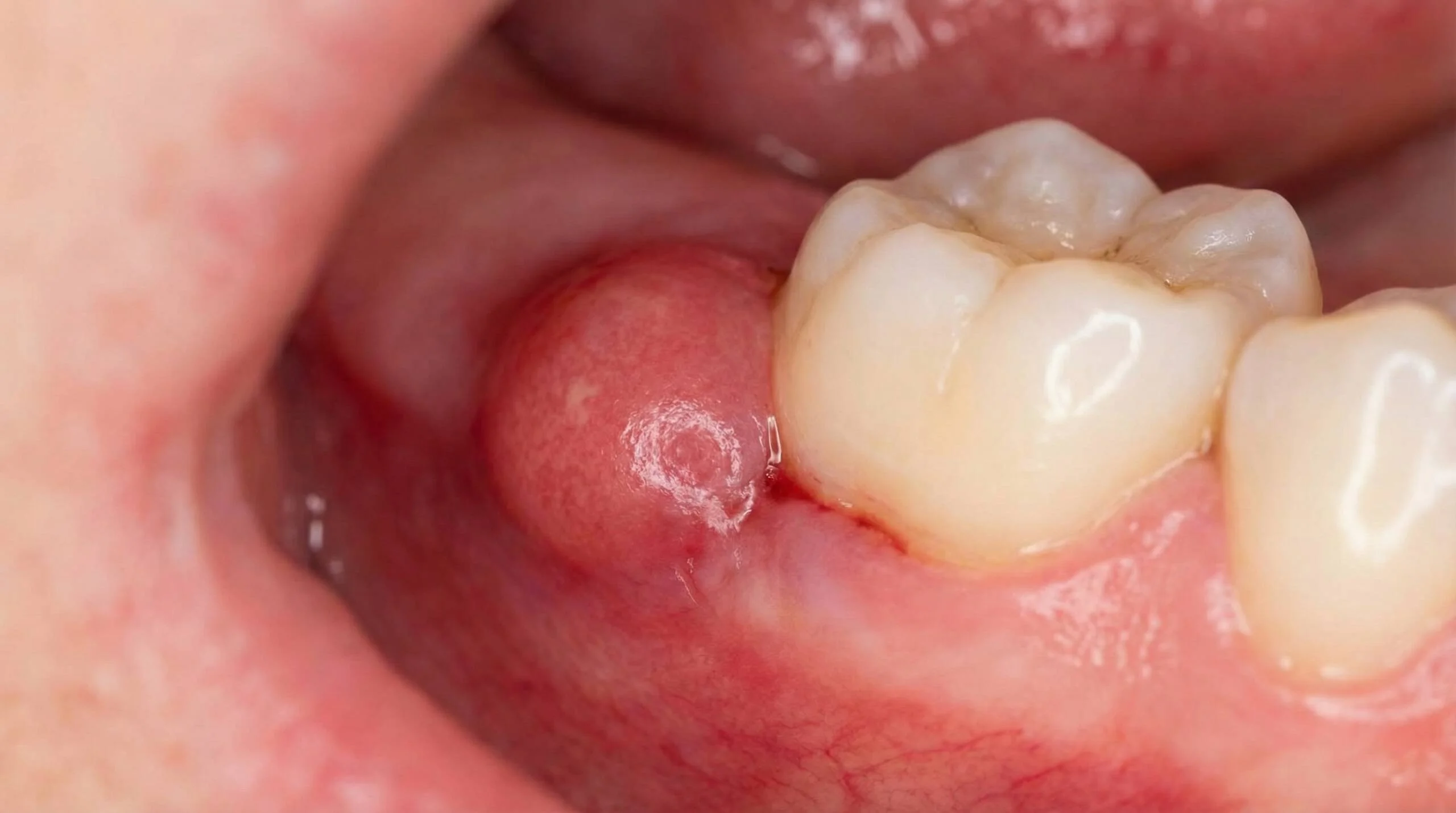
Investigating what causes a gum abscess requires distinguishing between two primary pathogenic origins:
1. Periodontal Abscesses (Gingival & Bone Driven)
- Pre-Existing Periodontal Pockets: Patients suffering from moderate-to-severe periodontitis have deep, narrow soft tissue pockets. When foreign food particles (popcorn hulls, seeds, coarse fibers) become lodged, they block pocket drainage, fueling rapid anaerobic bacterial proliferation.
- Subgingival Calculus Deposition: Untreated calcified tartar extending down the root trunk continuously releases bacterial endotoxins, generating acute suppurative flares.
2. Periapical Abscesses (Pulpal Nerve Driven)
- Untreated Dental Caries: Unchecked bacterial decay penetrates the protective enamel and dentin to infect the vascular dental pulp. Necrotic pulpal degradation travels through the apical foramen, eroding alveolar bone and tracking outward through the cortical plate to manifest as a fluctuant swelling on the gum.
- Failed Endodontic Therapy: Refractory microflora surviving in poorly sealed apical anatomy can re-ignite acute periapical infections years later.
Clinical Symptoms of a Gum Abscess
Hallmark clinical features of acute intraoral suppuration include:
- Severe, Pulsating Throbbing Pain: Lying flat increases intracranial capillary pressure, intensifying localized throbbing that radiates into the ear, jaw, and ipsilateral temporal region.
- Marked Percussion and Biting Sensitivity: Accumulating purulent fluid elevates the tooth slightly out of its alveolar socket; occluding against opposing teeth triggers sharp, electric shock-like distress.
- Foul Taste and Halitosis: Slight drainage of purulent exudate produces a bitter, salty, metallic taste and offensive breath.
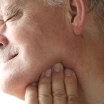
- Facial Asymmetry and Cervical Lymphadenopathy: Progressive swelling distorts cheek contours, and regional submandibular lymph nodes become enlarged, firm, and tender.
- Systemic Pyrexia (Fever): High body temperature and general malaise signal that bacterial endotoxins are provoking a systemic immune response.
Does a Gum Abscess Heal with Antibiotics?
A common and hazardous misconception is asking: does a gum abscess heal with antibiotics alone?
No, systemic antibiotics cannot cure, eradicate, or definitively heal a gum abscess on their own.
The biological reasons are clear:
- Systemic antibiotics circulate via functional vascular beds. A mature abscess consists of a necrotic, avascular fluid collection that systemic medications cannot easily penetrate.
- While antibiotics can temporarily contain spreading cellulitis, they do not eliminate the physical bacteria, calculus, or necrotic debris.
- Without mechanical instrumentation of the contaminated root or root canal system, purulent accumulation inevitably recurs once the antibiotic regimen finishes.
What to Do If a Gum Abscess Pops Spontaneously
If an intraoral abscess ruptures on its own during eating or sleep, knowing what to do if a gum abscess pops is essential:
- Expel the Purulent Drainage: Never swallow discharged purulent fluid; spit it out immediately.
- Warm Hypertonic Saline Rinse: Dissolve one level teaspoon of salt in a glass of warm water and rinse gently. Warm saline promotes drainage, cleanses the wound bed, and provides mild topical antisepsis.
- Refrain from Squeezing: Do not manipulate or compress remaining margins with fingers or cotton swabs.
- Seek Immediate Professional Care: Transient pain reduction following rupture simply reflects decompressed fluid pressure; it does not indicate recovery. Left untreated, the infection continues to resorb underlying bone silently.
How Does a Gum Abscess Heal? Professional Clinical Treatments
Understanding how does a gum abscess heal requires professional intervention through structured gum abscess treatment protocols:
1. Controlled Sterile Incision and Drainage
The clinician achieves profound local anesthesia before creating a micro-incision with a sterile scalpel or entering through the gingival sulcus with an ultrasonic probe. Purulent exudate is evacuated, the lumen is irrigated with sterile saline, and localized pressure drops instantly.
2. Periodontal Debridement and Pocket Curettage
When origin traces to a periodontal pocket, ultrasonic scalers and Gracey curettes debride the contaminated root surface, remove calculus, and flush out impacted foreign debris.
3. Endodontic Root Canal Therapy
If the abscess originates from pulpal necrosis, an access cavity is prepared, necrotic pulp tissue is removed, and root canals are disinfected and hermetically sealed to save the natural tooth.
4. Therapeutic Tooth Extraction
When extensive alveolar bone loss leaves the tooth hopeless or a vertical root fracture is detected, extraction remains the only viable measure to protect systemic health.
What Is Good for a Gum Abscess? Temporary Home Relief
While awaiting an emergency dental visit, understanding what is good for a gum abscess focuses on conservative palliative care:
- Warm Salt Water Rinses: Lowers local microbial load and accelerates passive exudate evacuation.
- External Cold Compresses: Applying cold ice packs intermittently (twenty minutes on, twenty minutes off) against the external cheek constricts local vessels, dampens swelling, and dulls pain. (Never apply external heat, as warmth draws purulence toward facial skin).
- Head Elevation During Sleep: Sleeping propped on two pillows lowers dependent cephalic venous pressure, mitigating throbbing pain.
- Over-the-Counter Analgesics: Anti-inflammatory medications (such as ibuprofen or acetaminophen) help modulate inflammatory pain.
Comparative Matrix: Periodontal Abscess vs. Periapical Abscess
|
Diagnostic Criteria |
Periodontal Gum Abscess |
Periapical Tooth Abscess |
|
Primary Infection Site |
Subgingival pocket & root margin |
Internal dental pulp chamber |
|
Pulpal Vitality Status |
Tooth is typically vital (Alive) |
Tooth is non-vital (Dead/Necrotic) |
|
Character of Discomfort |
Constant, dull, localized to gum |
Acute, throbbing, excruciating bite pain |
|
Anatomical Swelling Zone |
Centered along marginal gingiva |
Apical vestibule near root apex |
|
Definitive Treatment |
Subgingival scaling, curettage, drainage |
Root canal therapy or extraction |
|
Radiographic Presentation |
Vertical/horizontal angular bone loss |
Circular radiolucency around root apex |
Frequently Asked Questions
What happens if I puncture a gum abscess with a needle?
Puncturing an abscess with an unsterile needle drives superficial bacteria into deeper vascular connective tissue, risking severe facial cellulitis or systemic bacteremia. It can also lacerate underlying periodontal ligament attachments without resolving the root cause. Drainage must be conducted exclusively in sterile dental settings.
Can applying crushed garlic or aspirin directly to an abscess cure it?
No. Placing raw garlic, aspirin tablets, or alcohol-soaked cotton balls directly on the gingiva causes chemical burns, mucosal sloughing, and tissue ulceration. These home remedies worsen soft tissue damage and delay proper clinical treatment.
Can a gum abscess resolve without any treatment?
No. An abscess may temporarily rupture and decompress, but the underlying bacterial nidus remains active inside the bone or pocket. Without clinical debridement, the infection continues to destroy bone and will inevitably recur.
Does a gum abscess cause permanent jawbone loss?
Yes. Rapidly multiplying anaerobic bacteria release osteolytic enzymes that break down alveolar bone. If ignored, the resulting bone destruction can compromise the stability of both the affected tooth and adjacent healthy teeth.
About the Author