


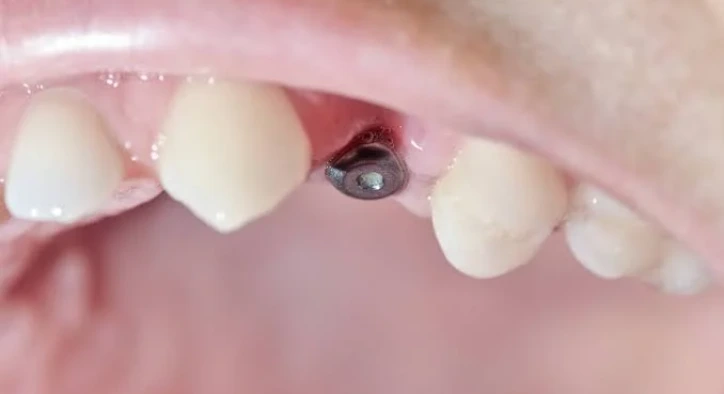
Dental Implant Screw Showing: Causes, Risks & Gum Recession
Don't put off your smile. Message us now to discuss your treatment options with our expert dentists.
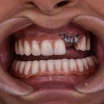
WhatsAppIn modern reconstructive dentistry, titanium dental implants represent the gold standard for replacing missing teeth, restoring biomechanical chewing capacity, and preserving alveolar bone architecture. Following surgical placement, titanium integrates biologically with vital bone cells through osteointegration. Once healed, custom abutments and porcelain or monolithic zirconia crowns mimic the emergence profile of natural teeth. However, months or years post-restoration, some patients observe a grayish metallic hue or threaded metal collar emerging at the cervical gumline. Confronted with this aesthetic and functional change, patients present with the complaint that their dental implant screw showing.
Table of Content
- Why Is a Dental Implant Screw Showing?
- Is an Exposed Implant Screw Dangerous?
- Clinical Signs Accompanying Exposed Implant Components
- Exposed Implant Screw Treatment: Modern Clinical Modalities
- Comparative Matrix: Severity Stages of Exposed Implant Threads
- Preventive Measures to Protect Implant Stability
- Frequently Asked Questions
Why Is a Dental Implant Screw Showing?
In implant dentistry and periodontology, discovering an exposed dental implant screw stems from a combination of anatomical, surgical, and microbiological variables:
- Poor Plaque Control and Peri-Implantitis: Undisturbed bacterial plaque biofilm accumulating along the mucosal seal induces peri-implant mucositis. Left untreated, chronic inflammation progresses to peri-implantitis, resorbing crestal alveolar bone. As underlying bone height diminishes, overlying soft tissue collapses, exposing the threaded titanium body.
- Thin Periodontal Phenotype (Gingival Biotype): Patients with a thin biotype possess delicate marginal gingiva lacking an adequate zone of dense, keratinized attached mucosa. Normal masticatory friction and tooth brushing can cause gradual implant gum recession.
- Inadequate Buccal Bone Thickness: Following tooth loss, the buccal cortical plate resorbs naturally. If bone grafting was insufficient during placement and the facial bone wall remains under one point five millimeters thick, this thin bone layer often resorbs over time, exposing the implant neck.
- Suboptimal Surgical Angulation: Positioning a fixture too far facially (toward the lip) places continuous pressure on the thin overlying labial bone and soft tissue, ultimately precipitating recession.
- Abrasive Toothbrushing Habits: Scrubbing implant restorations vigorously with hard-bristle toothbrushes lacerates the delicate peri-implant mucosal cuff.
- Tobacco Smoking: Inhaled nicotine induces peripheral vasoconstriction, starving marginal tissues of oxygen and accelerating crestal bone loss around implants.
Is an Exposed Implant Screw Dangerous?
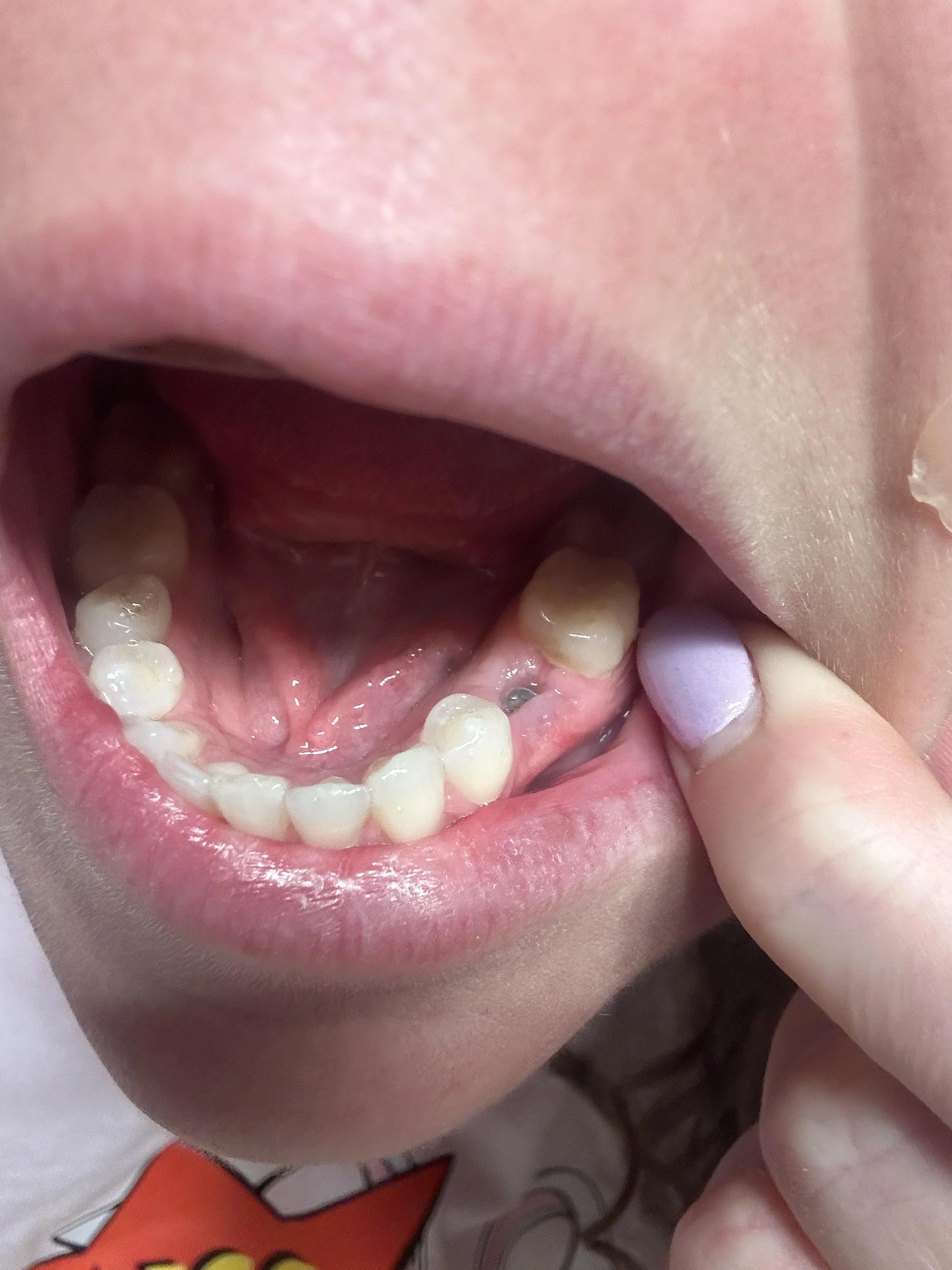
A primary concern is whether is an exposed implant screw dangerous:
- Healing Abutments: If a metallic component is visible during early healing before permanent crown delivery, this is typically a normal healing abutment (gingiva former) designed to shape the soft tissue cuff.
- Exposed Fixture Threads After Final Restoration: In this scenario, it is a pathological condition requiring prompt clinical evaluation.
- Titanium implant bodies feature micro-roughened surfaces designed for bone integration. Once exposed to the oral cavity, these micro-threads harbor bacteria that cannot be removed with home brushing. Unaddressed microbial biofilms accelerate bone loss, potentially leading to mobility and implant failure.
Clinical Signs Accompanying Exposed Implant Components
Beyond visual metal exposure, underlying tissue loss often produces additional symptoms:
- Marginal Discoloration: A dark gray or black crescent along the restoration margin.
- Gingival Bleeding on Probing: Soft tissue inflammation, swelling, and bleeding during gentle brushing.
- Purulent Discharge and Halitosis: Suppuration draining from the peri-implant pocket, accompanied by an unpleasant taste and odor.
- Persistent Food Impaction: Fibrous food debris repeatedly catching within exposed threads.
- Fixture Mobility (Advanced Stage): Detectable movement of the implant crown during chewing, indicating severe loss of bone support.
Exposed Implant Screw Treatment: Modern Clinical Modalities
Determining exposed implant screw treatment depends on the extent of bone involvement:
1. Mechanical Decontamination and Laser Therapy
Cleaning exposed titanium threads requires non-abrasive tools to avoid scratching the surface:
- Titanium-coated curettes, glycine powder air-polishing, and ultrasonic tips remove subgingival biofilm.
- Erbium (Er:YAG) or diode lasers vaporize bacterial endotoxins from micro-threads, sterilizing the implant surface.
2. Connective Tissue Grafting (Soft Tissue Augmentation)
When bone support is intact and metal exposure is limited to soft tissue recession:
- A micro-surgical subepithelial connective tissue graft is harvested from the palate.
- The graft is placed over the exposed implant collar and secured with microsutures, thickening the soft tissue and covering the metallic margin.
3. Guided Bone Regeneration (Bone Grafting & Collagen Membranes)
When horizontal or vertical bone resorption has occurred:
- Surgical access exposes and decontaminates the affected threads.
- Particulate bone graft is adapted over the defect and protected with an absorbable collagen membrane to encourage osteoblast migration.
4. Custom Zirconia Abutment Replacement
When discoloration is caused by a visible metallic titanium abutment shining through thin mucosa:
- The restorative crown is unseated, and the titanium abutment is replaced with a tooth-colored, biocompatible custom zirconia abutment and a new ceramic crown.
5. Explantation (Implant Removal - Last Resort)
When bone resorption exceeds fifty percent of the fixture length, mobility is present, or infection persists despite intervention, the implant must be removed using specialized explantation kits. The site is debrided, grafted, and allowed to heal before a replacement implant can be placed.
Comparative Matrix: Severity Stages of Exposed Implant Threads
|
Clinical Presentation |
Exposed Component |
Crestal Bone Status |
Recommended Therapy |
|
Mild Gingival Dehiscence |
1 mm of collar visible |
Minimal or no bone loss |
Laser debridement + Connective tissue graft |
|
Moderate Exposure |
2 to 3 micro-threads visible |
Localized horizontal bone loss |
Air-polishing + Guided bone regeneration |
|
Severe Peri-Implantitis |
Multiple threads, suppuration |
Deep angular vertical defects |
Open flap debridement + Prosthetic revision |
|
Complete Implant Failure |
Extensive exposure, mobile |
Substantial loss of bone anchor |
Explantation (Implant removal) + Grafting |
Preventive Measures to Protect Implant Stability
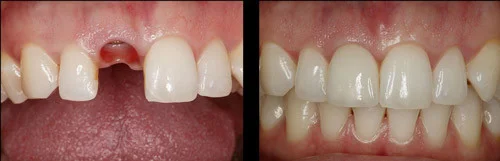
To help maintain the mucosal seal and bone support around dental implants:
- Use Specialized Interdental Floss: Conventional floss may shred around abutments; use specialized expanding implant floss or super floss daily.
- Incorporate a Water Flosser: Pulsating oral irrigators flush loose food debris and unattached bacteria from beneath implant prostheses.
- Adopt Gentle Brushing Mechanics: Use an ultra-soft toothbrush, sweeping with circular motions from the gums toward the crown rather than scrubbing horizontally.
- Maintain Regular Maintenance Visits: Semi-annual clinical exams and periodic low-dose radiographs catch marginal bone loss early, before threads become exposed.
Frequently Asked Questions
If my dental implant screw is showing, will it fall out?
Prompt clinical evaluation can often prevent implant loss. Metal exposure serves as an early indicator of tissue changes. When addressed promptly with debridement and soft tissue grafting, the implant can remain stable. However, leaving the problem untreated allows bone loss to progress, which can eventually lead to fixture mobility.
Can I brush away the exposed metal threads at home?
No. Attempting to scrub exposed threads aggressively with a toothbrush will abrade delicate marginal tissue and worsen recession. Furthermore, home brushing cannot sterilize subgingival micro-threads; professional decontamination using specialized instruments or lasers is required.
Does an exposed implant screw cause pain?
Early bone loss and soft tissue recession around implants often develop without discomfort. Pain and throbbing typically emerge only after secondary infection establishes within the pocket, causing localized swelling and purulent drainage.
Can a gum graft completely cover an exposed implant screw?
When underlying interproximal bone levels remain intact and the recession is primarily soft tissue-related, connective tissue grafting can often recover the exposed metal, restoring natural aesthetics. If extensive bone support has been lost, surgical coverage becomes more challenging.
About the Author