


What Is a Titanium Implant? Costs, Allergy Risk, and Procedure
Don't put off your smile. Message us now to discuss your treatment options with our expert dentists.
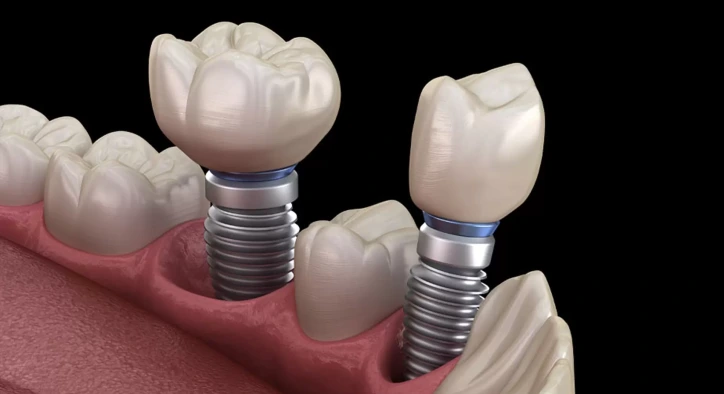
WhatsAppIn modern reconstructive dentistry, implant surgery represents the premier clinical solution for restoring missing teeth, returning both smile aesthetics and masticatory forces to natural standards. Functioning as artificial tooth roots anchored securely within the jawbone, dental implants provide a stable foundation for porcelain or zirconia crowns. Throughout the historical evolution of implantology, medical-grade titanium remains the undisputed gold standard material, backed by decades of extensive clinical research.
Medical-grade titanium and its specialized alloys demonstrate exceptional biological compatibility (biocompatibility) with human tissue. Following surgical placement into the maxilla or mandible, bone cells attach directly to the titanium micro-surface (a structural process termed osseointegration) allowing titanium implants to function comfortably for a lifetime. This comprehensive YMYL master guide explores what is a titanium implant, details titanium implant procedure stages, evaluates can you be allergic to titanium implants, outlines 2026 titanium implant cost variables, and compares titanium against zirconia implant systems.
Table of Content
- What is a Titanium Implant?
- The Surgical Workflow: Titanium Implant Procedure
- Can You Be Allergic to Titanium Implants? Clinical Facts
- Titanium vs. Zirconia Implants
- Comparative Matrix: Titanium vs. Zirconia Implants
- Deciphering the Financial Framework: Titanium Implant Cost
- Frequently Asked Questions
What is a Titanium Implant?
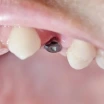
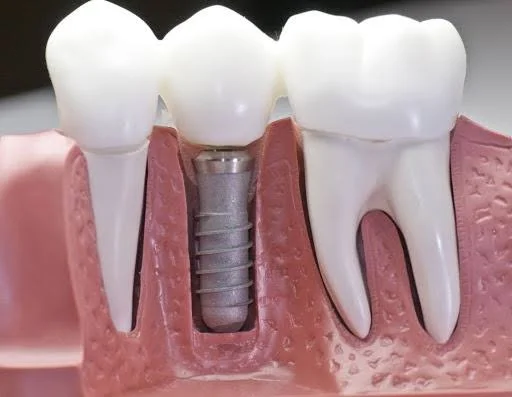
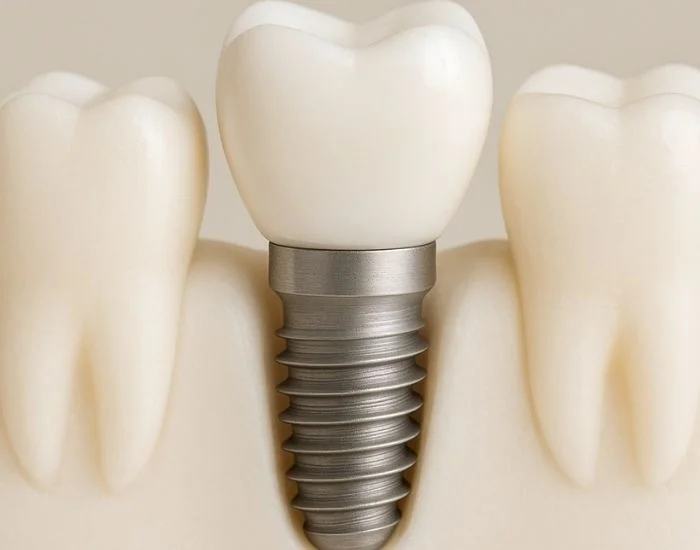
In oral surgery literature, the exact scientific answer to what is a titanium implant is this: It is a screw-shaped artificial tooth root manufactured from commercially pure titanium or titanium alloys (typically Grade 4 or Grade 5), surgically placed into the jawbone to replace missing tooth roots and support fixed prosthetics.
Titanium’s clinical dominance stems from its ability to instantly form a microscopic, protective titanium dioxide (TiO2) passivating layer upon exposure to oxygen or bodily fluids. This inert oxide layer prevents the immune system from recognizing the implant as a foreign body. Bone-building cells (osteoblasts) proliferate directly across this TiO2 surface, anchoring the titanium post permanently into the jawbone matrix.
The Surgical Workflow: Titanium Implant Procedure
In our surgical suites, the titanium implant procedure progresses through these structured, comfortable phases:
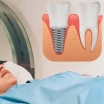
- 3D Volumetric Imaging & Planning: A 3D Cone-Beam Computed Tomography (CBCT) scan evaluates jawbone density, width, height, and anatomical boundaries (such as the inferior alveolar nerve in the lower jaw or the maxillary sinus cavity in the upper jaw).
- Local Anesthesia & Site Preparation: The surgical site is fully numbed using local anesthetics. A small mucoperiosteal incision exposes the bone crest, and specialized osteotomy drills prepare a precision osteotomy socket under continuous irrigation.
- Implant Placement: The selected titanium implant is threaded into the prepared socket at a calibrated insertion torque (typically 35 to 45 Ncm). A protective cover screw or healing abutment is placed, and the soft tissue is closed with micro-sutures.
- Osseointegration Phase: The biological window required for the titanium surface to fuse completely with jawbone cells averages 2 to 3 months in the lower jaw and 3 to 4 months in the upper jaw. If bone grafting (guided bone regeneration) is performed, healing may require up to 6 months.
- Prosthetic Restoration: Once osseointegration is confirmed, a digital intraoral scan captures the implant position, and a custom zirconia or porcelain crown is screwed or cemented into place.
Can You Be Allergic to Titanium Implants? Clinical Facts
Patients contemplating implant therapy frequently ask can you be allergic to titanium implants or will my body reject the post?
Based on extensive medical literature, the scientific answer to can you be allergic to titanium implants is that pure medical-grade titanium is one of the most immunologically inert metals, with true Type-I or Type-IV allergic reactions occurring in fewer than 1 in 10,000 patients (<0.01%).
In rare instances, minor sensitivities can develop toward trace alloy elements such as nickel or vanadium. If a patient has a documented history of severe metal hypersensitivity, a specialized MELISA (Memory Lymphocyte Immuno-Stimulation Assay) blood test can measure systemic immune reactivity to titanium prior to surgery. True "implant rejection" is almost always caused by bacterial infection (peri-implantitis), heavy smoking, uncontrolled diabetes, or surgical overheating during placement rather than an allergic response.
Titanium vs. Zirconia Implants
While white zirconia implants have emerged to meet specific aesthetic demands, key structural differences distinguish them from traditional titanium posts:
- Material Composition: Titanium is a biocompabile metallic element with a metallic gray tone. Zirconia is a white-colored ceramic compound made from zirconium dioxide (ZrO2).
- Aesthetic Performance: In patients with thin gingival biotypes in the anterior aesthetic zone, the metallic shadow of a titanium post may occasionally show through thin tissue margins. White zirconia implants eliminate gray show-through.
- Clinical History & Strength: Titanium implants carry a 50+ year clinical track record. Their flexural strength and fracture resistance under heavy posterior masticatory forces exceed zirconia. Zirconia implants are more rigid and carry a slightly higher risk of micro-fracture under extreme loads.
- Prosthetic Flexibility: Titanium systems offer two-piece designs with customizable angled abutments, whereas many zirconia systems are fabricated as single-piece posts with limited restorative adaptability.
Comparative Matrix: Titanium vs. Zirconia Implants
Evaluate the technical properties of both implant materials in the table below:
|
Technical & Clinical Criteria |
Titanium Implant Systems |
Zirconia Implant Systems |
|
Material Base Class |
Biocompatible Medical Metal (Grade 4 / 5) |
Biocompatible Ceramic (ZrO2) |
|
Clinical Track Record |
50+ Years of Research (World Standard) |
15+ Years of Data (Evolving Technology) |
|
Osseointegration Rate |
Extremely High (98%+ Success Rate) |
High (95%+ Success Rate) |
|
Aesthetic Characteristics |
Excellent in posterior regions; risk of gray shadow in thin gums |
Maximum anterior aesthetics (Natural white base) |
|
Flexural & Fracture Strength |
Very High (Absorbs masticatory stress) |
High (More rigid; minor risk of micro-brittleness) |
|
Systemic Allergy Risk |
Negligible (<0.01% incidence rate) |
Zero Risk (Metal-free composition) |
Deciphering the Financial Framework: Titanium Implant Cost
Stating a flat fee for "titanium implant cost" or "single tooth implant price" without a physical examination is clinically inaccurate. Final estimates reference baseline dental association tariffs alongside these key variables:
- Implant Brand & Origin: Premium, globally established titanium implant manufacturers from Switzerland, Germany, or the USA with decades of clinical data command different pricing compared to regional brands.
- Adjunctive Surgical Procedures: If the site lacks sufficient bone volume, adjunctive procedures such as bone grafting (bone powder), membrane placement, or sinus lift surgery will adjust the total surgical budget.
- Prosthetic Crown Material: The choice between a metal-ceramic crown or a premium translucent zirconia crown on top of the implant abutment influences overall costs.
Frequently Asked Questions
Will I feel pain during or after titanium implant surgery?
No. The surgical procedure is completely painless because high-potency local anesthetics fully switch off pain sensation in the jawbone and gums. Once the anesthetic wears off, mild soreness or pressure is normal, which is easily controlled with prescribed anti-inflammatory painkillers.
How long do titanium implants last?
When surgically placed according to correct biomechanical principles and supported by sound home care, titanium implants can last for a lifetime. The primary factor governing longevity is daily home hygiene specifically brushing, interdental flossing, and professional cleanings to prevent peri-implant gum inflammation.
Does smoking affect titanium implant osseointegration?
Yes, significantly. Heavy smoking impairs local blood circulation and cellular oxygenation, lowering osseointegration success rates by 10% to 15%. Smoking increases the risk of early implant loss and peri-implantitis. Patients are strongly advised to cease smoking at least 1 week prior to surgery and for 2 months post-placement.
Can titanium implant surgery be performed if I currently have a cold?
It is best to postpone elective implant placement if you have an active upper respiratory infection. Implants placed in the posterior upper jaw sit near the maxillary sinus floor; operating while sinus mucosa is inflamed elevates bacterial infection risks. Reschedule once your symptoms have cleared.
Will a titanium implant set off airport metal detectors?
No. Medical-grade titanium is non-ferromagnetic (it possesses no magnetic properties). It will not trigger alarms at airport security gates or building metal detectors. Furthermore, patients with titanium implants can safely undergo Magnetic Resonance Imaging (MRI) scans.
About the Author