


How to Remove Tooth Stains Naturally: A Complete Guide
Don't put off your smile. Message us now to discuss your treatment options with our expert dentists.
WhatsAppThat coffee-stained smile staring back at you every morning... you are not imagining it. Tooth stains are one of the most common cosmetic dental complaints among adults in the UK, and the growing interest in natural remedies has produced a flood of tips, hacks, and myths online. Some work. Many do not. A few can actually damage your enamel if used incorrectly. This guide cuts through the noise and explains which natural methods are genuinely effective for removing tooth stains, which are overhyped, and when you might need professional dental help to get the results you actually want.
Table Of Contents
- What Causes Tooth Stains?
- Extrinsic vs Intrinsic Stains: Why the Difference Matters
- Natural Methods for Removing Tooth Stains
- Strawberries, Pineapple, and Fruit Enzymes
- Activated Charcoal: Hype or Help?
- Whitening Toothpastes and Strips
- When Natural Methods Are Not Enough
- Daily Habits That Prevent Tooth Stains from Returning
- Frequently Asked Questions About Tooth Stain Removal
What Causes Tooth Stains?
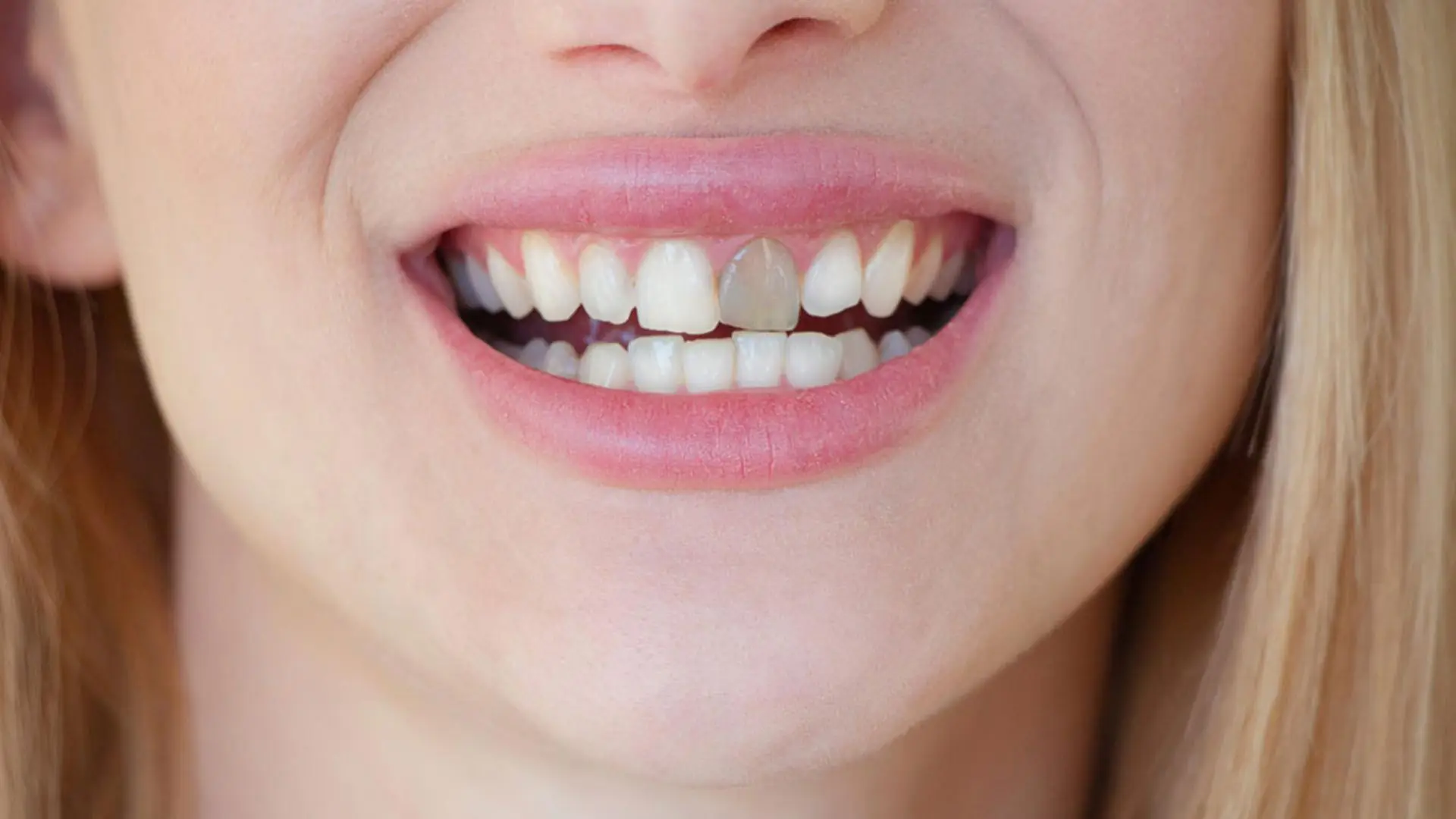
Tooth stains do not appear overnight. They develop gradually, shaped by daily habits, diet, and even factors that are entirely outside your control. Understanding the root cause is the first step towards choosing the right solution - because treating the wrong type of stain with the wrong method is a very common mistake.
The most common culprits are dietary. Coffee, tea, red wine, and dark berries contain chromogens - highly pigmented compounds that bind to tooth enamel over time. Tobacco use, both smoking and chewing, is another major contributor. Nicotine and tar from cigarettes penetrate the enamel surface and create persistent yellow or brown discolouration that resists ordinary brushing entirely.
Some stains have nothing to do with lifestyle choices. Certain medications - particularly tetracycline antibiotics taken during childhood - can cause internal discolouration that no amount of natural whitening will shift. The ageing process also plays a measurable role: as the outer enamel layer thins over the years, the naturally darker dentin beneath becomes more visible, giving teeth a yellowish hue that many patients mistake for surface staining.
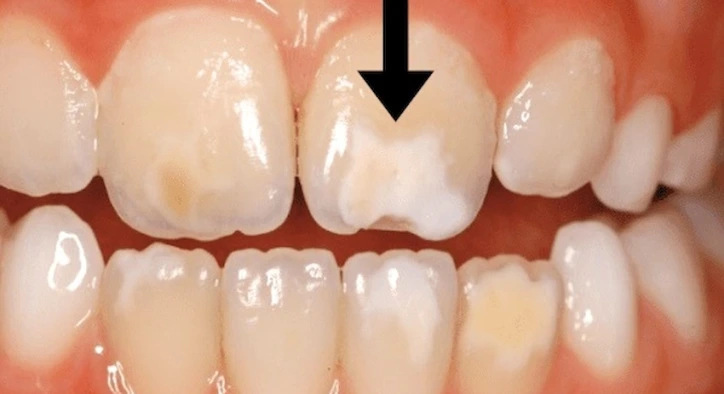
Fluorosis - overexposure to fluoride during the years when teeth are still forming - can produce white spots, streaks, or in more severe cases, brown patches across the teeth. This is an intrinsic structural change, not a surface stain, and it requires a completely different approach to treat.
Extrinsic vs Intrinsic Stains: Why the Difference Matters
Not all tooth stains respond to the same treatments. Dentists classify discolouration into two broad categories, and knowing which type you are dealing with determines which solutions will actually work for you.
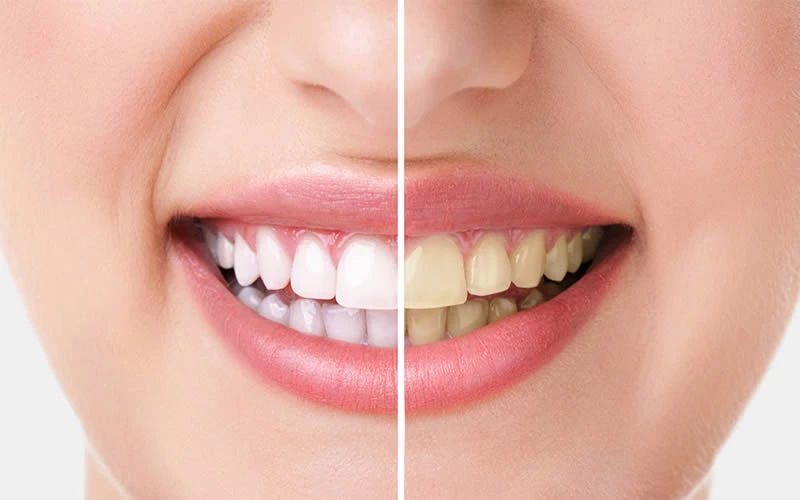
Extrinsic stains sit on the outer surface of the tooth, forming within the pellicle layer - a thin protein film that coats the enamel. They are caused by chromogens from food, drink, and tobacco. These surface stains are the most responsive to natural remedies and professional scale-and-polish treatments. If you drink three or four cups of tea or coffee daily and notice a general yellowing across all your teeth, extrinsic staining is almost certainly the cause.
Intrinsic stains are embedded deeper in the dentin or developed during tooth formation itself. They result from trauma, fluorosis, ageing, or medication use during development. Natural whitening methods have very limited effect on intrinsic stains. These typically require professional intervention such as professional teeth whitening treatment, laminate veneers, or dental bonding to achieve any meaningful improvement.
A practical self-assessment: if the discolouration is relatively uniform across all your teeth and you consume a lot of staining foods or drinks, extrinsic staining is likely. If it is patchy, greyish, or has been present since childhood with no obvious dietary cause, intrinsic staining is more probable. When genuinely unsure, a brief dental consultation will give you a clear and accurate answer in minutes.
Natural Methods for Removing Tooth Stains
Before looking at specific remedies, it is worth being honest about what natural methods can and cannot realistically achieve. They work best on mild to moderate extrinsic staining. They are gentler than chemical bleaching agents, which is a genuine benefit for people with sensitive teeth or enamel concerns. They require consistent, long-term use - there are no overnight results here. And some of them can cause enamel damage if misused, a warning that far too many social media posts and online articles skip over entirely.
With those expectations set, here are the approaches that carry the most reasonable scientific support:
Baking Soda: The Mild Abrasive That Works
Baking soda (sodium bicarbonate) is a mild abrasive that physically removes surface stains by gently polishing the enamel. Unlike harsher abrasives, it has a low Relative Dentin Abrasivity (RDA) value, meaning it can lift plaque and surface pigments without causing measurable enamel erosion when used at the right frequency.
A systematic review published on PubMed found that toothpastes containing sodium bicarbonate were significantly more effective at removing extrinsic stains than non-bicarbonate alternatives, without causing significant harm to enamel or soft tissue at recommended frequencies.
How to use it safely:
- Mix half a teaspoon of baking soda with a small amount of water to form a thick paste
- Brush gently for two minutes, no more than twice per week
- Do not use it daily - over-frequent application gradually erodes enamel over weeks and months
- Rinse thoroughly with water afterwards
Results are gradual. Most people notice a visible difference after four to six weeks of consistent use. If you are expecting a dramatic change within days, you will be disappointed - but the slow pace is precisely what makes this approach safe for enamel.
Oil Pulling: Ancient Remedy, Modern Evidence
Oil pulling is an Ayurvedic practice involving swishing oil - typically coconut or sesame - around the mouth for 10 to 20 minutes. The principle is that oil binds to bacterial cell membranes, reducing overall oral bacteria count, and that lower bacterial levels mean less plaque and fewer stains.
A clinical study published in the Journal of International Oral Health found that coconut oil pulling reduced plaque scores and signs of gingivitis in ways comparable to chlorhexidine mouthwash. That is a meaningful finding. The evidence linking oil pulling directly to active stain removal is, however, considerably weaker - the main benefit appears to be plaque and bacteria reduction rather than stain lifting.
What patients at our İstanbul dental clinic often report is that oil pulling leaves their mouth feeling noticeably fresher and cleaner. Whether it meaningfully lightens existing stains is debatable. Where it genuinely seems to help is in preventing new stains from accumulating, particularly when combined with twice-daily brushing and regular flossing.
Use refined coconut oil. Swish for 10 to 15 minutes, spit it into a bin rather than the sink (it solidifies in cold pipes and causes blockages), then brush your teeth as normal.
Strawberries, Pineapple, and Fruit Enzymes
This category receives enormous attention online. Strawberries contain malic acid, which has a mild bleaching effect on tooth surfaces in laboratory conditions. Pineapple contains bromelain, an enzyme studied for its potential to break down the pellicle layer where stains accumulate and adhere.
The clinical reality is more complicated. While malic acid does show whitening potential in lab settings, it is also an acid - and acid erodes enamel. A clinical study found that applying strawberry paste to teeth caused measurable mineral loss from enamel, despite producing little visible whitening improvement on the tooth surface. Bromelain from pineapple shows more promise but still lacks the depth of clinical data needed to support firm recommendations for home use.
If you want to experiment with fruit-based approaches:
- Limit use to once or twice per week at most
- Rinse thoroughly with water immediately after application
- Wait at least 30 minutes before brushing to allow enamel to begin remineralising
- Avoid applying neat lemon juice directly to teeth - its acid concentration is too high and the risk of enamel erosion far outweighs any whitening benefit
The real irony of over-enthusiastic fruit-based whitening is that it can produce the very enamel thinning that makes teeth appear more yellow and translucent over time, not less.
Activated Charcoal: Hype or Help?
Activated charcoal whitening products went viral across social media platforms in recent years, with black charcoal toothpastes and powders flooding health stores and online marketplaces. The reasoning sounds logical: charcoal is highly porous and adsorbs surface pigments, physically pulling stains away from teeth.
The clinical evidence does not support the hype. A 2019 review published in the Journal of the American Dental Association found no reliable evidence that charcoal-based dental products effectively whiten teeth or protect against tooth decay. The more pressing concern is abrasivity: activated charcoal is significantly more abrasive than baking soda, and regular use can scratch and progressively thin enamel over time - the opposite of what you want.
The British Dental Association has raised concerns about the growing number of unregulated charcoal dental products on the UK market, noting that many lack fluoride entirely - meaning they actively undermine the protection your teeth need while delivering questionable whitening benefit in return.
Our recommendation: skip the charcoal. If you want a safe, abrasive-based natural approach, baking soda has significantly stronger evidence and a much more favourable safety profile.
Whitening Toothpastes and Strips
While not strictly natural, whitening toothpastes and strips are over-the-counter options that patients regularly ask about alongside natural remedies, so they are worth addressing clearly here.
Whitening toothpastes work through a combination of mild abrasives and low-concentration peroxide or specific enzymes. They are effective at maintaining brightness after a professional whitening session but are unlikely to produce dramatic results on heavily stained teeth when used alone as the sole treatment.
Whitening strips contain hydrogen peroxide, typically at concentrations between 6% and 14%. They are regulated differently across the UK and EU - always verify that any product you purchase is properly approved for sale in your country. NHS guidance advises exercising caution with high-concentration peroxide products sold without proper regulation or dental supervision, as these can cause irreversible sensitivity and damage to soft tissue.
For patients who experience significant sensitivity with whitening strips, alternating use with a high-fluoride or sensitivity toothpaste, spacing treatments out over a longer period, and applying strips for shorter durations than the maximum stated on packaging can all help manage discomfort during the process.
When Natural Methods Are Not Enough
There is a clear ceiling to what natural methods can achieve. If your teeth have deep or intrinsic staining, if you need results within a specific timeframe, or if you have tried natural approaches consistently for several months without any meaningful improvement, professional treatment is the logical and time-efficient next step.
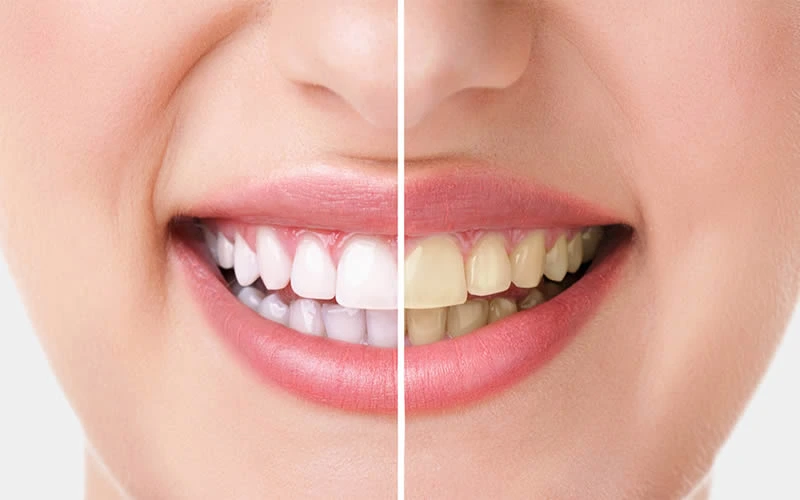
Professional teeth whitening uses clinically controlled concentrations of hydrogen peroxide or carbamide peroxide, applied under dental supervision. Results are faster, more predictable, and safer than any home method - and a qualified dentist can identify whether your staining type is actually suitable for whitening or whether a different approach would serve you better and save you wasted effort.
For patients whose staining is too deep or too structural for whitening to address effectively, smile design treatments incorporating laminate veneers can deliver truly transformative results. Veneers are custom-made porcelain shells bonded to the front surface of the teeth, masking discolouration entirely while simultaneously correcting shape, minor alignment issues, and overall smile aesthetics. Patients travelling to İstanbul for dental care consistently find that the cost of professional whitening or veneers is substantially lower than equivalent treatment in the UK, making it genuinely practical to combine several procedures into one trip.
Browse our before and after patient gallery to see the real results achieved by patients who visited our İstanbul clinic specifically for stain treatment and broader smile transformations.
Daily Habits That Prevent Tooth Stains from Returning
Whatever approach you use to address existing stains, your daily habits determine whether they come back within months. Patients who invest in whitening treatment but neglect their maintenance routine often find themselves back at square one far sooner than they expect.
The habits that produce the biggest long-term difference:
- Brush twice daily with a fluoride toothpaste. Fluoride strengthens enamel and reduces its porosity, making it harder for chromogens to penetrate and settle on the surface.
- Use a straw for iced coffee, cold tea, and dark soft drinks. This reduces direct contact between staining beverages and your tooth surfaces significantly.
- Rinse with water after consuming staining foods and drinks. You do not need to brush immediately - rinsing is sufficient and avoids the risk of spreading acid across enamel with a toothbrush.
- Schedule a professional clean every six months. A dental hygienist removes calculus and built-up surface staining that brushing alone and natural methods simply cannot shift. This is the single most impactful preventive step available to you.
- Quit smoking. Tobacco produces some of the most persistent and deep-set extrinsic staining of any substance. No natural remedy meaningfully counteracts continued tobacco use.
- Eat crunchy vegetables like carrots, celery, and apples regularly. Their fibrous texture provides mild mechanical cleaning of the tooth surface during chewing, helping to prevent plaque from accumulating.
At our dental clinic in İstanbul, patients are consistently advised that the long-term success of any whitening treatment depends more on daily maintenance habits than on the treatment itself. Achieving a brighter result is the start of the process, not the end of it.
Frequently Asked Questions About Tooth Stain Removal
Can yellow teeth turn white again naturally?
Mild to moderate yellowing caused by surface staining can genuinely improve with consistent natural methods over several weeks. Deep yellowing caused by ageing, intrinsic factors, or medication use during development typically requires professional whitening or cosmetic dental treatment to achieve a meaningfully whiter result.
How long does baking soda take to whiten teeth?
Most people notice gradual improvement after four to eight weeks of twice-weekly use. Baking soda is not a rapid whitener - it removes surface stains slowly and gently. Expecting a visible change within days is unrealistic and leads many people to over-use it, which creates enamel risk over time.
Is oil pulling effective for removing tooth stains?
Oil pulling reduces plaque and oral bacteria, which helps prevent new stains from forming. Its direct effect on lifting existing stains is limited. It works best as a supportive part of a broader oral hygiene routine rather than as a standalone whitening treatment.
Are natural whitening methods safe for sensitive teeth?
Generally yes, when used correctly and at appropriate frequencies. Baking soda at twice-weekly use and oil pulling are well tolerated by most people with sensitivity. Avoid fruit acids and activated charcoal, as these can worsen sensitivity by eroding enamel with repeated use.
How much does professional teeth whitening cost in İstanbul compared to the UK?
Professional teeth whitening in the UK typically costs between £300 and £700 for a full course of treatment. At our dental clinic in İstanbul, equivalent treatments are available at considerably lower prices. Many patients from the UK combine whitening with other dental procedures - such as veneers, implants, or crowns - to make the most of a single trip and maximise overall value. Contact our team for a personalised treatment plan and cost estimate with no obligation.
When should I see a dentist about tooth staining?
If natural methods produce no visible improvement after two to three months of consistent use, if the staining appeared suddenly, if you notice patchy or white spot discolouration alongside general yellowing, or if you are experiencing increased sensitivity, book a dental consultation. These signs can point to issues beyond simple surface staining that require professional assessment and a tailored treatment approach.
Can teeth whitening damage enamel?
Natural whitening methods at appropriate frequencies are safe for enamel when used as directed. Professional whitening conducted by a qualified dentist is also clinically safe, though temporary sensitivity during or after treatment is common. The products to be genuinely cautious about are unregulated high-concentration bleaching kits sold online without dental supervision, and abrasive products like activated charcoal used on a daily basis.
About the Author