


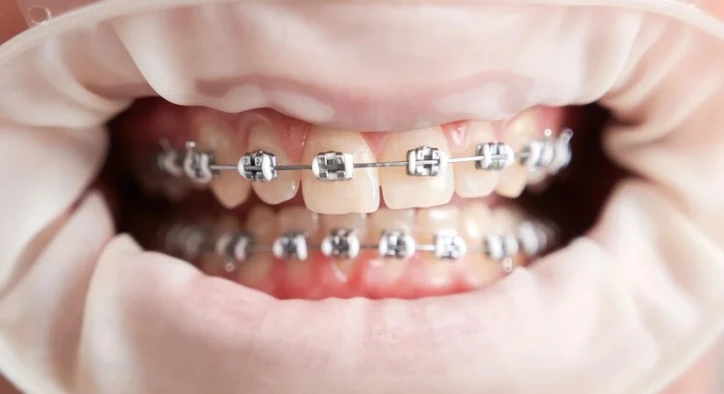
How Long Do Braces Stay On? Treatment Duration and Stages
Don't put off your smile. Message us now to discuss your treatment options with our expert dentists.
WhatsAppCrowded arches, spacing (diastema), deep bites, open bites, and skeletal jaw discrepancies not only compromise facial aesthetics but also induce premature tooth wear, speech impediments, and temporomandibular joint (TMJ) dysfunction. In orthodontics, the primary mechanism for correcting malocclusions is fixed orthodontic appliances (brackets and archwires). Through continuous, light forces transmitted by archwires, dynamic remodeling occurs within the alveolar bone; osteoclasts resorb bone ahead of the movement vector while osteoblasts deposit bone behind it, guiding roots into physiological positions.
Prospective orthodontic patients routinely ask: How long do braces stay on? How long does active tooth movement require, how long does it take to put braces on during the initial bonding appointment, how long does orthodontic treatment take in total, can braces come off in 3 months, how many years do you wear braces for severe malocclusions, and what is the maximum time braces stay on? This clinical guide explores all variables dictating the orthodontic timeline.
Table of Content
- How Long Do Braces Stay On?
- How Long Does It Take to Put Braces On?
- Can Braces Come Off in 3 Months?
- How Long Does Orthodontic Treatment Take?
- What Is the Maximum Time Braces Stay On?
- The Retention Phase: Safeguarding Finished Results
- Comparative Matrix: Orthodontic Timelines by Diagnostic Complexity
- Frequently Asked Questions
How Long Do Braces Stay On?
In modern orthodontics, the answer to how long do braces stay on averages twelve to twenty-four months (one to two years).
However, treatment is customized. Based on biological bone turnover and malocclusion complexity:
- Mild Crowding and Minor Diastemas: Completed within six to twelve months.
- Moderate Crowding and Overjet / Overbite Corrections: Requires twelve to eighteen months.
- Severe Malocclusion, Premolar Extractions, and Impacted Canines: Requires eighteen to thirty months (one and a half to two and a half years).
- Surgical Orthodontics (Combined Orthognathic Surgery): May require twenty-four to thirty-six months.
How Long Does It Take to Put Braces On?
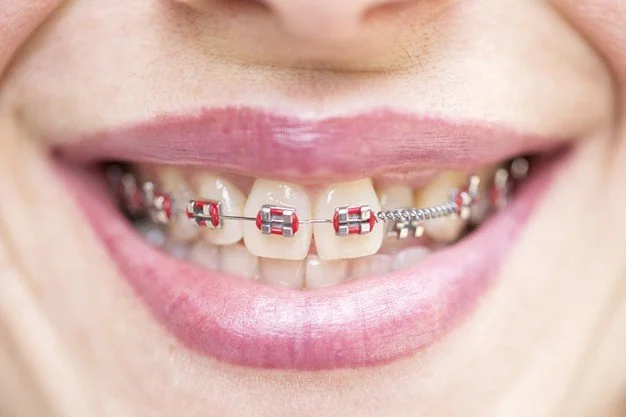
During the initial bracket placement session, how long does it take to put braces on depends on whether one or both arches are bonded:
- Single Arch Bonding: Polishing enamel, acid-etching, applying bonding primer, positioning brackets, and curing with light polymerization units requires approximately forty to forty-five minutes.
- Dual Arch Bonding (Upper and Lower Same Day): Requires approximately one to one and a half hours.
- Pain-Free Procedure: Bonding involves no needles or local anesthesia; the process is entirely non-invasive and painless.
Can Braces Come Off in 3 Months?
Patients frequently ask: Can braces come off in 3 months?
No, comprehensive orthodontic therapy cannot finish in three months.
Biological reasons include:
- Bone Remodeling Velocity: Teeth safely move through alveolar bone at an average rate of 0.5 to 1.0 mm per month. Excessive force risks root resorption and loss of pulpal vitality.
- Root Angulation and Intercuspation: Although crowns may appear aligned after twelve weeks, underlying root apices remain uncorrected and functional occlusion is not established.
- Immediate Relapse: Removing appliances after three months ensures rapid relapse, as newly formed osteoid tissue requires months to mineralize.
Exception: Very minor pre-restorative cosmetic alignments addressing a single rotated incisor may take three to four months; however, comprehensive malocclusion correction cannot.
How Long Does Orthodontic Treatment Take?
Key parameters answering how long does orthodontic treatment take and how many years do you wear braces include:
1. Severity of Malocclusion
The extent of dental crowding, rotational severity, and skeletal discrepancy directly influences treatment duration.
2. Extraction vs. Non-Extraction Protocols
When four premolars are extracted to relieve severe crowding, closing extraction spaces adds four to six months to the treatment plan.
3. Patient Age and Cellular Turnover
Because metabolic cellular turnover is elevated in growing adolescents, teeth move slightly faster than in adult bone. While adults achieve identical aesthetic and functional results, treatment may take a few months longer due to dense cortical bone.
4. Patient Compliance and Elastics
Wearing prescribed intermaxillary elastics consistently for twenty-two hours daily is critical. Inconsistent wear halts bite correction and prolongs treatment.
5. Broken Brackets and Hard Foods
Crunching hard foods (nuts, hard crusts, ice) shears brackets off enamel. Every broken bracket suspends tooth movement, adding approximately one month to treatment.
6. Impacted Teeth
Surgically exposing and guiding palatally impacted canines down into the dental arch requires continuous traction, extending total treatment time toward two years.
What Is the Maximum Time Braces Stay On?
Patients facing extended treatment often ask about what is the maximum time braces stay on:
- Under standard conditions, complex orthodontic cases rarely exceed three to three and a half years.
- Durations exceeding four years generally indicate missed adjustment visits, chronic appliance breakage, or poor elastic compliance.
- Keeping appliances bonded for prolonged periods increases the risk of enamel decalcification (white spot lesions) and marginal gingival inflammation if hygiene is compromised.
The Retention Phase: Safeguarding Finished Results
Treatment does not end when brackets are removed:
- Fixed Lingual Retainers: A passive multi-strand stainless steel wire bonded across the inside surfaces of the anterior teeth holds alignment permanently.
- Removable Clear Retainers (Essix): Clear thermoformed trays worn overnight maintain transverse arch width.
- Omitting retainers allows elastic periodontal fibers and bone memory to rebound teeth toward their original crooked positions.
Comparative Matrix: Orthodontic Timelines by Diagnostic Complexity
|
Diagnostic Classification |
Average Duration |
Extraction Requirement |
Visit Frequency |
|
Mild Crowding / Spacing |
6 to 12 Months |
Non-Extraction |
Every 4 to 6 Weeks |
|
Moderate Class 1 Malocclusion |
12 to 18 Months |
Rarely Extraction |
Every 4 to 6 Weeks |
|
Severe Class 2 / Class 3 Bite |
18 to 24 Months |
Frequently Extraction |
Every 4 Weeks |
|
Impacted Canine Guidance |
20 to 30 Months |
Case Dependent |
Every 3 to 4 Weeks |
|
Orthognathic Surgical Cases |
24 to 36 Months |
Surgical Plan |
Variable |
Frequently Asked Questions
Does getting braces put on or removed hurt?
No. Adhesive bracket placement and debonding at the end of treatment are painless procedures. However, mild soreness and pressure upon chewing occur during the first three to four days following placement or wire adjustments, resolving quickly.
Are clear aligners faster than traditional braces?
For mild to moderate alignment issues, clear aligners can be slightly faster due to targeted digital force distribution. However, aligner velocity depends entirely on wearing the trays for twenty-two hours daily.
How much does a broken bracket delay treatment?
A loose bracket removes all corrective force from that tooth. On average, every broken bracket extends treatment time by approximately one month.
Do braces take longer for adults than children?
Because mature adult bone is fully mineralized with slower cellular turnover, adult therapy typically takes three to six months longer than adolescent treatment. However, successful tooth movement occurs at any age.
About the Author