


What Is a Water Flosser? What Does It Do, and How Is It Used?
Don't put off your smile. Message us now to discuss your treatment options with our expert dentists.
WhatsAppWhile daily toothbrushing represents the cornerstone of oral hygiene, a conventional toothbrush cleans only accessible facial, lingual, and occlusal surfaces, leaving interdental contact points and the subgingival sulcus uncleaned. Biofilm accumulating within these interproximal domains mineralizes into calculus, serving as the primary etiology for gingivitis and periodontitis. Although string dental floss remains a traditional interdental cleaning aid, physical limitations, fixed prosthetic bridges, dental implants, or orthodontic appliances can make manual flossing technically challenging.
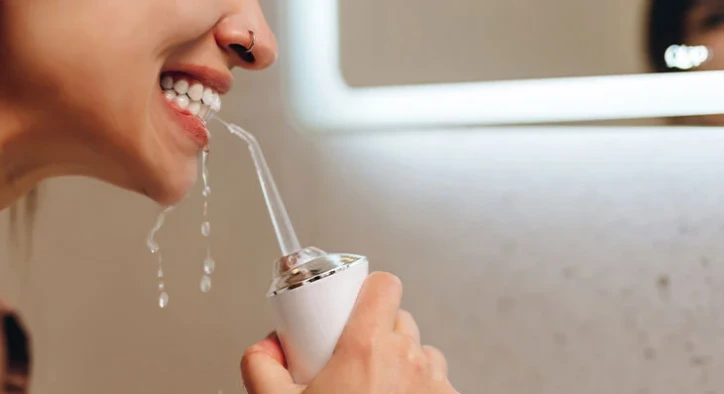
Advanced oral care technologies offer a hydrodynamic alternative: the water flosser (oral irrigator). Combining pressurized water pulses with micro-bubble technology, water flossers penetrate interdental spaces and periodontal pockets, merging mechanical plaque disruption with fluid flushing. This comprehensive clinical guide explores what is a water flosser, analyzes what does a water flosser do, outlines how to use a water flosser, highlights water flosser benefits, and evaluates the water flosser vs dental floss clinical comparison.
Table of Content
What Is a Water Flosser and What Does It Do?
In periodontology literature, the precise medical definition of a water flosser is: An electric or battery-operated oral hygiene device that delivers a targeted, pulsating stream of pressurized water to wash away interdental biofilm, unattached plaque, and trapped food debris from proximal surfaces and subgingival margins.
When integrated into daily hygiene routines, what does a water flosser do?
- Disrupts Interdental Biofilm: Uses hydrodynamic hydraulic forces to shear unattached plaque matrix away from tooth surfaces.
- Flushes Subgingival Pockets: Penetrates periodontal pockets up to 6 mm deep, flushing out anaerobic bacterial pathogens and inflammatory mediators unreachable by standard brushing.
- Cleans Prosthetics & Braces: Evacuates food particles lodged beneath fixed bridge pontics, around implant abutments, and surrounding orthodontic brackets.
- Stimulates Gingival Circulation: Delivers localized hydraulic pulses (1,200 to 1,600 pulses per minute) that massage gingival tissues, enhancing microvascular circulation and soft tissue health.
Key Clinical Benefits of a Water Flosser

Extensive clinical trials support the following primary water flosser benefits:
- Reduces Gingival Bleeding: Consistently reduces localized gingival inflammation and bleeding within weeks by flushing pathogenic bacteria from the sulcus.
- Prevents Peri-Implantitis: Effectively cleans around titanium implant abutments without scratching implant surfaces, protecting against peri-implant mucositis.
- Enhances Orthodontic Hygiene: Removes trapped food and plaque around orthodontic brackets, reducing white-spot decalcification lesions during active alignment.
- Controls Halitosis: Washes away sulfur-producing anaerobic bacteria trapped in interdental spaces and deep pockets, curbing oral malodor.
- Improves Compliance: Offers an easy, comfortable alternative for individuals with limited manual dexterity, arthritis, or physical aversion to string floss.
How to Use a Water Flosser Properly: Step-by-Step Guide
To achieve maximum therapeutic benefits without causing soft tissue trauma, execute how to use a water flosser using these clinical steps:
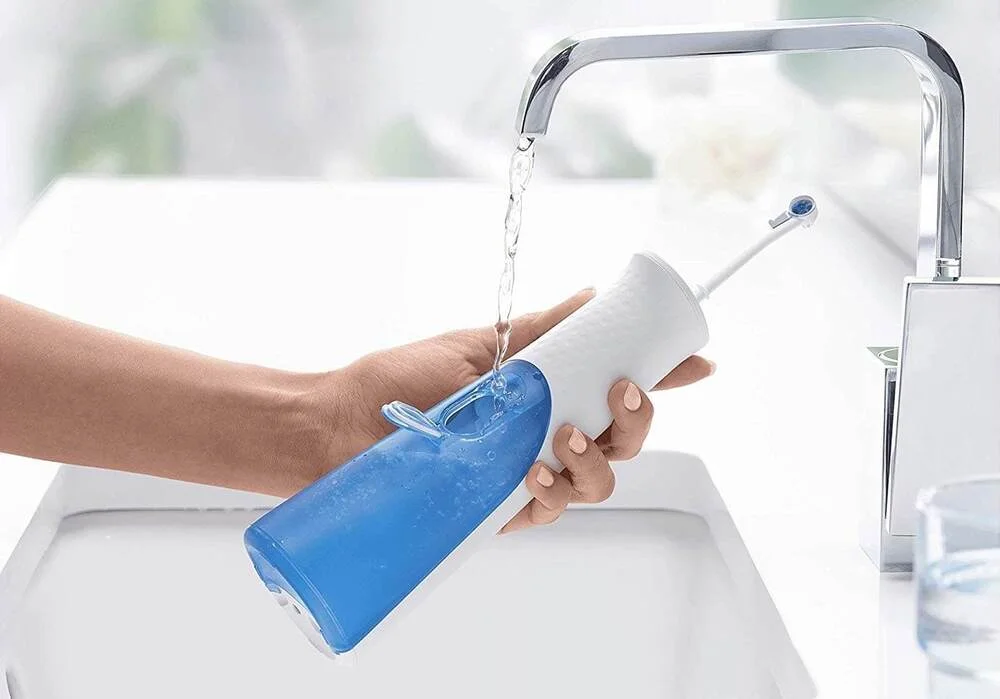
- Fill the Reservoir: Fill the reservoir with lukewarm water. Alcohol-free therapeutic mouthwashes can be added if recommended by your periodontist.
- Select & Lock the Tip: Insert the appropriate jet tip (standard tip, orthodontic tip, or plaque seeker tip for implants) into the handle until it clicks.
- Set Pressure Level: Always start at the lowest pressure setting, especially for sensitive or inflamed gums. Gradually increase pressure as tissue tolerance improves.
- Position Over the Sink: Lean forward over the sink to allow water to drain freely. Place the tip in your mouth and close lips partially to prevent splashing. Aim the tip at a 90-degree angle to the gingival margin.
- Trace the Gumline: Turn the unit on. Guide the jet stream slowly along the gumline, pausing briefly (2 to 3 seconds) at each interdental contact space.
- Empty & Clean: Turn off the unit, empty remaining reservoir water, and allow the tip to air dry.
Water Flosser vs Dental Floss: Clinical Comparison
Evaluating water flosser vs dental floss requires understanding their distinct mechanical clearing actions:
- String Dental Floss (Frictional Scraping): String floss physically contacts enamel surfaces, relying on frictional scraping to shear off sticky biofilm. It excels at scraping tight, physical contact points where teeth touch directly.
- Water Flosser (Hydrodynamic Flushing): A water flosser relies on hydraulic pressure and pulsation to flush unattached plaque, bacteria, and debris from interdental spaces and deep subgingival sulci. It penetrates subgingival pockets deeper than string floss can reach safely.
Comparative Matrix: String Floss vs. Water Flosser
Compare the technical and performance parameters of both tools below:
|
Clinical Parameters |
String Dental Floss |
Water Flosser (Oral Irrigator) |
|
Cleaning Mechanism |
Frictional Contact Scraping |
Hydrodynamic Hydraulic Flushing |
|
Subgingival Pocket Depth |
1 to 3 mm (Limited penetration) |
Up to 6 mm (Deep pocket flushing) |
|
Orthodontic & Implant Compatibility |
Technically difficult & slow |
Highly Efficient & Rapid |
|
Soft Tissue Trauma Risk |
Can cut gums if snapped forcefully |
Zero Trauma when pressure is set correctly |
|
Manual Dexterity Requirement |
High technique required |
Very Low (Ergonomic single-button control) |
|
Sticky Plaque Disruption |
Superior on direct contact surfaces |
Excellent for loose biofilm and debris |
Frequently Asked Questions
Does a water flosser remove hardened dental calculus (tartar)?
No. A water flosser removes unattached soft bacterial plaque and food debris. Once plaque mineralizes into hard dental calculus (tartar), it bonds chemically to the tooth. Calculus can only be removed professionally by a dentist using ultrasonic scalers. Water flossers prevent new calculus from forming on clean teeth.
Is bleeding normal when using a water flosser for the first time?
Mild bleeding during the first few days of use is normal if localized gingival inflammation (gingivitis) is present. Bleeding indicates the evacuation of inflammatory exudate from engorged capillaries, not mechanical tissue damage. With daily use, inflammation subsides and bleeding stops within a week.
Can mouthwash be added to the water flosser reservoir?
Yes. You can mix alcohol-free therapeutic mouthwashes with lukewarm water in a 1:1 ratio inside the reservoir. This delivers antimicrobial agents directly into interdental spaces and subgingival pockets. Always flush the unit with plain warm water afterward.
About the Author