



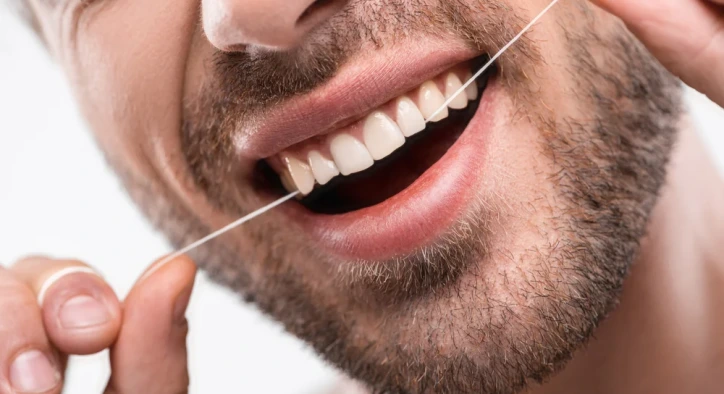
What Is Dental Floss? How to Use It, Its Benefits and Types
Don't put off your smile. Message us now to discuss your treatment options with our expert dentists.
WhatsAppToothbrushing is universally recognized as the primary step in oral hygiene. However, regardless of toothbrush quality or brushing technique, a standard toothbrush cleans only about 60% of tooth surfaces. The tight spaces where adjacent teeth touch (known as interdental or proximal surfaces) are anatomically inaccessible to toothbrush bristles. Consequently, a vast majority of hidden dental caries and localized periodontal inflammation originate within these contact zones.
This is where dental floss plays a mandatory role in preventive dentistry. By mechanically disrupting interdental biofilm and evacuating trapped food debris, flossing prevents interproximal caries, gingivitis, and advanced periodontitis. This comprehensive master guide examines what is dental floss, details what does dental floss do, outlines proper dental floss use, explains how to use dental floss, evaluates dental floss picks, surveys types of dental floss, clarifies when to use dental floss, and discusses factors influencing dental floss price.
Table of Content
- What Is Dental Floss and What Does It Do?
- Types of Dental Floss: Choosing the Right Option
- How to Use Dental Floss: Correct Clinical Technique
- When to Use Dental Floss: Optimal Timing and Frequency
- Comparative Matrix: Clinical Analysis of Floss Types
- Factors Influencing Dental Floss Price
- Frequently Asked Questions
What Is Dental Floss and What Does It Do?
In periodontology literature, the precise medical definition of what is dental floss is: A specialized strand of thin filaments (manufactured from nylon, polytetrafluoroethylene (PTFE), or silk) designed to remove interdental plaque and food debris from proximal tooth surfaces and the subgingival sulcus.
What primary preventive roles does dental floss serve?
- Prevents Interproximal Caries: Removes plaque from tight contact points where neighboring teeth meet, stopping hidden decay.
- Prevents Gingivitis: Cleans beneath the gingival margin, eliminating bacterial toxins that trigger gum inflammation, redness, and bleeding.
- Eliminates Oral Malodor: Removes decaying food particles and anaerobic bacteria trapped between teeth that cause halitosis.
- Inhibits Calculus Formation: Disrupts soft plaque before it mineralizes into hard dental calculus (tartar) via salivary calcium deposition.
Types of Dental Floss: Choosing the Right Option
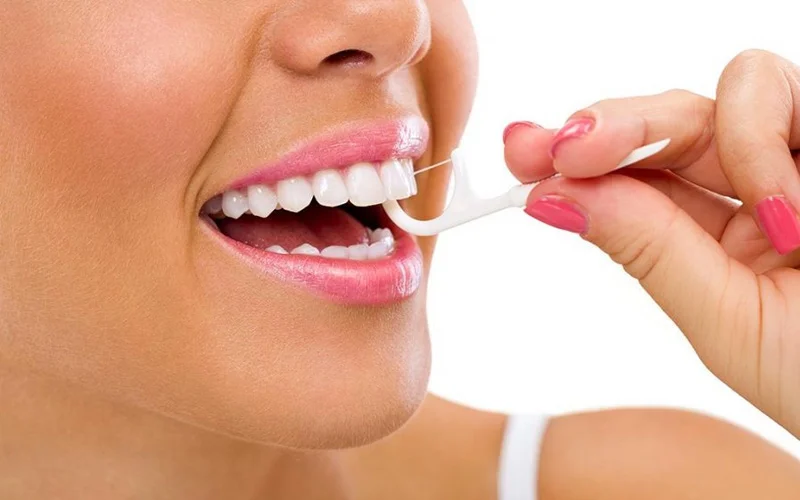
Different oral anatomies require specific types of dental floss:
- Waxed Dental Floss: Coated with a light layer of wax, allowing it to glide smoothly through tight contact points without shredding.
- Unwaxed Dental Floss: Thin, uncoated nylon strands that squeak against clean enamel, ideal for normal contact spaces.
- PTFE (Teflon) Floss: Single-filament construction that glides effortlessly through extremely tight or rough contact points without tearing.
- Dental Floss Picks: Pre-threaded floss held on a small plastic handle; dental floss picks offer high convenience for beginners, children, or individuals with dexterity challenges.
- Superfloss (Specialty Floss): Features a stiffened end, a spongy middle section, and regular floss; designed specifically for cleaning beneath dental bridges, orthodontic braces, and wide interdental spaces.
How to Use Dental Floss: Correct Clinical Technique
To prevent soft tissue trauma while ensuring complete plaque removal, follow these steps for proper dental floss use:
1. Traditional String Floss Protocol:
- Preparation: Dispense approximately 40–45 cm (18 inches) of floss. Wind most of it around the middle fingers of both hands, leaving 3–5 cm of working floss.
- Grip: Hold the working segment taut between your thumbs and index fingers.
- Insertion: Gently glide the floss between teeth using a smooth back-and-forth sawing motion; avoid snapping it down into the gums.
- C-Shape Curve: Curve the floss into a C-shape around the side of one tooth as it meets the gumline.
- Scraping Motion: Gently slide the floss beneath the gumline, then scrape upward away from the gum toward the tip of the tooth.
- Progressive Cleaning: Unwind a fresh section of clean floss for each interdental space.
2. Using Dental Floss Picks:
Guide the pre-tensioned floss section between teeth using a gentle sawing motion. Hug the tooth surface in a slight curve and slide up and down. Wipe the floss segment clean between teeth to maintain hygiene.
When to Use Dental Floss: Optimal Timing and Frequency
Determining when to use dental floss involves understanding both daily frequency and routine sequencing:
- Before or After Brushing? Clinical studies recommend flossing BEFORE toothbrushing. Removing interdental debris first allows the fluoride in toothpaste to reach interproximal enamel surfaces more effectively.
- Daily Frequency: Floss at least once per day, preferably during your nighttime oral hygiene routine before sleep. Salivary flow decreases during sleep, making overnight plaque removal critical.
Comparative Matrix: Clinical Analysis of Floss Types
Compare the clinical properties of different floss options below:
|
Floss Category |
Ease of Use |
Ideal Dental Anatomy |
Tear Resistance & Tissue Safety |
|
Waxed String Floss |
High |
Very tight contact points |
Resistant to shredding; gentle on gums |
|
Unwaxed String Floss |
Moderate |
Normal interdental spacing |
May shred in tight or rough contacts |
|
PTFE (Teflon) Floss |
Very High |
Tight spaces, rough restoration margins |
Maximum tear resistance |
|
Floss Picks |
Maximum (Single-handed) |
Beginners, children, limited mobility |
Requires care to avoid snapping gums |
|
Superfloss |
Requires Technique |
Dental bridges, orthodontic braces |
Spongy texture clears wide spaces |
Factors Influencing Dental Floss Price
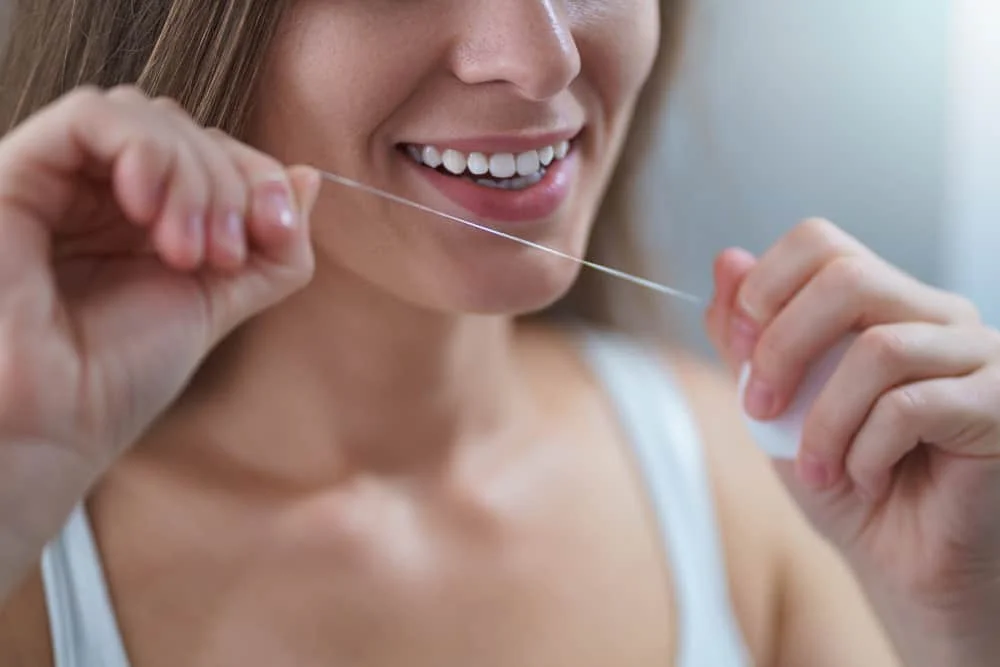
Variations in dental floss price depend on manufacturing technology and features:
- Material Technology: Basic nylon flosses are economical, whereas PTFE, expanding, or charcoal/fluoride-infused specialty filaments command higher pricing.
- Spool Length and Volume: Dispensers ranging from 25-meter compact sizes to 100-meter bulk rolls reflect proportional pricing.
- Floss Pick Formulations: Multi-pack quantities (30-count, 50-count, 100-count) and ergonomic handle designs influence total cost.
Frequently Asked Questions
Is it normal for gums to bleed when using dental floss?
Bleeding during the first 3 to 7 days of flossing is normal for beginners or individuals with mild gingivitis. Bleeding occurs due to pre-existing gingival inflammation, not because the floss cuts the tissue. With consistent daily flossing, inflammation resolves and bleeding stops within a week. Consult your dentist if bleeding persists past 7 days.
Does dental floss create gaps between teeth?
No, absolutely not. Dental floss is micro-thin. It is physically impossible for floss to widen natural tooth contacts or create gaps. On the contrary, neglecting interdental hygiene leads to bone loss and gum recession, which causes teeth to shift and form gaps.
Can traditional wooden toothpicks replace dental floss?
No. Wooden or hard plastic toothpicks cannot replace dental floss. Toothpicks are thick and rigid; they press into delicate interdental papillae, causing gum recession, tissue trauma, and bone damage. Only dental floss or interdental brushes should be used.
Should I continue flossing when I have a cold or flu?
Yes. Immune defenses decrease during upper respiratory infections, and mouth-breathing causes dry mouth (xerostomia). Dry mouth accelerates bacterial plaque accumulation. Flossing daily during an illness protects against opportunistic gingival inflammation.
How should patients with orthodontic braces floss?
Patients with braces should use Superfloss with a stiffened end or utilize a plastic floss threader to pass standard floss beneath the main archwire safely.
About the Author