


What Are the 7 Principles of My Smile Design?
Don't put off your smile. Message us now to discuss your treatment options with our expert dentists.
WhatsAppA smile is the most powerful tool in social communication, reflecting an individual's self-confidence and character to the outside world. However, a flawless smile means more than just having "bleached white teeth." Smile design represents the mathematical and artistic harmony of the teeth with each other, the gums, and—most importantly—the patient’s facial features.
With today’s advancing technology, this process is tailored to each patient's unique anatomy. Beyond being a medical intervention, it has evolved into a form of "visual identity design." While many people looking for an answer to "what is smile design?" think the process only consists of porcelain veneers or zirconium crowns, a successful result requires analyzing many dynamic variables, from the thickness of the lips to the curvature of the smile line.
Table Of Content
- Are White Teeth Enough for an Aesthetic Smile?
- Principle 1: Gum Aesthetics (Pink Aesthetics) and Zenith Points
- Principle 2: Tooth Axes and Balance of Symmetry
- Principle 3: Incisal Edge and Smile Line Harmony
- Principle 4: The Golden Ratio
- Principle 5: Embrasures and Natural Transitions
- Principle 6: Harmony with Facial Character
- Principle 7: Phonetic and Functional Integration
- Frequently Asked Questions (FAQ)
- What is smile design and how long does it take?
- What are the 7 basic criteria for a perfect smile?
- How is the golden ratio calculated in dental aesthetics?
- Are smile design before and after results permanent?
- What are the differences between male and female smile designs?
- How are smile design prices determined in 2026?
Are White Teeth Enough for an Aesthetic Smile?
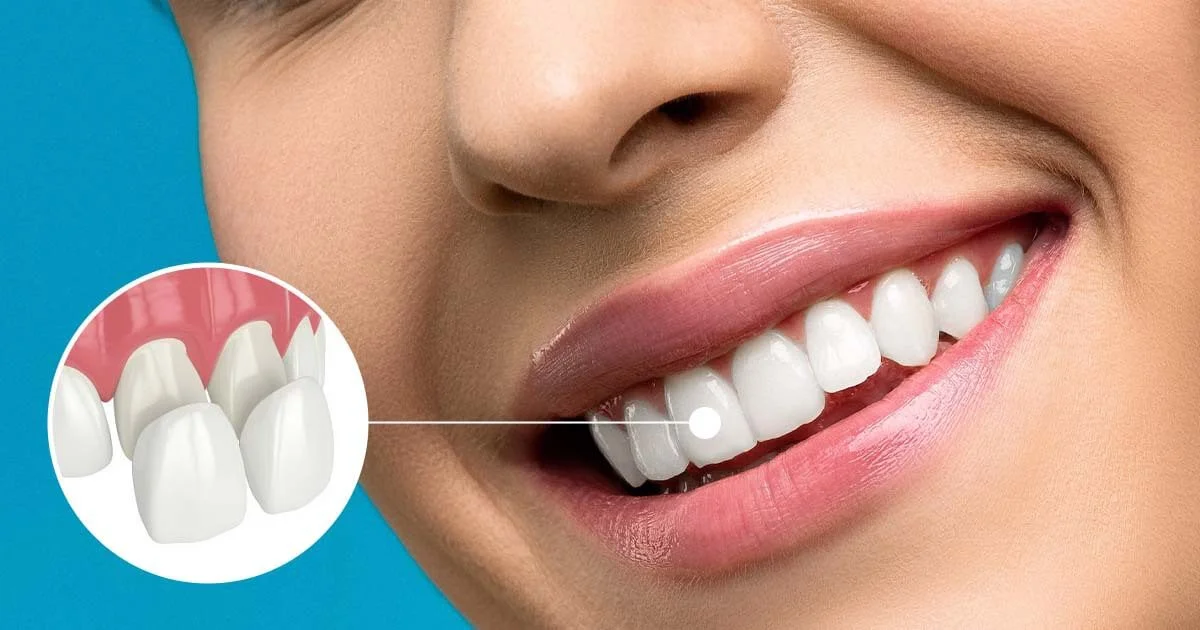
The color of the teeth is undoubtedly important; however, in the success of a smile design, color is just the tip of the iceberg. The anatomy of an aesthetic smile is built on the form, texture, and reflective properties of the teeth, as well as their relationship with surrounding tissues. If the hierarchy between tooth lengths is disrupted or the axis of symmetry shifts slightly, the result may look artificial and unsettling, no matter how white the teeth are.
In this process, digital smile design software is used to minimize the margin of error. These analyses, performed on high-resolution photographs and intraoral scans, help determine where the teeth should be positioned according to the "Golden Ratio" of the face. For sustainability, it is critical not to reduce aesthetics solely to the teeth but also to account for lip support and the vertical dimension of the face.
Principle 1: Gum Aesthetics (Pink Aesthetics) and Zenith Points
The foundation of a perfect smile is the health and symmetry of the gums. In the field known as "pink aesthetics," one of the most important smile design criteria is the correct positioning of the gum line. If the gums are too visible (gummy smile) or at asymmetrical levels, the teeth will also appear unbalanced. Zenith points refer to the highest point where each tooth meets the gum. The position and height of these points determine the dynamism of the smile.
Principle 2: Tooth Axes and Balance of Symmetry
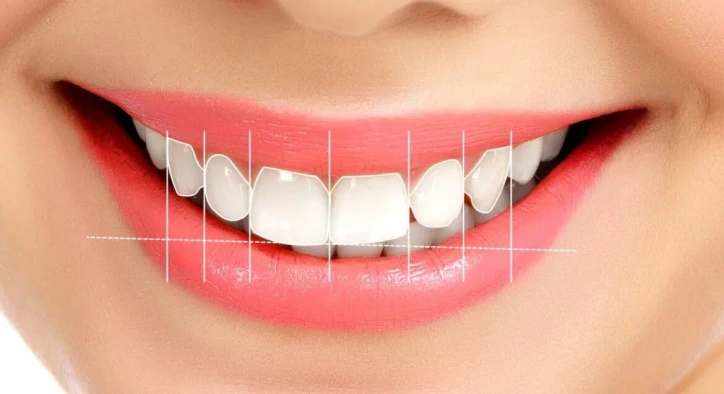
The inclination of the vertical axes of the teeth defines the character of the smile. An ideal smile design requires the teeth to tilt slightly toward the center as they move from the midline outwards. This tilt gives the dental row a natural depth and fluidity. While absolute symmetry is rarely found in nature, "dynamic symmetry"—where the dental midline coincides with the facial midline but micro-differences in tooth form are preserved—reinforces naturalness.
Principle 3: Incisal Edge and Smile Line Harmony
The smile line is an imaginary curve connecting the cutting edges of the upper teeth. For a "young and dynamic smile," this line must harmonize with the curve of the lower lip. If this line is flat or curves opposite to the lower lip, the individual may appear older or tired. Extending or reshaping the incisal edges ensures that the teeth integrate seamlessly with the lip structure when smiling.
Principle 4: The Golden Ratio
The Golden Ratio, a mathematical miracle found throughout nature, is the cornerstone of smile design planning. According to this rule, when viewed from the front, the width of the two central incisors should be approximately 1.618 times the width of the lateral incisors. Calculations based on scientific data ensure the result is not just "beautiful" but mathematically "correct."
Principle 5: Embrasures and Natural Transitions
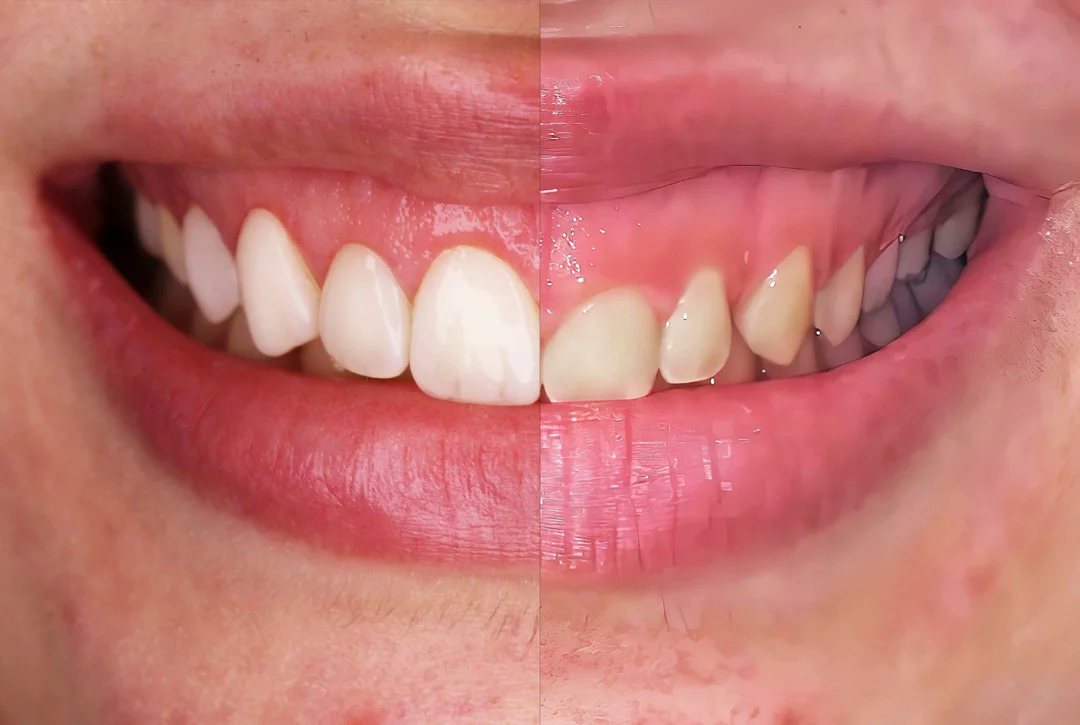
Embrasures are the natural V-shaped spaces between the incisal edges of the teeth. Their presence prevents the teeth from looking like a solid, artificial block. In successful designs, the depths and widths of these natural triangles are carefully engineered to allow light to pass between the teeth, breaking the "artificial tooth" perception often associated with veneers or crowns.
Principle 6: Harmony with Facial Character
Smile design is an art of face reading as much as a biological procedure.
- Masculine Forms: Teeth with straighter, more angular, and distinct lines.
- Feminine Forms: Rounded corners with more curved and soft transitions.
- Age Factor: Keeping the central incisors slightly longer is a common method for a more youthful appearance. The goal is to discover the form that best reflects the patient’s character rather than applying a generic template.
Principle 7: Phonetic and Functional Integration
No matter how beautiful a smile design is, it is considered unsuccessful if the patient cannot speak clearly or eat comfortably. The correct pronunciation of sounds like "F" and "V" depends on the contact point of the upper front teeth with the lower lip. Functionally, the bite relationship is vital; balanced chewing forces protect both the restorations and the jaw joint (TMJ) health.
Frequently Asked Questions (FAQ)
What is smile design and how long does it take?
Smile design is the process of making teeth functionally and aesthetically compatible with the face. The process is usually completed within 7-10 days, depending on the scope of the procedures.
What are the 7 basic criteria for a perfect smile?
For a perfect result, 7 main parameters are considered: gum health, tooth axes, symmetry, smile line harmony, the golden ratio, embrasures, and harmony with facial character.
How is the golden ratio calculated in dental aesthetics?
It is based on the 1.618 (phi) rule regarding the ratio of tooth widths. Digital software performs these calculations with millimetric precision to ensure the central and lateral teeth are in proportion.
Are smile design before and after results permanent?
Designs made with materials like porcelain laminates or zirconium are very long-lasting. With good oral hygiene and regular check-ups, results can be preserved for 15-20 years.
What are the differences between male and female smile designs?
Women generally prefer designs with rounded edges and more prominent central incisors, while men often opt for straighter lines and angular forms to convey a stronger expression.
How are smile design prices determined in 2026?
Prices depend on the quality of the material, laboratory craftsmanship, and the dentist's experience. Additionally, surgical interventions like gum aesthetics are among the smile design criteria that affect the total cost.
About the Author