


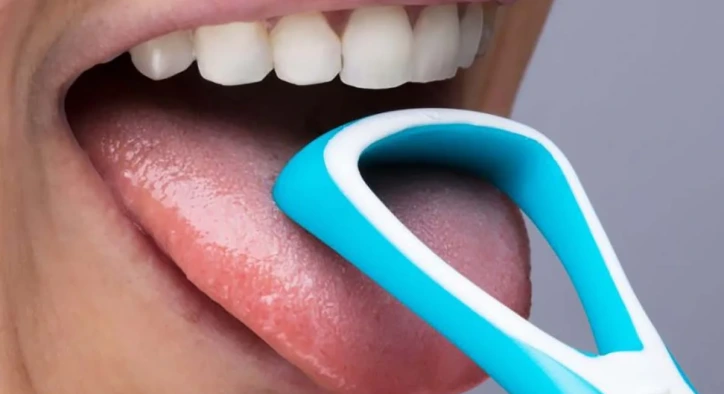
How Do You Use a Tongue Cleaner? What Does It Do?
Don't put off your smile. Message us now to discuss your treatment options with our expert dentists.
WhatsAppWhen evaluating daily oral hygiene routines, the vast majority of individuals focus strictly on brushing their teeth and utilizing dental floss for interdental access. However, the oral cavity does not consist solely of highly calcified tooth structures. The largest, most porous, and highly fertile environment for bacterial colonization inside the mouth is the surface of the tongue. The tongue dorsum is densely covered with thousands of microscopic projections called "papillae." This velvet-like, highly irregular texture acts exactly like a structural sponge, continuously trapping food micro-debris, dead epithelial cells, salivary proteins, and millions of active microorganisms throughout the day.
Believing that oral hygiene is finalized solely by brushing your teeth is equivalent to cleaning only one half of a room while leaving the other half dirty. The hidden microbiological source behind persistent bad breath, periodontal diseases, and even secondary tooth decay is almost always the white-grey bacterial biofilm accumulating on the tongue. Mechanically removing this toxic layer from the oral cavity is the direct purpose of a specialized tongue cleaner (tongue scraper). Highly emphasized in modern preventive dentistry, this anatomical tool is a mandatory asset for comprehensive oral health.
Table of Content
What Does a Tongue Cleaner Do? Main Benefits Explained
When introduced during diagnostic consultations, patients frequently inquire: what does a tongue cleaner do? The primary biological benefits of implementing a tongue scraper within your daily hygiene loop include:
- Drastically Minimizes Bacterial Load: Anaerobic bacteria that colonize the tight spaces between papillae thrive in oxygen-free settings, causing localized gum inflammation and enamel decay. A tongue cleaner mechanically shears away this volatile biofilm layer, lowering total oral pathogen concentrations by up to 80%.
- Enhances Taste Receptor Sensitivity: When the papillae are heavily blanketed by bacterial sludge and food debris, your taste buds (receptors) are physically insulated from the foods you consume. Clearing this layer enhances taste sensitivity instantly; distinct sweet, salty, sour, or bitter profiles can be intensely registered while consuming less food volume.
- Restores Natural Aesthetic Display: The unappealing white, yellow, or coated appearance covering the tongue is entirely removed. The tissue regains its healthy, smooth and vibrant coral-pink presentation.
- Supports Systemic Digestive Function: Digestion begins directly inside the mouth. A thoroughly cleaned tongue surface prompts healthy salivary enzyme expression (such as amylase) and blocks the continuous swallowing of harmful bacterial colonies into the gastrointestinal tract.
Exploring Tongue Cleaner Categories: Copper vs. Metal vs. Plastic
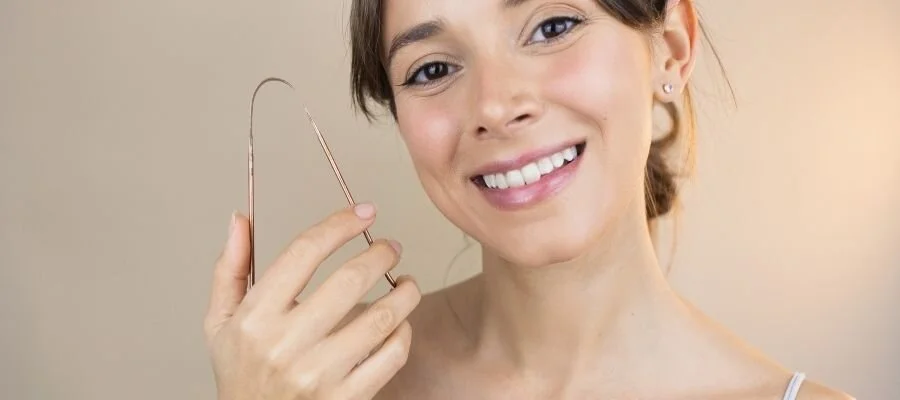
Cosmetic and preventive dental markets provide various design geometries and material structures. Selecting the appropriate composition is highly critical for durability and auto-sanitization:
1. Copper Tongue Cleaner
Tracking back from traditional Ayurvedic wisdom to modern biomaterials science, the copper tongue cleaner remains the premier clinical selection. Copper elements hold natural "oligodynamic" properties, meaning they are inherently anti-bacterial and anti-microbial. A raw copper surface destroys trapped pathogens on contact at a cellular level. Consequently, copper scrapers represent a premium choice that self-sanitizes, resists rust, and supports optimal oral microflora.
2. Metal Tongue Cleaner (Stainless Steel)
Matching the material quality of clinical surgical instruments, a premium metal tongue cleaner is typically cast from medical-grade stainless steel. These devices exhibit exceptional mechanical durability, presenting zero risks of bending, warping, or snapping. They can be effortlessly sterilized inside a dishwasher or via boiling water, representing a lifelong, non-allergenic device.
3. Plastic Tongue Scrapers
Commonly found in local retail stores, built into the reverse side of toothbrushes, or sold as basic plastic arches. While flexible and inexpensive, plastic materials possess porous surface profiles that can harbor bacterial micro-colonies over time, requiring complete replacement every 3 to 4 months.
Step-by-Step Execution Protocol
Adhering to correct tongue cleaner instructions ensures maximum biofilm removal without causing micro-trauma to delicate lingual tissues. The clinical how to use a tongue cleaner protocol moves forward through these organized steps:
- Initial Setup: Perform the tongue scraping routine first thing in the morning on an empty stomach, prior to brushing your teeth or rinsing your mouth with water. The volatile bacterial biofilm layer reaches its peak density during sleep.
- Lingual Extension: Position yourself before a mirror, open your mouth wide, and extend your tongue forward as far as possible in a fully relaxed state.
- Appliance Placement: Take the curved, U-shaped edge of the tongue cleaner and position it gently at the absolute back or root region of the extended tongue.
- The Scraping Stroke: Applying light, smooth downward pressure, sweep the appliance forward in a single motion from the root of the tongue toward the tip. You will visually note the white debris gathering along the scraper edge.
- Rinse and Repeat Sequence: Following every individual forward stroke, flush the scraper under running tap water to remove all debris. Repeat this scraping movement across the center, left, and right zones of the tongue for a total of 4 to 6 sequences.
- Final Clean-Up: Once completed, rinse your mouth thoroughly with lukewarm water. You may then move forward with your standard toothbrushing and interdental flossing routines. Wash your scraper, dry it with a towel, and store it in a dry setting.
Which Tongue Cleaner Is Better?
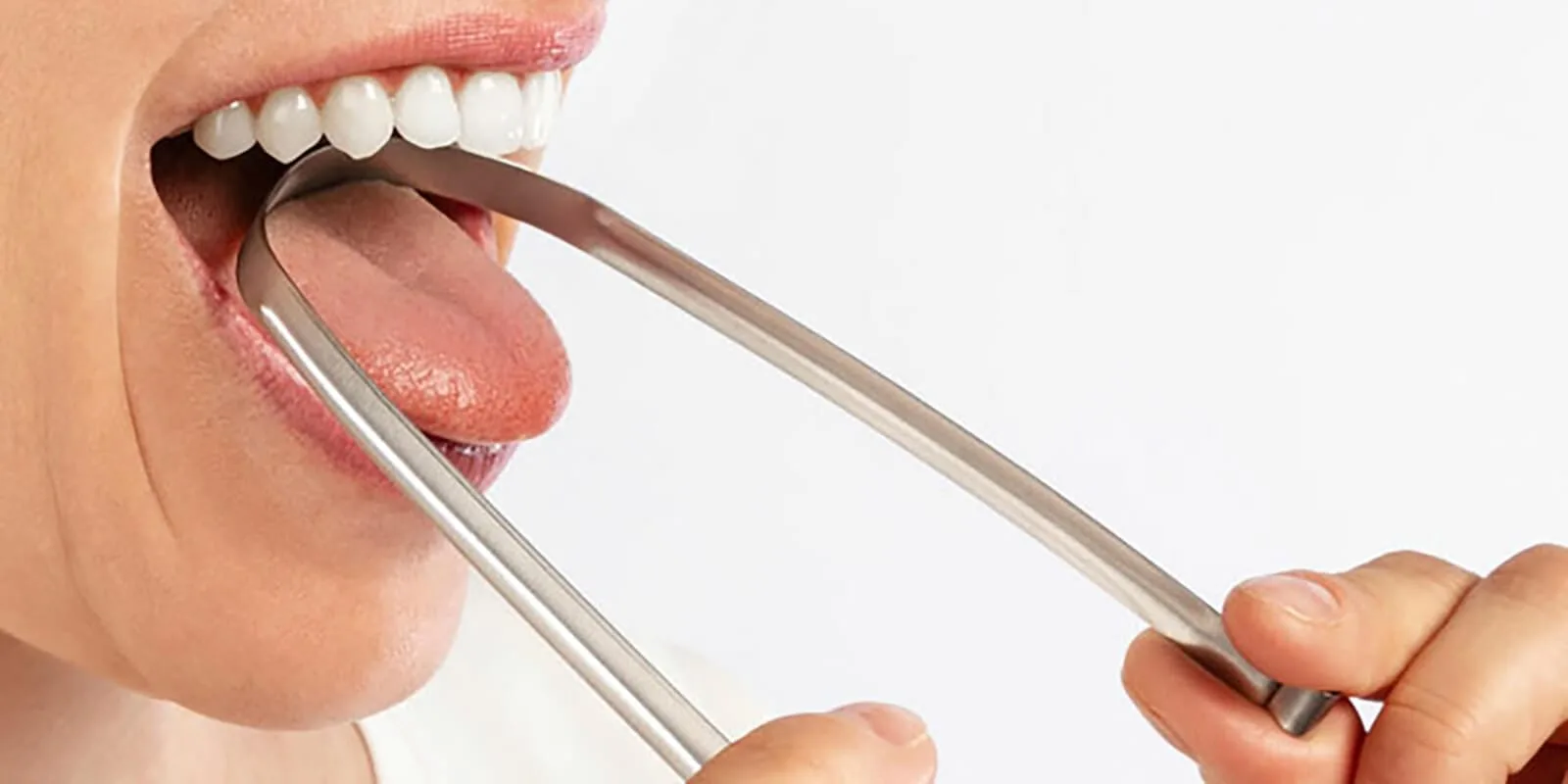
Reference this comparative structural framework to determine the optimal scraper composition for your daily habits:
|
Structural Performance & Criteria |
Copper Tongue Cleaner |
Metal Tongue Cleaner (Steel) |
Plastic Tongue Scraper |
|
Natural Anti-Bacterial Action |
Excellent (Oligodynamic destruction) |
Absent (Relies on smooth surface) |
Absent (Can collect micro-colonies) |
|
Operational Lifespan Window |
Lifetime (Develops a natural patina) |
Lifetime (Zero structural wear) |
Must be discarded every 3-4 months |
|
Sanitization Complexity |
Easy (Polished with lemon/salt) |
Very Simple (Boiling water safe) |
Moderate (Hot water can warp plastics) |
|
Flexibility & Tissue Comfort |
High |
Moderate - Firm |
High - Soft |
Frequently Asked Questions
Is it healthy to use a tongue cleaner daily?
Yes, implementing a tongue cleaner daily is exceptionally healthy and strongly recommended within preventive dentistry. Mechanically disrupting the volatile bacterial biofilm layer covering the tongue is directly effective in preventing localized gum disease (gingivitis), calculus (tartar) accumulation, and chronic throat infections (tonsillitis). Clearing the tongue balances the overall oral microbiome safely.
Does a tongue cleaner help with bad breath permanently?
Yes. Approximately 85-90% of chronic bad breath (halitosis) cases originate from intraoral profiles, specifically driven by anaerobic bacteria nesting on the posterior tongue. As these microorganisms break down protein fragments, they emit Volatile Sulfur Compounds (VSCs) which smell identically to rotten eggs. Standard toothbrushing cannot lift these deep-seated gases. Scraping the tongue eliminates these pathogen reservoirs, leading to an immediate, dramatic drop in halitosis scores.
Can I simply use my standard toothbrush to clean my tongue instead?
No, there is a substantial clinical difference. Toothbrush bristles are structurally engineered to disrupt plaque on highly calcified, hard enamel surfaces. When a regular toothbrush is scrubbed against the highly porous, soft tissue of the tongue, the vertical bristles push the bacterial biofilm deeper into the structural valleys between the papillae rather than lifting it out. Furthermore, the thick profile of a toothbrush head triggers the gag reflex intensely. Tongue cleaners utilize flat, low-profile, curved edges engineered to smoothly sweep bacteria up and out of the mouth.
About the Author