


Frequently Asked Questions About Impacted Wisdom Tooth Extraction and Post-Surgery Care
Don't put off your smile. Message us now to discuss your treatment options with our expert dentists.
WhatsAppHuman evolution and shifting dietary habits across historical eras have caused our jawbones to decrease significantly in structural size. As the tough, fibrous diets of ancient times were completely replaced by the soft, cooked meals of the modern era, the third molars located at the absolute rear of the dental arch began to lose their exit space.
Due to this localized crowding, these teeth frequently become locked beneath the soft tissue or hard bone matrix, a clinical state defined in dental medicine as an impacted wisdom tooth. Directly altering systemic oral health, structural teeth alignment, and temporomandibular jaw joints, this surgical issue triggers massive dental pathologies if not extracted at the appropriate clinical time window.
Table of Content
- What is an Impacted and Semi-Impacted Wisdom Tooth?
- What Happens If an Impacted Wisdom Tooth is Not Extracted?
- How is Impacted Wisdom Tooth Surgery and Extraction Done?
- Is Semi-Impacted Wisdom Tooth Extraction Difficult?
- How Long Does Pain Last After Wisdom Tooth Surgery?
- Essential Post-Operative Instructions After a Wisdom Tooth Extraction
- Frequently Asked Questions
What is an Impacted and Semi-Impacted Wisdom Tooth?
During comprehensive radiological tracking (utilizing digital panoramic x-rays and 3D cone-beam computed tomography), third molars are structurally classified based on their positioning within the jaw bone matrix:
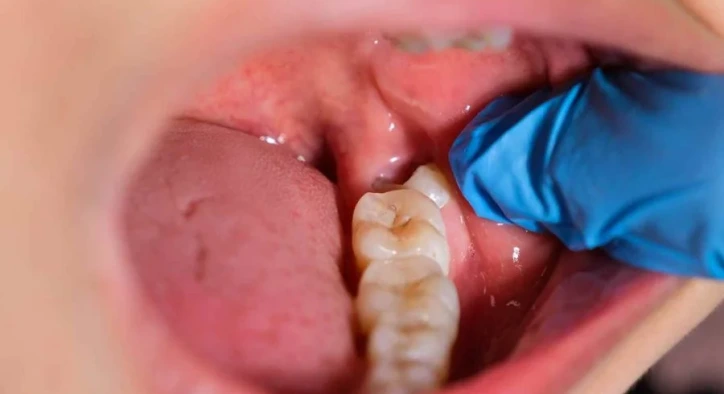
- Impacted Wisdom Tooth: A clinical setup where the tooth remains completely encased within the surrounding bone architecture, showing zero visibility inside the oral cavity during visual inspection. These can sit in vertical, horizontal, or severely inverted angles (mesioangular or distoangular configurations).
- Semi-Impacted Wisdom Tooth: Occurs when a specific segment of the tooth crown successfully pierces through the gingival fibers but cannot complete its natural eruption path. A semi-impacted wisdom tooth scenario produces significantly more acute infections compared to fully bone-impacted teeth. This happens because the loose, overlying gum tissue flap (operculum) creates a microscopic trap against the crown. Food debris and bacteria easily collect inside this pocket, completely shielded from regular toothbrush bristles, triggering frequent acute inflammatory attacks known as pericoronitis.
What Happens If an Impacted Wisdom Tooth is Not Extracted?
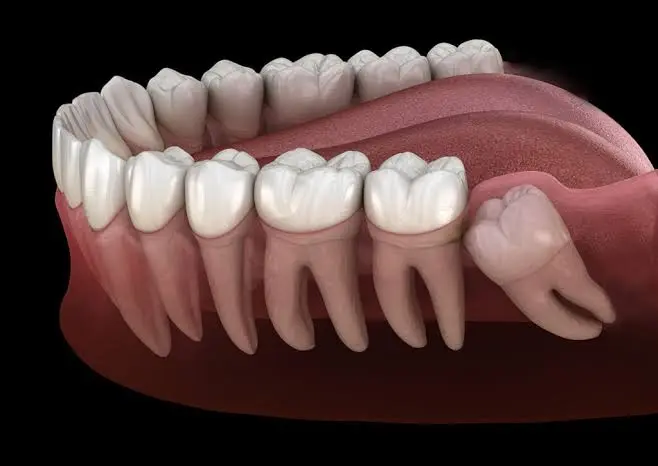
Patients frequently question the clinical necessity of removing teeth that are invisible or not actively producing chronic pain. So, what happens if an impacted wisdom tooth is not extracted? Leaving these compromised structures inside the jaw bone gives rise to several silent complications over time:
- Decay of the Adjacent Second Molar: Teeth situated in horizontal or angular patterns exert a constant mechanical pushing force directly against the root framework of the healthy second molar ahead. Because this micro-gap cannot be cleaned, it triggers deep, hidden decay along the adjacent root body, leading to the catastrophic loss of both teeth.
- Orthodontic Crowding and Shift: The continuous eruptive pressure of third molars pushes the entire dental arch forward, causing front incisors to overlap and destroying historical orthodontic corrections.
- Cyst and Odontogenic Tumor Formation: The protective developmental fluid sac surrounding an impacted crown (pericoronal follicle) can gather fluid and expand if left inside the jaw for too long. This expansion causes localized bone resorption, developing into large jaw cysts or rare odontogenic tumors.
- Recurrent Severe Infections and Trismus: Infections developing around semi-impacted teeth spread rapidly toward the cheek, neck, and submandibular fields, causing facial swelling, difficulty swallowing, and intense muscle locking that prevents the mouth from opening, a clinical state known as trismus or jaw lock.
How is Impacted Wisdom Tooth Surgery and Extraction Done?
Though routinely referred to as a standard extraction, removing a tooth locked beneath the bone is a meticulous micro-surgical intervention managed under sterile conditions. An impacted wisdom tooth surgery moves forward through these precise operational milestones:
- 3D Nerve Mapping Analysis: Using detailed 3D dental tomographies, oral surgeons calculate the exact milimetric distance between the wisdom tooth roots and the main sensory nerve canal of the lower jaw (inferior alveolar nerve). This mapping is absolute to guarantee neurological safety.
- Deep Local Anesthesia Integration: The target quadrant is completely numbed using advanced local anesthetics. For patients managing intense dental phobias or hyperactive gag reflexes, conscious sedation or intravenous general anesthesia options are fully accessible.
- Tissue Flap Elevation and Bone Relief: A small, controlled incision is made along the gum line to gently lift the soft tissue and expose the underlying bone surface. The layer of bone trapping the crown is micro-removed using cooled surgical handpieces or advanced piezoelectric bone surgery cutting instruments until the tooth is fully visible.
- Tooth Sectioning Technique (Separation): Attempting to forcefully elevate a horizontal or hooked root layout in one solid piece can fracture the jaw bone. To bypass this risk, the surgeon sections the tooth into small fragments, safely retrieving each piece one-by-one from the socket without creating structural trauma.
- Socket Debridement and Suturing: The underlying follicular tissues are cleared out completely, the socket is flushed with sterile antiseptic solutions, and the gum flap is neatly realigned and secured using sterile surgical sutures.
Is Semi-Impacted Wisdom Tooth Extraction Difficult?
A prominent point of concern for patients planning treatment is the question: Is semi-impacted wisdom tooth extraction difficult? From a clinical oral surgery perspective, removing a semi-impacted tooth is typically significantly faster and less invasive compared to deeply bone-buried, fully impacted teeth. Because a segment of the crown has already entered the mouth, the amount of bone removal required is minimal or non-existent. The overall procedure is usually completed within 10 to 30 minutes, depending on root morphology.
How Long Does Pain Last After Wisdom Tooth Surgery?
Once the advanced local anesthesia wears off completely (roughly 3 to 4 hours post-surgery), experiencing a mild-to-moderate dull ache or light throbbing is entirely natural. So, how long does pain last after wisdom tooth surgery? This soreness reaches its physiological peak within the first 24 to 48 hours and remains fully manageable using standard anti-inflammatory painkillers prescribed by your surgeon.
Starting on the third day, pain levels decrease rapidly, disappearing completely within 5 to 7 days. If a sudden, intense, throbbing pain that is resistant to painkillers develops on the third or fourth day, it indicates a breakdown of the protective blood clot, a painful complication known as alveolitis or dry socket, requiring immediate clinical care.
Essential Post-Operative Instructions After a Wisdom Tooth Extraction
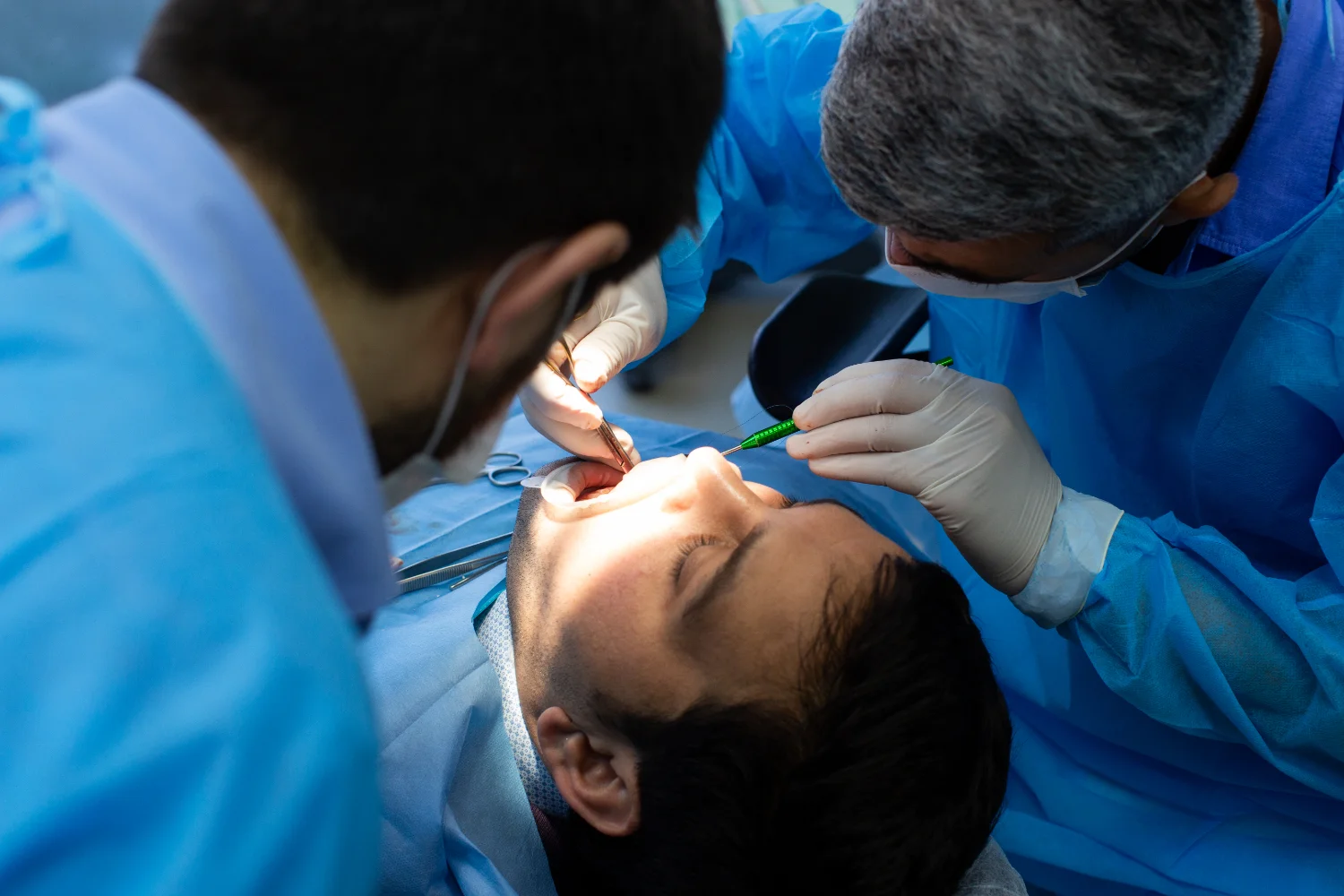
The overall speed and comfort of the tissue recovery process depend directly on the patient's adherence to home care instructions after impacted wisdom tooth extraction:
- Maintain Firm Pressure on the Gauze: The sterile gauze pad positioned directly over the surgical socket must be kept firmly compressed by biting down continuously for 30 to 45 minutes to arrest primary bleeding, then discarded. Constantly checking or changing the gauze disrupts early clot formation.
- Do Not Spit or Rinse for the First 24 Hours: Creating negative pressure by spitting or swishing liquids aggressively will dislodge the fragile initial blood clot from its socket, leading to dry socket infections. Always swallow your saliva and minor blood traces normally.
- Consistent Cold Compress Application: Apply an external ice pack wrapped in a cloth to your cheek over the surgical zone for 10-minute intervals during the first day. This drastically minimizes facial swelling, edema, and bruising.
- Dietary Adjustments: For the initial 24 hours, completely avoid hard, crunchy, heavily spiced, hot, or granular foods (like rice, seeds, or nuts) that can settle into the open socket. Focus on soft, lukewarm options like yogurt, smooth soups, and ice cream. Always chew food on the opposite side, and do not use drinking straws, as the suction pressure can dislodge the clot.
- Strict Smoking and Alcohol Ban: Nicotine severely constricts blood vessels, starving the healing bone socket of vital oxygen and stopping the recovery process entirely. Smoking must be strictly avoided for at least 48 hours post-surgery.
Frequently Asked Questions
When are surgical sutures removed after a wisdom tooth extraction?
Sutures are placed to ensure the gum tissue flap heals evenly over the bone socket. If standard non-resorbable silk sutures are utilized, they are painlessly removed by your specialist inside the clinic exactly 7 to 10 days post-surgery. If bio-resorbable sutures are applied, they dissolve and flake away naturally within two weeks.
Will my face swell heavily after an impacted wisdom tooth surgery?
The extent of facial swelling is tied to the structural depth of the tooth inside the bone and the amount of bone relief required during surgery. Localized cheek swelling (edema) peaking on the second and third days is a natural biological healing response. Following consistent cold application and using prescribed anti-inflammatories, this swelling resolves rapidly starting on the fourth day.
Can an impacted wisdom tooth surgery be safely performed during pregnancy?
Unless a patient presents with an acute, unmanaged dental abscess or severe infection, elective impacted wisdom tooth extractions are postponed until after delivery. However, if emergency surgical intervention is mandatory, it can be safely conducted during the second trimester (between the 4th and 6th months), utilizing pregnancy-safe local anesthetics and consulting directly with the patient's obstetrician.
Can an oral surgery for an impacted tooth be performed if I have a cold or flu?
If you are managing an active upper respiratory tract infection presenting with nasal congestion, sneezing fits, or a productive cough, it is best to reschedule the surgery. Keeping your mouth open for an extended duration becomes highly challenging if you cannot breathe comfortably through your nose. Furthermore, the immense internal pressure generated by a sneeze can tear surgical sutures and blow the protective blood clot directly out of the socket.
About the Author