


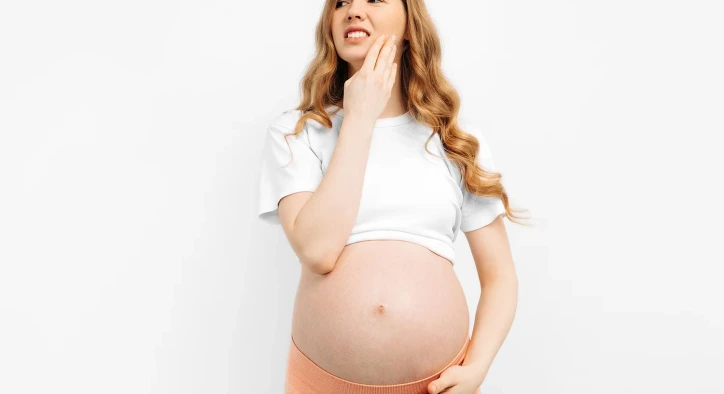
Is Gum Swelling Normal During Pregnancy? Why Does It Occur and How Can It Be Treated?
Don't put off your smile. Message us now to discuss your treatment options with our expert dentists.
WhatsAppPregnancy is a miraculous phase of life filled with immense biological transitions, where hormonal frameworks are entirely rewritten to support a new life. During this period, expectant mothers pay close attention to their dietary intake, sleep quality, and general well-being. However, there is a frequently ignored issue that can trigger sudden panic when it surfaces: swollen gums during pregnancy. Discovering blood stains in the sink during brushing, noticing your gums puffing up like cushions, or feeling localized tenderness while chewing are incredibly common milestones. At Avrupa Sağlık Diş clinics, we have compiled this comprehensive, medically verified YMYL guide to help mothers navigate pregnancy gum issues safely.
Table of Content
- Is Swollen Gums During Pregnancy Normal?
- What Causes Swollen Gums During Pregnancy?
- What Triggers a Pregnancy Gum Infection?
- When Does Pregnancy Gum Swelling Start?
- When Do Swollen Gums Go Away After Pregnancy?
- What to Do When Bleeding and Swollen Gums Occur Together?
- How to Treat Swollen Gums During Pregnancy (Clinical & Home Care Options)
- What is a Pregnancy Tumor (Pyogenic Granuloma)?
- Frequently Asked Questions
Is Swollen Gums During Pregnancy Normal?
The first question that typically crosses a mother’s mind is: "Is there an underlying systemic disease, or is this a natural pregnancy side effect?"
To put your mind at ease immediately, experiencing swollen gums during pregnancy is completely normal and highly common. In clinical dentistry, this specific condition is classified as pregnancy gingivitis. Statistical data shows that approximately 60% to 70% of expectant mothers experience gum sensitivity, structural swelling, or localized bleeding at some point during their pregnancy. While it is not a direct threat to your baby on its own, it must be monitored closely to prevent it from progressing into severe bone-destroying infections.
What Causes Swollen Gums During Pregnancy?

During pregnancy, the oral cavity becomes uniquely vulnerable to external bacterial plaque. The primary biological factors explaining what causes swollen gums during pregnancy include:
- Surging Progesterone and Estrogen Levels: Throughout gestation, progesterone and estrogen levels skyrocket. This hormonal surge causes the delicate blood vessels inside your gums to widen and become more permeable. Consequently, the gum tissue becomes fluid-heavy, bright red, and tender to the touch.
- Hyper-Reaction to Bacterial Plaque: Microscopic plaque films that your body easily managed before pregnancy are now perceived by your hormone-altered gums as an immediate threat. Your immune defense launches an exaggerated inflammatory response, causing the tissue to swell up rapidly.
- Temporary Immune System Shifting: To prevent the mother's body from rejecting the developing fetus as a foreign organism, the immune system slightly modifies its defense behavior. This temporary shift makes it harder for oral tissues to fight off standard plaque-building bacteria.
- Morning Sickness and Vomiting Episodes: Severe vomiting, especially during the first trimester, covers the teeth and gums in corrosive stomach acid. This acid weakens tooth enamel and chemically irritates the delicate gingival margins, worsening localized swelling.
What Triggers a Pregnancy Gum Infection?
If your symptoms expand beyond simple puffiness into a constant foul odor, throbbing dental pain, or pus releasing from the gingival line, the condition has evolved into a pregnancy gum infection. This usually occurs because an expectant mother, frightened by bleeding and pain, stops brushing her teeth entirely. This neglect allows billions of aggressive bacteria to build up inside the natural pockets between the teeth and gums, culminating in painful periodontal abscesses.
When Does Pregnancy Gum Swelling Start?
These subtle structural changes in the gums typically begin to manifest around the 2nd month of pregnancy (approximately the 8th week). As maternal hormones climb toward their peak, the swelling and bleeding tendencies reach their maximum intensity between the 3rd and 7th months.
When Do Swollen Gums Go Away After Pregnancy?
This condition does not cause permanent damage. Once delivery occurs, your endocrine system works swiftly to return hormone markers to their pre-pregnancy baselines. Consequently, swollen, bleeding, and dark red gums typically resolve on their own within 3 to 6 months postpartum. However, this guaranteed resolution does not mean oral hygiene can be ignored during the waiting months.
What to Do When Bleeding and Swollen Gums Occur Together?
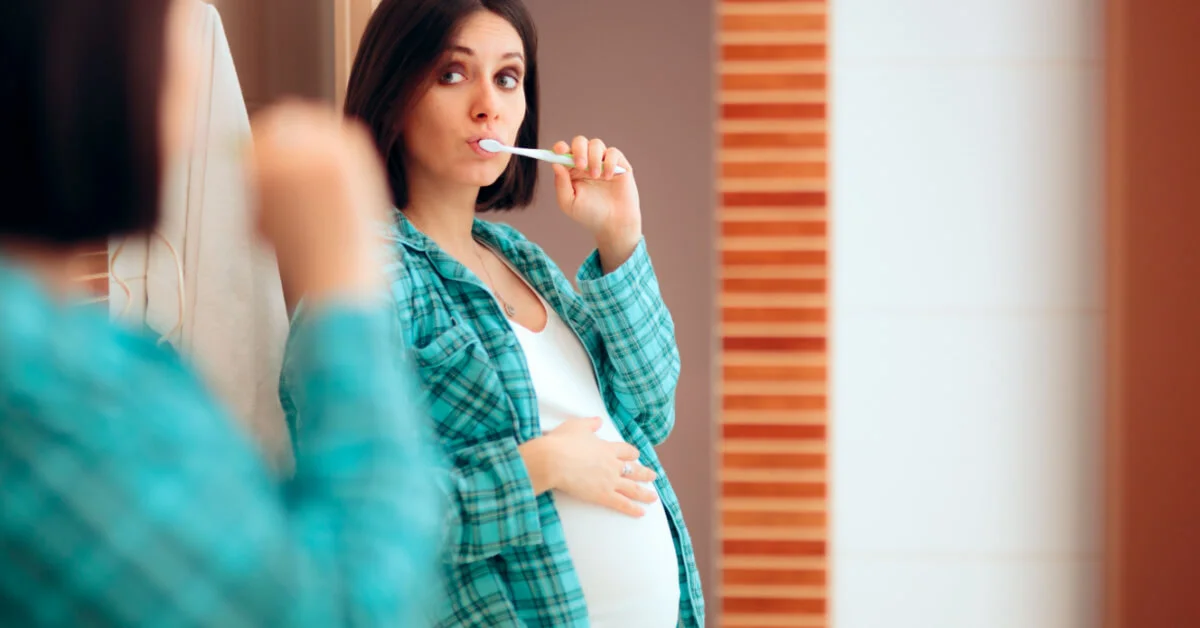
Gingival swelling means the micro-capillaries within your gums have physically expanded. This makes the tissue so fragile that a toothbrush strike, biting into an apple, or even light pressure can cause bleeding. Stopping oral brushing because your gums bleed during pregnancy is the worst mistake you can make. When bleeding happens, you must double down on your home care, using a soft-bristled brush to gently clean the margins using smooth, circular, massaging motions.
How to Treat Swollen Gums During Pregnancy?
- Professional Dental Cleaning (Scaling): This is the safest and most effective clinical procedure we provide for expectant mothers. While we cannot alter your pregnancy hormones, we can completely strip away the hard tartar and bacterial plaque. By eliminating these irritants, the hormones have nothing left to react against. Scheduling a dental cleaning during the second trimester brings immediate, measurable relief.
- Switching to an Ultra-Soft Toothbrush: Rigid, hard bristles will slice through sensitive, swollen gums. Choose a dedicated prenatal toothbrush with ultra-thin, soft nylon filaments.
- Warm Saltwater Rinses: Dissolve a quarter teaspoon of standard salt into a glass of warm water and rinse 2–3 times daily. Saltwater naturally draws out trapped fluid from the swollen tissues via osmosis, reducing puffiness safely.
- Nutritional Adjustments: Consuming foods rich in Vitamin C reinforces the structural integrity of your gum tissues. Drastically reducing sticky carbohydrates and sugary snacks starves the bacteria responsible for plaque formation.
- Flossing and Gentle Water Flossers: Using dental floss or a low-pressure water flosser clears out decomposing food debris stuck between swollen teeth, halting the chain reaction of infection.
Critical Warning: Never apply unverified herbal pastes, essential oil blends, or alcohol-based
commercial mouthwashes to swollen pregnancy gums. These chemicals can be absorbed directly
into your bloodstream through the porous oral mucosa.
What is a Pregnancy Tumor (Pyogenic Granuloma)?
Occasionally, gum swelling does not spread evenly across all teeth but isolates itself into a singular, dark red, raspberry-like growth between two teeth. Despite its frightening name, a pregnancy tumor is entirely benign and non-cancerous. It is simply an overgrowth of tiny blood vessels triggered by extreme hormonal stimulation. Unless it bleeds severely or blocks normal chewing, it is left completely alone until delivery, after which it typically shrinks and disappears spontaneously.
Frequently Asked Questions
Can swollen gums during pregnancy cause premature birth?
Yes, clinical data confirms that untreated, severe periodontal infections (gum disease) release high counts of inflammatory markers like prostaglandins into the maternal bloodstream. These markers can mimic the biological triggers for labor, significantly increasing the risk of premature birth and low birth weight. Meticulous gum care is a vital component of a safe pregnancy.
Is it completely safe to visit a dentist for a cleaning during pregnancy?
Yes, it is entirely safe. The second trimester (months 4 through 6) is the ideal window for essential dental work, including deep scaling, composite fillings, or emergency root canals. During the first and third trimesters, routine dental cleanings are usually postponed, and only emergency interventions for severe pain are performed.
Can I take antibiotics or painkillers for a pregnancy gum infection?
You must never take any medication during pregnancy without the dual confirmation of both your obstetrician and your dental specialist. If a deep infection threatens your systemic health, safe Category B prenatal antibiotics and paracetamol-based pain relievers can be prescribed under strict clinical monitoring.
Should I brush my teeth immediately after morning sickness vomiting?
No. Vomiting coats your mouth in highly destructive stomach acid, which temporarily softens your outer tooth enamel. Brushing soft enamel immediately causes microscopic wear and irritates your gums further. Instead, rinse your mouth thoroughly with plain water right after vomiting, and wait at least 30 minutes before using a toothbrush.
About the Author