


What Is Fiber Post Installation? How Is It Done And What Is Its Lifespan?
Don't put off your smile. Message us now to discuss your treatment options with our expert dentists.
WhatsAppThe core priority of modern dentistry is always to preserve healthy natural tooth structures within the mouth and bypass surgical extraction options at all costs. Due to severe, deep decay, complex crown fractures from trauma, or massive missing structures revealed after removing failing old fillings, patients are often left with ultra-thin enamel walls or just the remaining root outline.
Historically, teeth with completely missing upper structures were automatically extracted and replaced with bridges or dental implants. However, thanks to the bio-mechanical material selections used in dynamic restorative dentistry, it is entirely possible to save these teeth. Providing a structural link by drawing functional retention directly from the root canal system, fiber post application provides heavily broken teeth with a solid structural foundation, skipping extraction paths entirely.
Table of Content
What is Fiber Post Application and What is Intracanal Fiber Post Application?
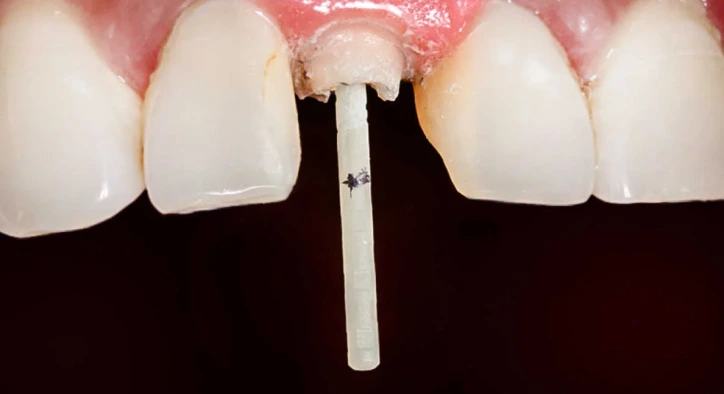
Defined within structural operative dentistry, the most accurate answer to what is fiber post application or the more targeted query what is intracanal fiber post application is this: It is a post-endodontic restorative procedure where a specialized composite rod (post) is placed into a previously treated root canal system to generate mechanical retention for building up a solid foundational core block (core build-up), allowing the tooth to support a final cosmetic crown.
In historical dentistry, these structural posts were crafted from cast alloys (metal post-and-core setup). However, metallic rods exhibit extreme stiffness and do not match the natural flexural metrics of real dentin. When heavy chewing forces hit a metal post, it acts as a rigid wedge inside the canal, often causing catastrophic vertical root fractures that render the tooth completely unsalvageable.
Conversely, modern glass fiber post application utilizes high-density fiberglass fibers embedded uniformly in a resilient resin matrix. Its definitive clinical benefit is that its flexural modulus (elasticity coefficient) directly matches real human dentin tissue. Because it flexes naturally alongside the tooth framework under mechanical stress, it reduces the risk of root fractures to near zero.
Why is Fiber Post Application Done?
Fiber post application is performed when the upper crown structure of a tooth has suffered severe destruction, leaving insufficient healthy enamel walls to support a standard direct filling or prosthetic crown.
The primary objective of this structural treatment is to introduce a flexible yet highly resilient rod inside the root canal system, constructing a mechanical anchor (foundation) to safely retain a future porcelain or zirconium crown. By uniformly distributing heavy chewing forces across the entire surface matrix of the root, this methodology minimizes the risk of catastrophic root fractures, allowing heavily compromised teeth that would otherwise face surgical extraction to remain functional inside the mouth.
How is Fiber Post Done?
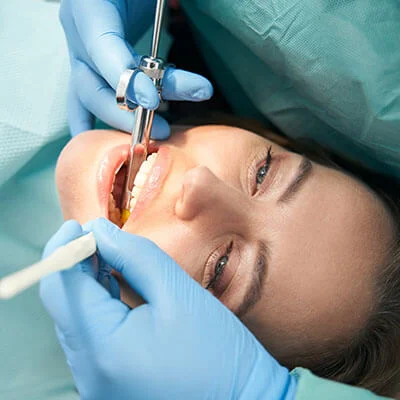
Executed inside sterilized clinical environments utilizing advanced moisture isolation protocols, the detailed stage workflow of how is fiber post done features these core operational steps:
1. Endodontic Evaluation and Canal Access Configuration
The target tooth must possess a clinically sound, dense root canal filling. High-resolution digital x-rays are evaluated to verify that the root apex is free from chronic infections or periapical cysts. Once confirmed, specialized rotary instruments remove the upper two-thirds of the internal gutta-percha packing, leaving the lower one-third intact to preserve the apical seal.
2. Sizing and Calibrating the Root Canal Space
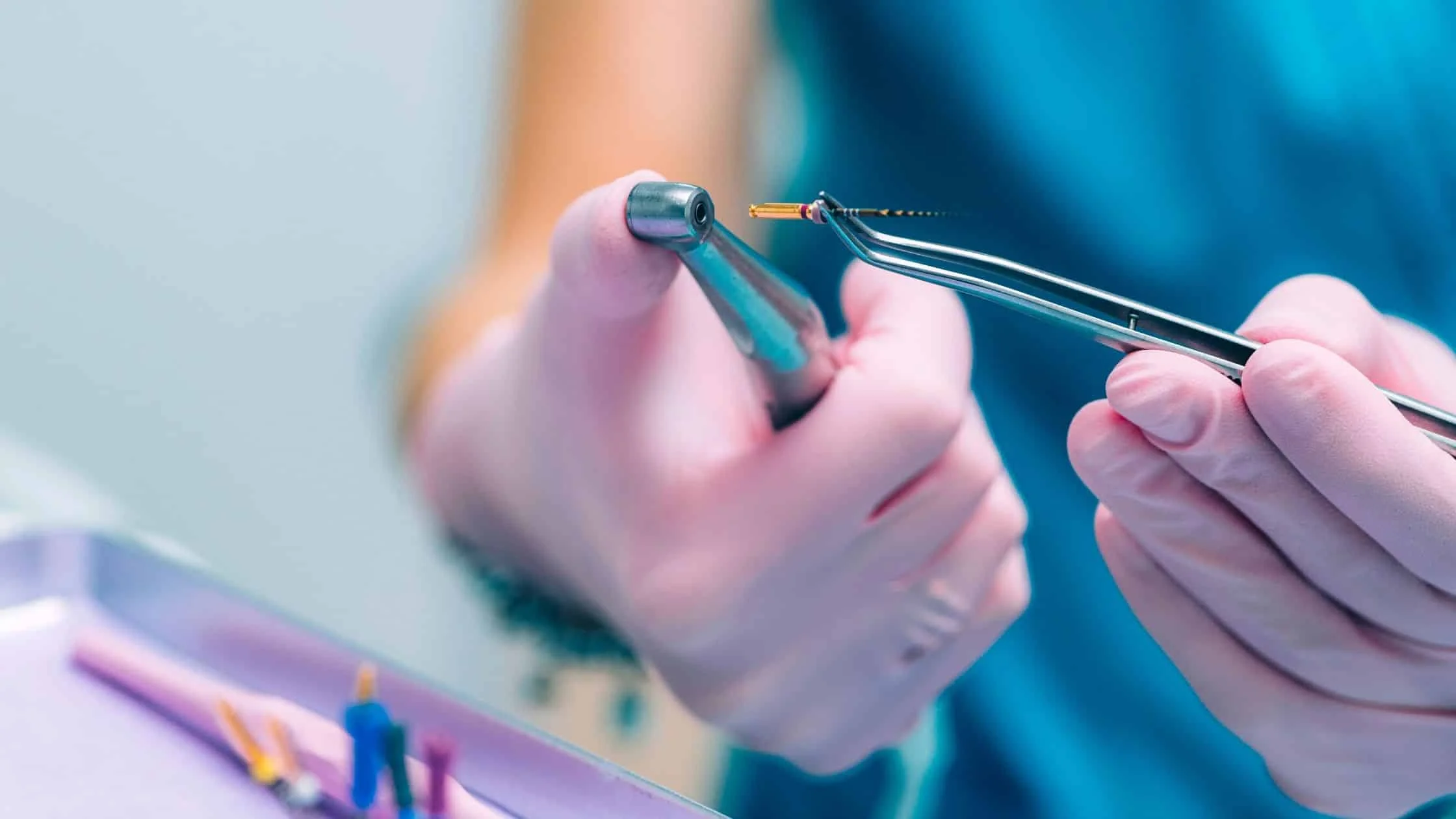
Precision drills that perfectly match the milimetric diameters of the specific fiber posts are introduced to shape the canal space smoothly. The selected glass fiber post is introduced into the canal as a physical trial to verify depth and general orientation, and any excess height extending beyond the crown line is shortened outside the mouth.
3. Chemical Conditioning and Adhesive Bonding Matrix
The internal root space is cleaned with specialized conditioning acids, rinsed thoroughly, and dried completely. Next, advanced dual-cure bonding systems are applied both inside the clean root canal space and over the fiberglass post surfaces to prepare the materials for molecular fusion.
4. Post Cementation and Foundational Core Build-Up
A flowable, dual-cure resin cement is introduced directly into the configured canal space, and the fiberglass rod is seated smoothly into position. High-intensity curing lights are applied to activate immediate polymerization. Once fully stabilized, the extending section of the fiberglass post serves as an anchor. The dentist applies advanced composite resins layer-by-layer around it, fully constructing the missing upper tooth frame (core build-up). After final shaping, the tooth structure is perfectly prepared to receive a permanent porcelain, premium zirconium, or E-Max crown.
Is Fiber Post Painful?
The concept of introducing an internal rod into a root canal system can trigger immediate anxiety regarding structural pain. So, is fiber post painful?
It is critical to clarify that since the target tooth has already undergone root canal therapy, all living nerve tissues and vascular channels inside the root system have been completely removed. The tooth is entirely non-vital. Therefore, it is biologically impossible to feel any sharp pain or distress during a fiber post application. Local anesthesia blocks are usually completely unnecessary for this procedure. Mild local numbing may only be chosen if adjacent gum tissues require slight structural contouring during matrix placement.
How Long Does Fiber Post Last and What is the Teeth Lifespan?
The long-term durability of a tooth saved via this structural restoration depends heavily on patient oral hygiene diligence and protecting the core structure mechanically.
When executed using precise chemical resin protocols and guarded by a full-coverage crown, a high-grade how long does fiber post last estimate is safely between 10 and 15 years. The fiberglass material itself is entirely inert, meaning it cannot decay, corrode, or degrade from exposure to oral fluids.
However, the primary variables controlling the ultimate fiber post teeth lifespan include:
- Mandatory Crown Protection: Following core build-up, the tooth must be protected with a high-strength zirconium or all-ceramic crown. Leaving a post-retained tooth protected solely by a large direct composite filling will lead to fluid micro-leakage along the filling margins over time under heavy chewing loads.
- Root Matrix Integrity: As long as the underlying natural root structure remains free of secondary decay or root surface caries caused by gum recession, the internal fiber post will maintain its structural integrity indefinitely.
Frequently Asked Questions
Why does a tooth feel sore or throb after a fiber post application?
Since the nerve has been removed, direct pulp pain is impossible. However, mild post-operative tenderness or light throbbing when biting down can develop during the first few days due to mechanical pressure exerted on the periodontal ligament surrounding the root apex during canal preparation. This soreness is temporary. If severe, continuous pain develops, it could point to an underlying root issue, requiring a root canal retreatment analysis.
Which restorative choice is better: a metal post or a fiber post?
Fiber posts are vastly superior. Metal posts are excessively rigid, lack translucent optics and can cause vertical root fractures under chewing loads. Fiber posts match the natural elasticity of teeth, present ideal tooth-colored shades for perfect light transmission, and evenly distribute mechanical stress without damaging the root canal walls.
Is performing a fiber post mandatory for every tooth that receives a root canal?
No, it is not mandatory. If a root-canal-treated tooth still retains more than 50% of its healthy natural enamel walls, a standard composite filling or a porcelain onlay restoration is perfectly sufficient. A fiber post is specifically indicated when the structural walls are entirely gone, thinned out, or heavily compromised, requiring internal mechanical retention to hold a restoration.
Can a fiber post application be performed if I currently have the flu?
If you have a mild cold without breathing complications, the procedure can be safely carried out since it is entirely non-invasive and bloodless. However, if you have a severe productive cough or intense nasal congestion, it is best to reschedule. Achieving total moisture isolation (via a rubber dam) is mandatory during resin bonding stages; if a patient cannot breathe comfortably through their nose, holding the mouth open during treatment becomes highly challenging, which can compromise material bonding accuracy.
About the Author