


What Is a Temporary Tooth? How Is It Fitted, and What Happens If It Isn't?
Don't put off your smile. Message us now to discuss your treatment options with our expert dentists.
WhatsAppWhen starting smile design makeovers, zirconia crowns, porcelain bridges, or dental implant procedures, a primary concern for patients is the fear of remaining toothless or appearing in public with shaved, reduced teeth during the treatment phase. Once teeth are prepared and reduced to receive fixed crowns, or when a failing tooth is extracted, a laboratory fabrication window lasting between 3 and 10 days is required. To eliminate aesthetic anxiety and insulate vulnerable tissues during this interim phase, specialized prosthodontic appliances known as a temporary tooth (provisional restoration) are immediately placed.
Provisional restorations are far more than simple cosmetic place-holders; in modern restorative dentistry, they serve as a vital clinical bridge determining the overall long-term success of the treatment. A well-engineered provisional crown shapes the surrounding gum tissue, shields shaved dentin tubules from severe thermal shocks, preserves spatial alignment, and allows uninterrupted chewing function. This comprehensive master guide examines what is a temporary tooth, answers how is a temporary tooth, details how is temporary tooth fitted, analyzes what happens if temporary tooth is not fitted, and highlights the biological necessity of a temporary tooth before zirconia.
Table of Content
- What is a Temporary Tooth?
- How Is a Temporary Tooth Formed? Technical Categories
- Clinical Protocol: How Is a Temporary Tooth Fitted?
- What Happens If a Temporary Tooth Is Not Fitted? Clinical Risks
- Performance Matrix: Provisional vs. Permanent Zirconia
- Maintenance Guidelines for Temporary Restorations
- Frequently Asked Questions
What is a Temporary Tooth?
In professional prosthodontic literature, the precise scientific answer to what is a temporary tooth is this: It is a short-term restorative crown or bridge fabricated from acrylic or composite resins, placed over prepared teeth or edentulous sites while final restorations are being manufactured in the dental laboratory.
Often referred to as a temporary tooth crown, this provisional appliance serves as a functional trial for the upcoming permanent restoration. It preserves the correct vertical dimension of occlusion and allows the patient's jaw muscles and temporomandibular joint (TMJ) to adapt smoothly to the planned tooth contours.
How Is a Temporary Tooth Formed? Technical Categories
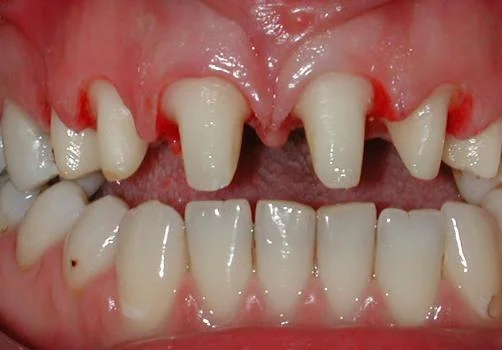
When patients ask how is a temporary tooth designed, the answer varies based on material choices and the underlying dental anatomy. Primary clinical classifications include:
1. Temporary Tooth After Crown Prep (Fixed Provisionals)
Placed immediately following the reduction of natural teeth for zirconia or porcelain crowns. A temporary tooth after crown prep seals open dentin tubules, preventing acute pulpal sensitivity.
2. Temporary Tooth After Extraction
Utilized when a tooth in the aesthetic zone must be extracted or replaced by an immediate implant. A temporary tooth after extraction prevents the loss of the natural gum contour and protects the fresh extraction socket.
3. Temporary Tooth Before Zirconia
Custom-milled or hand-crafted acrylic crowns seated while final zirconia units are being manufactured. A temporary tooth before zirconia guides the healing gum margins to establish perfect pink aesthetic contours.
4. Temporary Tooth Prosthesis (Flippers / Micro-Partials)
Removable acrylic appliances used during extensive tooth loss or throughout the 3-month osseointegration period of dental implants. A temporary tooth prosthesis maintains basic chewing support and cosmetic appearance.
Clinical Protocol: How Is a Temporary Tooth Fitted?
The clinical steps of how is temporary tooth fitted are executed seamlessly using one of two primary workflows:
A. Direct In-Office Method
- Pre-Operative Impression: Before shaving the teeth, a quick silicone index is captured from the patient's natural bite.
- Tooth Reduction: The target teeth are reshaped under local anesthesia.
- Resin Application: Self-curing acrylic or bis-acryl resin is injected into the pre-operative silicone index and seated over the prepped teeth.
- Trimming & Temporary Cementation: Within 2 to 3 minutes, the hardened provisional is removed, trimmed, polished, and secured over the prepped teeth using a temporary, eugenol-free luting cement.
B. Indirect CAD/CAM Method
In extensive smile makeovers, digital intraoral scanners map the prepped teeth. High-density PMMA blocks are milled in-office to deliver high-strength, aesthetic provisionals seated on the same day as tooth preparation.
What Happens If a Temporary Tooth Is Not Fitted? Clinical Risks
Patients occasionally question whether skipping a provisional restoration for a few days poses any harm. However, answering what happens if temporary tooth is not fitted highlights several severe biological risks:
- Severe Thermal Sensitivity and Pulpal Inflammation: Removing the enamel layer leaves millions of microscopic, fluid-filled dentin tubules directly exposed. Without a provisional crown, breathing cold air or drinking water triggers intense pain and can cause irreversible nerve inflammation requiring root canal treatment.
- Tooth Migration and Loss of Fit: Deprived of contact points, adjacent teeth tip toward the empty space, and opposing teeth super-erupt within days. If a provisional is omitted, the final custom-milled zirconia crown will fail to fit.
- Gingival Overgrowth and Collapse: Without a provisional crown supporting the gingival margin, gum tissue collapses into the prepared margin area, leading to severe bleeding and impression distortion when seating the permanent crown.
- Functional and Social Compromise: Patients experience impaired speech articulation, cosmetic embarrassment, and an inability to chew properly.
Performance Matrix: Provisional vs. Permanent Zirconia
Review the key structural differences between temporary provisionals and final zirconia crowns below:
|
Technical & Clinical Criteria |
Temporary Tooth Restoration |
Permanent Zirconia Crown |
|
Material Base Composition |
Acrylic Resin, Bis-Acryl, PMMA |
Sintered High-Translucency Zirconia Block |
|
Flexural & Structural Strength |
Moderate (Engineered for short-term forces) |
Ultra-High (1000 - 1200 MPa) |
|
Luting Cement Class |
Eugenol-Free Temporary Cement (Easily removed) |
Permanent Dual-Cure Resin / Glass Ionomer |
|
Intraoral Lifespan Window |
3 Days to 3 Weeks (Up to 3 months for implants) |
Lifetime (10–15+ years with sound care) |
|
Soft Tissue Guidance Capability |
Maximum (Actively shapes gum margins) |
Matches established tissue contours |
|
Wear & Abrasion Resistance |
Low (Susceptible to fracture under heavy load) |
Excellent (Highly resistant to wear and fracture) |
Maintenance Guidelines for Temporary Restorations
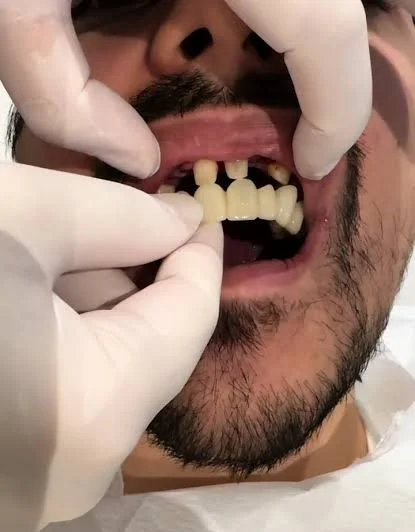
Because temporary cements are formulated to allow easy removal during final fitting appointments, patients must observe specific care rules:
- Avoid Sticky and Hard Foods: Chewing gum, caramels, nuts, or hard crusts can dislodge or fracture the provisional material.
- Correct Flossing Technique: When flossing around a temporary crown, do not pull the floss upward! Slide the thread out laterally through the side gap to avoid pulling off the temporary crown.
- Protocol for Dislodged Provisionals: If a temporary crown detaches, contact your dental clinic immediately. Never attempt to reattach a provisional crown using household superglues or unapproved chemicals.
Frequently Asked Questions
Is it normal to experience mild pain after a temporary tooth is fitted?
Yes. Mild soreness, pressure, and thermal sensitivity during the first 24 to 48 hours following tooth preparation are completely normal. The underlying dental pulp is adapting to the reduction process and the provisional material. Over-the-counter pain relievers easily manage this transition. However, if you experience severe, throbbing pain that disrupts sleep, contact your clinician to evaluate the nerve status.
Is it dangerous if a temporary tooth is accidentally swallowed?
No. Temporary provisionals are fabricated from non-toxic, medical-grade acrylics or resins. If accidentally swallowed, the crown will pass through the digestive tract naturally without causing chemical toxicity. However, if you suspect the crown was aspirated into the airway, seek immediate medical attention. Contact your dental clinic promptly to have a replacement provisional fitted.
How quickly can a broken temporary tooth be replaced?
Replacing a fractured temporary crown is a quick in-office procedure. In most cases, a new provisional can be fabricated and cemented within 15 to 30 minutes, ensuring your treatment timeline remains undisturbed.
Can I chew normally with temporary teeth?
Temporary teeth allow for basic, soft-food chewing, but they do not match the strength of final zirconia crowns. Stick to a soft diet, avoid biting into hard items using prepped front teeth, and remember that provisionals are designed primarily to protect tissues until your final crowns are ready.
About the Author