


What Is a Removable Denture? Types and Costs
Don't put off your smile. Message us now to discuss your treatment options with our expert dentists.
WhatsAppThe primary objective of reconstructive dentistry is to systematically replace missing teeth, returning the patient’s chewing efficiency, vocal articulation, and smile aesthetics to optimal biological standards. While modern dental implants represent the premier choice for fixed restorations, traditional prosthodontic engineering remains vital for individuals presenting with severe jawbone loss, systemic contraindications to surgery, or those seeking non-invasive, cost-effective options for multiple missing teeth.
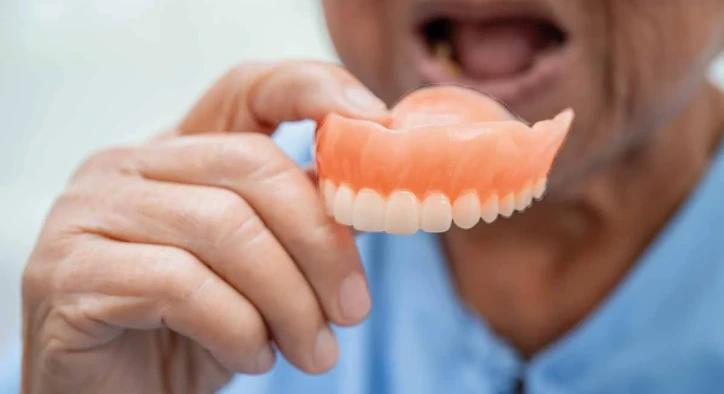
An intraoral dental appliance designed to replace extensive tooth loss along with surrounding hard and soft tissue deficiencies, which can be easily inserted and removed by the patient at will, is termed a removable denture. Driven by high-grade biomaterials and precision attachment technologies, modern removable dental configurations are now fabricated with minimal thickness, offering natural visual adaptation and stable functional retention. This comprehensive master guide examines what is a removable denture, explores modern types of removable dentures, details clinical production milestones, and outlines 2026 removable denture tooth prices.
Table of Content
- What is a Removable Denture?
- Technical Classifications: Types of Removable Dentures
- Structural Dynamics: Upper Jaw vs. Lower Jaw Removable Denture Selection
- Patient Adaptation and Hygiene Protocol
- Performance Matrix: Removable Denture Modalities
- Deciphering the Financial Framework: Removable Denture Cost
- Frequently Asked Questions
What is a Removable Denture?
In professional clinical prosthodontics, the exact scientific answer to what is a removable denture is this: It is a customized dental appliance engineered to restore extensively edentulous arches, replacing lost teeth and resorbed alveolar ridge structures while allowing effortless removal by the patient for simple hygiene maintenance.
Unlike fixed crown-and-bridge work, a removable denture tooth system does not direct functional chewing loads exclusively to remaining root abutments. Instead, it distributes forces across the underlying mucosal tissues covering the residual jawbone. Consequently, capturing a micron-level adaptation between the internal acrylic base and the patient's soft tissue topography stands as the primary factor governing denture stability.
Technical Classifications: Types of Removable Dentures
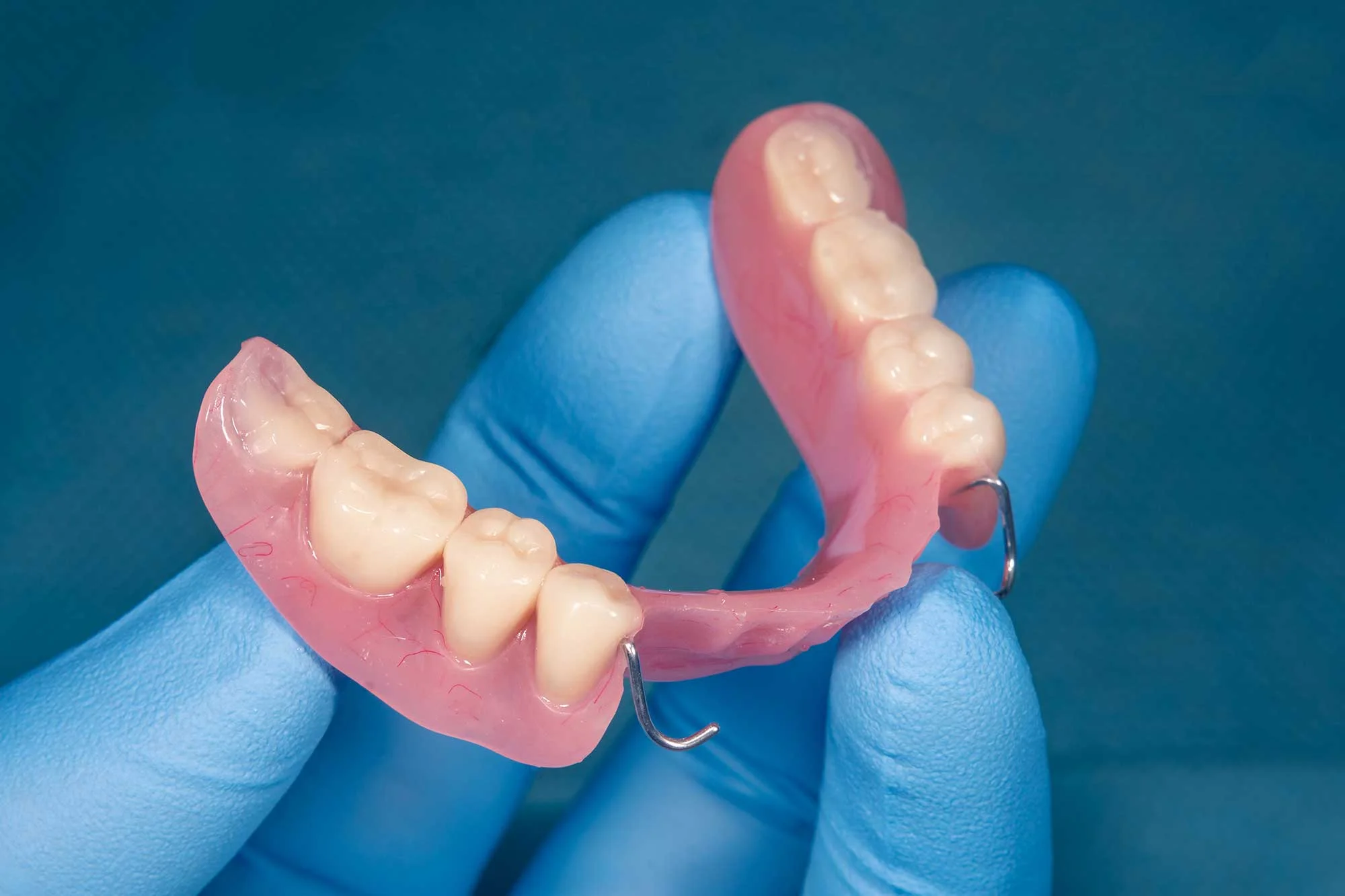
Depending on the number of remaining natural teeth and the structural integrity of the ridges, types of removable dentures are classified as follows:
1. Complete Dentures (Full Arches)
Indicated for cases of complete edentulism where all natural teeth have been lost in a single arch. Commonly referred to as "false teeth" or "full plates," these configurations rely entirely on the residual alveolar ridge and mucosal surface for support. While upper full dentures achieve excellent retention through hydraulic suction over the hard palate, lower plates present greater clinical challenges due to continuous muscle interference from the tongue and lips.
2. Partial Dentures (Clasp-Retained Frameworks)
Utilized when several natural teeth remain stable, but are spaced in a configuration that cannot safely support a long-span fixed bridge. The removable denture tooth segments are embedded into an acrylic base reinforced by a metal framework, which anchors onto remaining natural teeth using cast metal clasps.
3. Precision Attachment Dentures (Hidden Attachment Systems)
Developed to completely eliminate the visible metal clasps associated with standard partial dentures. The remaining natural teeth are covered with custom crowns housing internal male or female slots (interlocking keyways). When the partial plate is inserted, corresponding precision elements snap securely into these hidden slots. No metal anchors are visible externally, which is why patients frequently call them "snap-in dentures."
4. Single Tooth Removable Denture (Micro-Partials / Flippers)
A localized, minor dental appliance used primarily to replace a single missing front tooth as a temporary aesthetic space maintainer while waiting for an implant or bridge phase to conclude. A single tooth removable denture clips gently onto adjacent tooth contours, instantly resolving aesthetic concerns.
Structural Dynamics: Upper Jaw vs. Lower Jaw Removable Denture Selection
The retentive biomechanics of an appliance shift completely depending on the specific arch it occupies:
- Upper Jaw Removable Denture: The maxillary anatomy provides a broad, stable surface area across the hard palate. An upper jaw removable denture base is designed to cover this expanse completely, generating a robust hydraulic seal. This vacuum effect keeps the upper appliance exceptionally stable, preventing displacement during function.
- Lower Jaw Removable Denture: The mandibular arch is continuously disrupted by the active movements of the tongue muscles during speech and swallowing. Furthermore, a lower jaw removable denture base cannot access a wide palatal seal, meaning it must balance along a narrow strip of bone (the residual ridge). To secure lower plate stability, modern clinicians frequently combine them with a minimum of two implants to create an implant-supported removable overdenture.
Patient Adaptation and Hygiene Protocol
Adapting to a new removable dental appliance requires a biological window of 4 to 6 weeks for vertical dimension adaptation. During the initial days, patients commonly experience temporary increases in salivation, minor speech alterations while pronouncing certain consonants, and localized mucosal sore spots. These sore spots are easily resolved during routine follow-ups, where the prosthodontist precisely trims the acrylic borders.
To protect the appliance and prevent oral malodor, follow these hygiene rules:
- Remove and rinse the appliance under running water after every meal. Clean the surfaces using a specialized soft-bristled denture brush and mild soap. Avoid standard toothpastes, as their abrasive particles can scratch the acrylic base, creating micro-grooves that harbor bacteria.
- Always remove the dentures before sleeping to relieve the underlying mucosal tissues from continuous physical load. Store the clean appliance inside a dedicated container filled with clean water to prevent the acrylic matrix from drying out and warping.
- Soak the appliance in water mixed with an effervescent denture cleaning tablet 1 to 2 times per week to fully eliminate microscopic bacterial and fungal colonization.
Performance Matrix: Removable Denture Modalities
Evaluate the structural differences and functional traits of advanced removable dental systems below:
|
Technical & Clinical Criteria |
Complete Full Dentures |
Clasp-Retained Partials |
Precision Attachment Systems |
|
Primary Structural Support |
Relies entirely on soft tissue and residual bone |
Combined tooth and tissue support matrix |
Secured by direct tooth locks and tissue |
|
Aesthetic Excellence Level |
Moderate (Lacks visible metal elements) |
Lower (Metal clasps may be visible) |
Very High (All retentive mechanisms are hidden) |
|
Chewing Load Distribution |
Limited (Absorbed entirely by soft tissue) |
Moderate (Anchored teeth share the load) |
High (Directs force along the long axis of teeth) |
|
Abutment Prep Requirement |
None (Indicated for completely toothless ridges) |
None (Clasps grip natural contours directly) |
Yes (Abutment teeth must be shaped for crowns) |
|
Average Production Sessions |
5 to 6 Clinical Visits (Impressions & Tries) |
4 to 5 Clinical Visits |
5 to 6 Clinical Visits |
|
Long-Term Alveolar Ridge Impact |
Can accelerate bone resorption under heavy loads |
Minimal structural bone impact |
Minimal structural bone impact |
Deciphering the Financial Framework: Removable Denture Cost
Stating a single flat fee for "removable denture tooth prices" or "full damak denture costs" prior to a physical assessment is clinically inaccurate. Final estimates reference the official baseline indices of the Turkish Dental Association adjusted by these specific material variables:
- The Scale and Arch Position of the Design: A complete single-arch plate involves different clinical stages compared to a full-mouth, double-arch precision attachment configuration.
- The Grade of the Artificial Denture Teeth: Whether the appliance incorporates standard domestic acrylic tooth blanks or ultra-wear-resistant, imported multi-layered composite or porcelain tooth structures alters the base cost.
- The Number of Precision Components: In snap-in designs, the exact number and brand of imported locking mechanisms directly adjust the total laboratory budget.
Frequently Asked Questions
Is a removable denture a permanent solution? How often must it be replaced?
While the raw acrylic and metal materials of a denture are highly durable, your underlying oral anatomy undergoes continuous biological change. Following tooth extraction, the alveolar jawbone naturally resorbs (shrinks) over time. As the bone level drops, a denture that initially fit perfectly will develop hidden structural gaps beneath its base, causing it to loosen, shift, or cause painful sore spots. While minor gaps can be temporarily corrected by performing a clinical denture reline (re-basing), the continuous biological changes require a complete replacement of the appliance every 5 to 7 years to maintain oral health.
Is it safe to use commercial denture adhesives daily?
Yes, using high-quality, zinc-free commercial dental adhesives according to the manufacturer's instructions is safe and can enhance chewing confidence, especially with lower complete plates. However, if a denture has become heavily unstable due to severe bone loss, relying excessively on large amounts of adhesive to keep it in place is counterproductive. The uneven forces generated by an ill-fitting plate secured with excessive adhesive can actually accelerate jawbone loss. If your plate shifts constantly, see your prosthodontist for an adjustment rather than relying on adhesives.
Can I chew all types of food comfortably with a removable denture?
When first adapting to removable appliances, functional chewing efficiency scales to roughly 30% to 40% of natural teeth. During the initial weeks, cut food into small pieces and chew slowly, distributing the load evenly across both sides of the mouth using the back teeth. Once full adaptation is achieved, most foods can be managed comfortably. However, attempting to bite or tear hard items using the front denture teeth will cause the back of the plate to lift and shift; functional chewing must always be directed to the posterior tooth zones.
What happens if I leave my dentures in my mouth while sleeping at night?
Leaving your dentures in place overnight deprives the underlying mucosal tissues of oxygen and vital blood circulation by keeping them under continuous physical pressure. This warm, enclosed environment blocks normal salivary cleansing, creating an ideal breeding ground for fungal pathogens that trigger a painful condition known as denture stomatitis (chronic oral thrush). Additionally, the constant pressure accelerates underlying alveolar bone resorption. To protect your oral health, dentures must remain out of the mouth for at least 8 hours a day, preferably during sleep.
About the Author