



What Is a Frenectomy? Tongue-Tie and Lip-Tie Surgery and Aftercare
Don't put off your smile. Message us now to discuss your treatment options with our expert dentists.
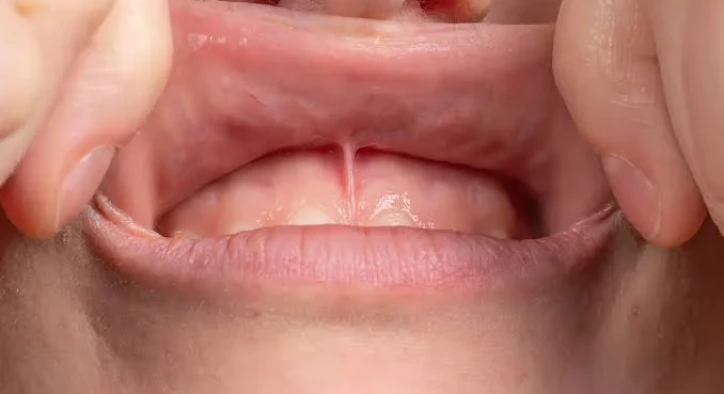
WhatsAppWithin the human oral anatomy, specialized folds of mucous membrane known as "frenulums" (or frenums) connect the lips, tongue, and cheeks to the underlying gingival and alveolar tissues. Located inside the upper and lower lips, beneath the ventral surface of the tongue, and along the cheek boundaries, these tissue attachments naturally present sufficient elasticity and anatomical length to avoid restricting normal oral mobility. However, due to genetic or developmental variations, a frenum may develop as excessively thick, short, or attached too close to the free gingival margin, triggering a series of functional and aesthetic complications.
Short or restrictive frenums are often the primary cause behind speech impediments in children, nursing difficulties in infants, persistent gaps between front teeth (diastemas), and localized gum recession in adults. In modern periodontics and oral surgery, the precise microsurgical procedure designed to excise or release these restrictive tissue folds is termed a frenectomy. The integration of advanced dental laser technology has transformed this procedure into a bloodless, suture-free experience that maximizes patient comfort. This comprehensive master guide examines what is a frenectomy, explores primary frenectomy surgery options, details how is frenectomy done, and outlines essential guidelines for things to consider after frenectomy.
Table of Content
- What is a Frenectomy?
- Technical Classifications: Types of Frenectomy Surgery
- Clinical Sequence: How is a Frenectomy Done?
- Recovery and Soft Tissue Healing Timeline
- Critical Guidelines: Things to Consider After Frenectomy
- Comparative Matrix: Laser-Assisted vs. Conventional Scalpel Surgery
- Frequently Asked Questions
What is a Frenectomy?
In contemporary periodontal literature, the scientific answer to what is a frenectomy is this: It is the surgical excision or release of a restrictive frenum fold (lip, tongue, or cheek attachment) using manual micro-instruments or dental lasers to resolve functional limitations, speech impediments, or periodontal health risks.
Frenum attachments vary significantly among individuals. When a frenum is restrictive, performing a frenectomy procedure achieves several key clinical targets:
- Allowing gaps between front teeth (diastemas) to close naturally or preventing post-orthodontic relapse.
- Preventing labial frenum pull from dragging the gingival margin downward, eliminating root exposure and recession.
- Resolving tongue-tie (ankyloglossia) in infants to enable normal breastfeeding mechanics.
- Freeing tongue mobility in children and adults to correct speech impediments (specifically difficult consonants like R, S, T, D, and L).
- Eliminating muscle pull that destabilizes removable complete or partial dentures in edentulous patients.
Technical Classifications: Types of Frenectomy Surgery
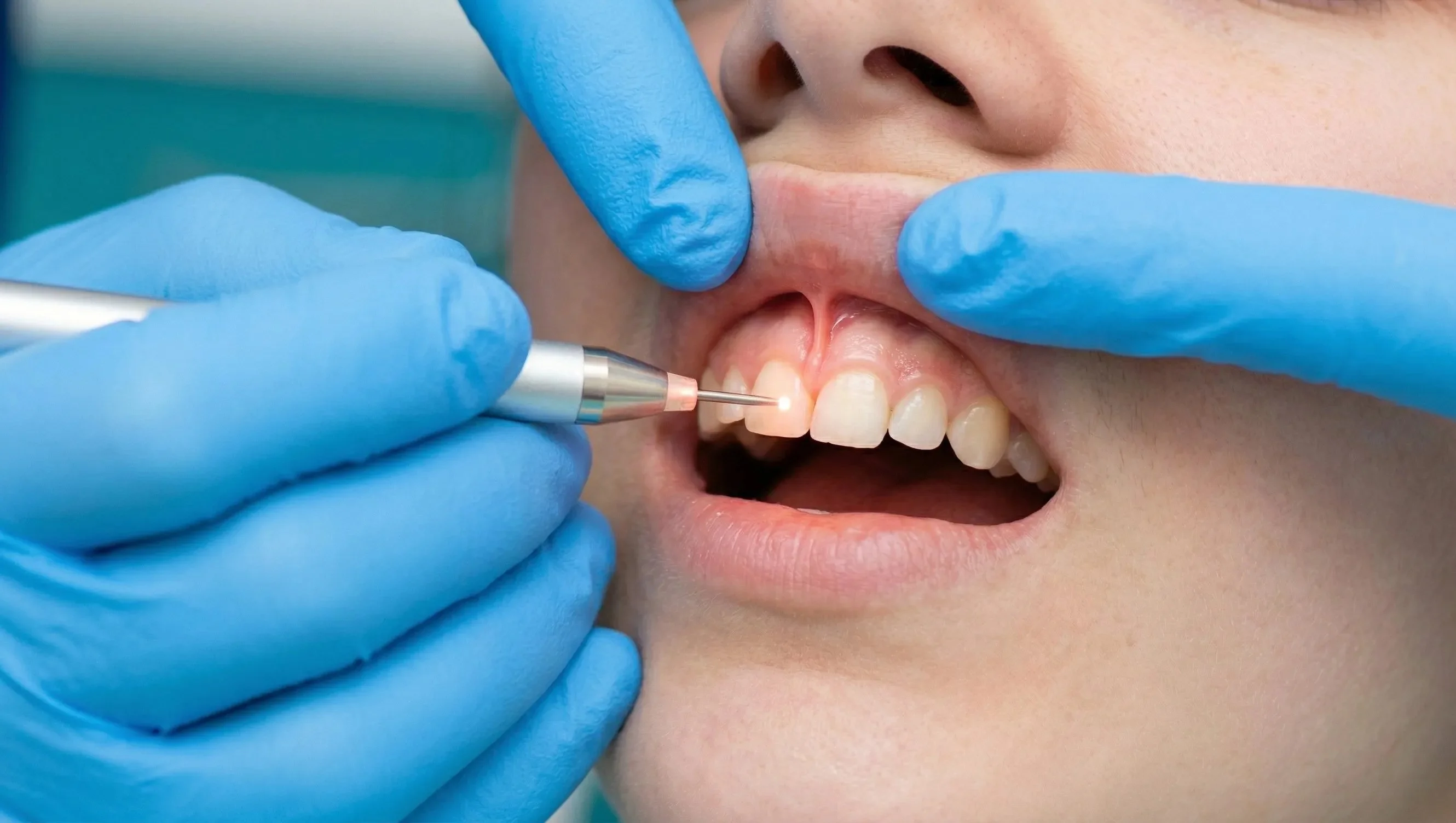
Based on the anatomical location inside the oral cavity, two main frenectomy surgery options are performed:
1. Labial Frenectomy
Surgery performed on the tissue fold connecting the upper or lower lip to the gingiva between the central incisors. A labial frenectomy is commonly indicated when a thick maxillary frenum causes a persistent midline diastema or when a mandibular labial frenum causes localized recession.
2. Lingual Frenectomy
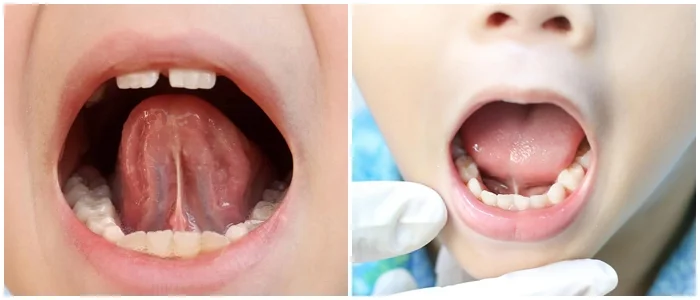
Surgery executed on the tissue band connecting the underside of the tongue to the floor of the mouth. Commonly known as tongue-tie release, a lingual frenectomy resolves restricted tongue elevation and extension (ankyloglossia). Once released, speech articulation and swallowing mechanics improve.
Clinical Sequence: How is a Frenectomy Done?
Patients experience how is frenectomy done as a quick, comfortable procedure, depending on whether laser or conventional blade techniques are chosen.
1. Laser-Assisted Frenectomy
- Topical Anesthesia: A high-potency anesthetic gel or spray is applied to the target tissue. Needle injections are rarely required.
- Laser Ablation: Using a focused diode or Er:YAG laser fiber optic tip, the restrictive frenum tissue is vaporized within seconds without physical blade contact.
- Bloodless Photo-Coagulation: As the laser cuts, it simultaneously seals local blood vessels, resulting in a completely bloodless field.
- Suture-Free Finish: No surgical stitches are needed. The procedure finishes in 5 to 10 minutes.
2. Conventional Scalpel Surgery
Under local anesthesia, the surgeon uses a scalpel or surgical scissors to excise the frenum fold. Micro-sutures are placed to control bleeding and approximate the tissue borders. This method takes roughly 15 to 20 minutes.
Recovery and Soft Tissue Healing Timeline
Following after frenectomy surgery, mucosal tissue heals rapidly due to its high vascularity and cellular turnover.
- Healing Duration: Soft tissue healing after laser frenectomy finishes in 2 to 4 days. Traditional scalpel surgery requires 7 to 10 days for complete tissue closure and suture removal.
- Pain and Swelling: Post-operative discomfort is minimal. Mild soreness is easily managed using standard over-the-counter anti-inflammatory relievers.
- Myofunctional Tongue Exercises: Following a lingual frenectomy, simple tongue-stretching exercises recommended by your clinician are essential to prevent re-attachment and train muscle coordination.
Critical Guidelines: Things to Consider After Frenectomy
To ensure rapid, uncomplicated healing, follow these things to consider after frenectomy rules:
- Post-Operative Diet: Avoid hot, highly spiced, acidic, or crunchy foods for the first 24 hours. Choose lukewarm, soft foods (such as purees, yogurts, and ice cream).
- Oral Hygiene: Resume normal brushing on all unoperated teeth starting the day after surgery. Keep the surgical site clean by using prescribed non-alcoholic chlorhexidine mouthwashes gently, without aggressive swishing.
- Avoid Tissue Tension: Do not stretch your lips or tongue to inspect the wound, and avoid touching the site with your fingers or tongue.
- Tobacco Restriction: Refrain from smoking for at least 3 days post-procedure. Tobacco smoke reduces tissue oxygenation and elevates secondary infection risks.
Comparative Matrix: Laser-Assisted vs. Conventional Scalpel Surgery
Compare the technical parameters of both surgical modalities below:
|
Technical & Clinical Criteria |
Laser-Assisted Frenectomy |
Conventional Scalpel Surgery |
|
Surgical Instrument |
Diode / Er:YAG Laser Fiber |
Steel Scalpel or Surgical Scissors |
|
Anesthetic Requirement |
Topical Gel or Minimal Injection |
Local Anesthetic Block Injection |
|
Intraoperative Bleeding |
Zero (Capillaries are photo-sealed) |
Moderate localized bleeding occurs |
|
Surgical Sutures (Stitches) |
Not Required |
Micro-sutures are mandatory |
|
Average Operational Time |
5 to 10 Minutes |
15 to 20 Minutes |
|
Tissue Healing Window |
2 to 4 Days (Rapid closure) |
7 to 10 Days (Requires suture clearance) |
Frequently Asked Questions
Is a frenectomy procedure painful? Will I feel pain during surgery?
No. Local anesthesia or high-potency topical gels numb the target tissue, ensuring you feel no pain during the procedure. Patients treated with dental lasers typically feel only light tactile movement without any sharp discomfort.
At what age should an infant undergo a lingual frenectomy?
If a restrictive lingual frenum impairs nursing, a lingual frenectomy can be performed as soon as it is diagnosed even within the first few days of life. Infant lingual tissue is thin and minimally vascularized, allowing the procedure to finish in seconds so the infant can nurse comfortably immediately afterward.
Will the gap between front teeth close on its own after a labial frenectomy?
If a labial frenectomy is performed during childhood or early permanent dentition, the gap between the central incisors frequently closes on its own as adjacent teeth erupt. In older patients or cases with wider gaps, short-term orthodontic treatment (such as clear aligners or braces) may be recommended following the frenectomy.
Will speech articulation improve immediately after a lingual frenectomy?
A lingual frenectomy physically frees tongue movement right away. However, articulate speech relies on established muscle memory. Children or adults accustomed to speaking with a restricted tongue benefit from short-term speech therapy and daily stretching exercises to refine their vocal articulation.
About the Author