


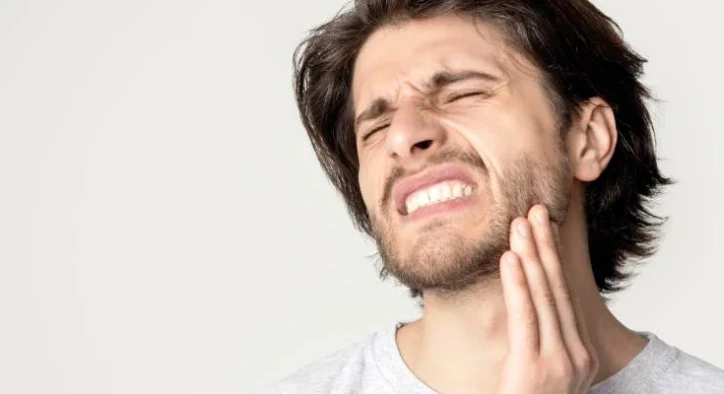
What Is Jaw Locking? What Causes It and How Is It Resolved?
Don't put off your smile. Message us now to discuss your treatment options with our expert dentists.
WhatsAppOne of the most complex, heavily utilized, and bio-mechanically sensitive mechanisms within the human anatomy is the temporomandibular joint (TMJ), commonly referred to as the jaw joint. Positioned immediately in front of each ear canal, this dual-joint system connects the lower jaw (mandible) to the skull, working in perfect symmetry to enable chewing, speaking, swallowing, yawning, and facial expressions. A healthy TMJ operates smoothly due to an internal fibrocartilaginous disc (meniscus) that acts as a structural shock absorber, ensuring fluid, friction-free opening and closing movements. However, psychological stress, hormonal fluctuations, poor cervical posture, intense night teeth grinding, or local oral infections can destabilize this delicate anatomical framework.
When this equilibrium is disrupted, patients frequently encounter an acute, high-anxiety clinical condition known as jaw locking (trismus or locked jaw syndrome). Characterized by the lower jaw becoming suddenly fixed at a specific structural boundary this condition develops from a combination of neurological, muscular, and intra-articular disorders.
Table of Content
What Causes Jaw Locking? Exploring the Biological Substrates
During clinical evaluations, oral surgeons look beyond single symptoms, as analyzing what causes jaw locking reveals a complex network of local and systemic variables. The foundational medical triggers responsible for jaw joint locking can be organized into these clinical categories:
1. Internal Disc Displacement Without Reduction
Inside the joint cavity, the cartilaginous disc moves smoothly between the condylar head of the mandible and the glenoid fossa of the skull. If this disc slips forward or becomes displaced out of its structural alignment, it physically blocks the natural sliding pathway of the jaw bone. When the patient tries to open their mouth, the condyle jams against the slipped disc, causing an immediate mechanical lock.
2. Acute Muscular Spasms and Stress Jaw Locking
Psychological tension is a major factor in modern stress jaw locking cases. Severe emotional stress, chronic anxiety, and neurological pressure cause the autonomic nervous system to hyper-activate the primary chewing muscles (especially the masseter and temporalis muscles). Continuous, intense contraction forces these strong muscles into a state of structural cramp (myofascial spasm). As the muscle fibers shorten, they pull the mandible tightly upward, restricting vertical mouth opening.
3. What Causes Jaw Locking During Sleep? (Severe Nocturnal Bruxism)
Patients who wake up in the morning completely unable to move their jaw often wonder: what causes jaw locking during sleep? The primary physiological trigger is severe nocturnal bruxism (unconscious teeth clenching and grinding during deep sleep cycles). Subjected to massive, crushing vertical forces for hours without rest, the masticatory muscles accumulate excess lactic acid, causing the joint capsule to freeze or lock by dawn.
4. Acute Infection Fields and Wisdom Tooth Jaw Locking
Localized bacterial infections within the oral cavity can spread directly into adjacent muscle compartments. A prominent example is wisdom tooth jaw locking caused by severe pericoronitis. When the soft tissue flap covering an impacted lower third molar becomes acutely infected, the inflammatory exudate tracks into the adjacent pterygomandibular space, irritating the medial pterygoid muscle. To insulate the infected zone and prevent movement, the central nervous system triggers a protective reflex arc, locking the chewing muscles completely (protective trismus).
5. Jaw Locking While Yawning (Temporomandibular Dislocation)
Some individuals experience a sudden structural lock when opening their mouth to maximum capacity, specifically experiencing jaw locking while yawning. This scenario is technically a joint dislocation (luxation) rather than a simple lock. The condylar head slides too far forward, passing over the articular eminence and becoming trapped in front of it. The patient is left completely unable to close their mouth, locking it wide open. This occurs frequently in individuals presenting with genetic joint hypermobility (loose ligaments).
Recognizing the Key Jaw Locking Symptoms
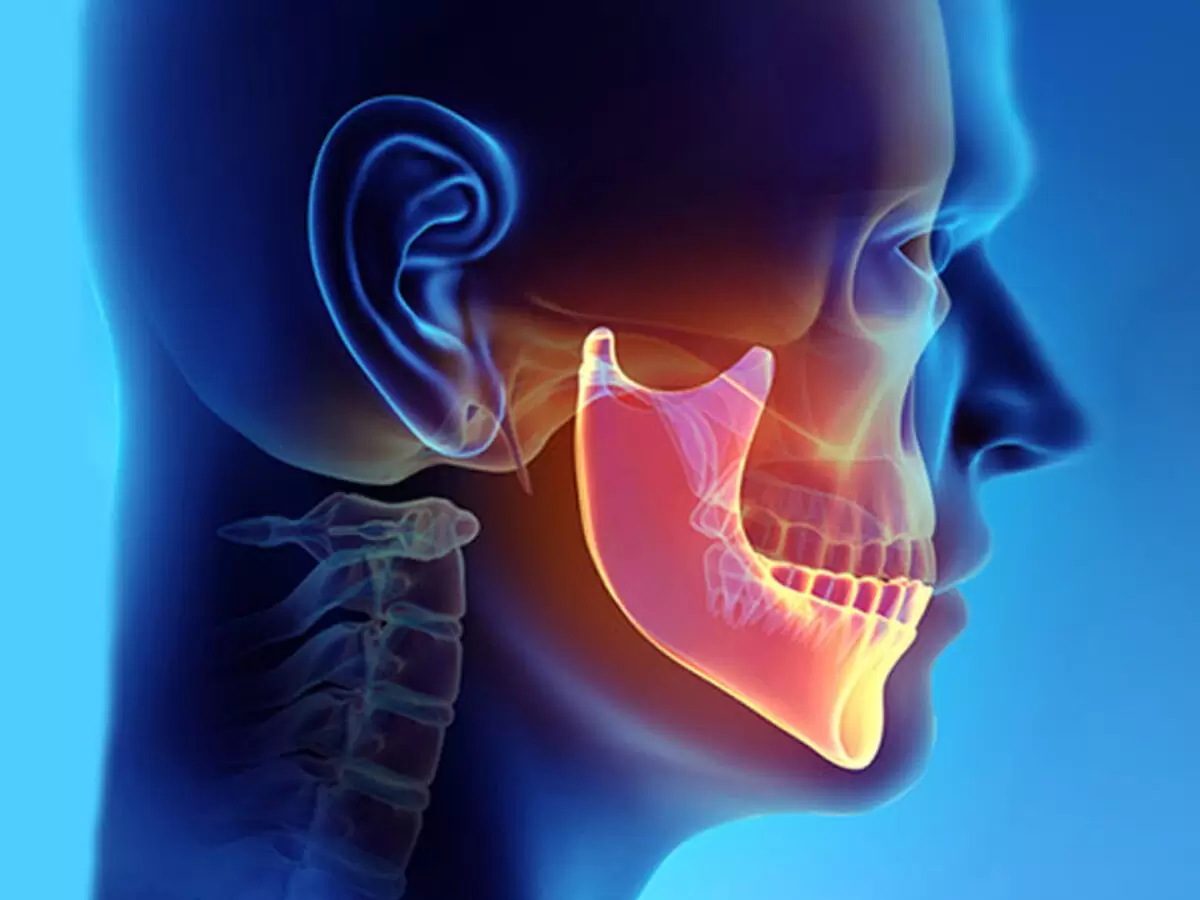
Before reaching a state of total structural immobility, the temporomandibular joint typically exhibits early clinical warning signs over months. Key jaw locking symptoms that require clinical evaluation include:
- Restricted Vertical Mouth Opening: A healthy individual should comfortably accommodate three to four fingers aligned vertically between their front incisors. At the onset of jaw locking, this clearance drops to one or two fingers (maximum interincisal opening falls below 35 mm).
- Intra-Articular Noises (Clicking, Popping, Crepitus): Experiencing sharp clicking or crunching sounds directly in front of the ear during chewing or speaking indicates that the internal cartilaginous disc is slipping out of place.
- Referred Preauricular and Temporal Pain: As a consequence of muscle fatigue and joint strain, chronic dull aches develop near the ear, temples and neck. These symptoms are frequently misdiagnosed as chronic migraines or middle ear infections.
- Lateral Mandibular Deviation: If the lower jaw shifts or tracks to one side in a zigzag pattern instead of moving straight down during opening, it signals that the joint on that side is beginning to lock.
How to Open a Locked Jaw? Advanced Clinical Treatments
Encountering an acute locked episode requires immediate, calm management. So, how to open a locked jaw safely, and what targeted protocols are implemented within a clinical environment?
The immediate first-aid approach depends entirely on the mechanical classification of the lock:
- Manual Reduction for Open Dislocation: If the jaw is locked wide open due to yawning, an oral surgeon executes the "Nelaton Maneuver." The clinician positions their thumbs over the lower molars, applying direct downward pressure while smoothly guiding the mandible backward to slide the condylar head safely back into its socket. This requires professional training and must never be attempted forcefully at home.
- Medical Blockade for Muscular Trismus: If the lock is driven by a severe muscle spasm or an active wisdom tooth infection, high-dose muscle relaxants, anti-inflammatories, and localized thermal therapy are implemented to release the muscle fibers.
Long-term jaw locking treatment frameworks rely on these specialized clinical interventions:
- Hard Acrylic Occlusal Splint Therapy: For patients managing internal disc displacement or severe night grinding, generic soft over-the-counter night guards are avoided. Instead, custom-milled hard acrylic occlusal splints are engineered using computer-guided bite registration. These splints decompress the joint space, allowing the displaced disc to realign naturally.
- Therapeutic Masseter Botox Injections: Botulinum toxin is precisely delivered into hyperactive masseter muscles. By temporarily blocking overactive nerve signals, Botox decreases muscle clenching forces without altering regular chewing functions, effectively neutralizing stress-induced spasms.
- Arthrocentesis and Joint Lavage: For chronic, persistent locking caused by internal tissue adhesions, a micro-surgical jaw locking treatment called arthrocentesis is performed. The joint space is flushed with sterile solutions to clear out inflammatory proteins, followed by an injection of lubricating hyaluronic acid.
How to Treat Jaw Locking at Home: Safe Relief Methods
For individuals experiencing a mild catch or temporary tightness before scheduling an evaluation, the following guidelines show how to treat jaw locking at home safely:
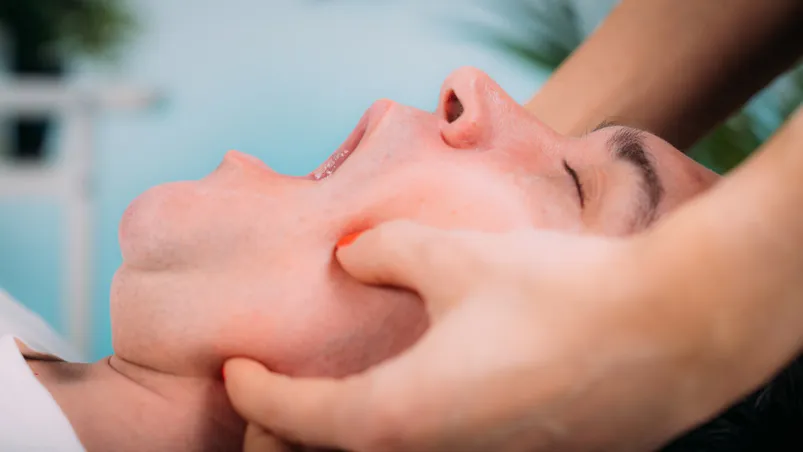
- Moist Heat Therapy: If your jaw feels tight or locked shut, apply a moist heat pack or a warm compress to the preauricular joint zone and cheek muscles for 15 minutes, 3 to 4 times a day. The constant heat increases local blood flow, clearing lactic acid and soothing muscle cramps. (Caution: If your jaw locking is accompanied by swelling from a wisdom tooth infection, avoid heat therapy, as it can worsen inflammation).
- Strict Soft Diet Implementation: While your jaw is locked or semi-restricted, avoid foods that demand heavy vertical or lateral grinding loads (such as steaks, nuts, raw carrots, apples, or chewing gum). Switch to a soft or pureed diet (soups, smoothies, yogurt, mashed potatoes) to allow the joint capsule to rest, and avoid opening your mouth excessively wide.
- Systemic Magnesium Supplements: Under medical guidance, incorporating highly bioavailable magnesium supplements helps soothe skeletal muscle tissues at a cellular level, reducing nocturnal clenching frequencies.
Targeted Jaw Locking Exercises: Physical Therapy Protocols
Implementing specialized jaw locking exercises is essential to restore natural range of motion and stretch tight capsular ligaments. However, these movements must only be performed after the acute pain phase has subsided, and they should never cause sharp pain.
1. The Controlled Rocabado Tongue-Up Exercise
Rest the tip of your tongue gently against the roof of your mouth, immediately behind your front upper teeth. Maintaining constant tongue contact against the palate, slowly open your mouth as wide as comfortable, then close it smoothly. This control forces the condyle to rotate correctly inside its socket without sliding forward prematurely, safeguarding the internal disc. Repeat 10 times, 3 times daily.
2. Passive Resistance Opening
Position your knuckles or two fingers directly beneath your chin. Attempt to slowly open your mouth downward while applying a gentle, steady upward counter-force with your hand. Hold this active isometric resistance for 5 seconds, then relax. This exercise helps balance coordinate muscle firing.
3. Controlled Lateral (Side-to-Side) Tracking
Slightly open your mouth, keeping your teeth a few millimeters apart. Slowly guide your lower jaw completely to the right, hold for 3 seconds, then track it completely to the left and hold for another 3 seconds. This target movement stretches the lateral temporomandibular ligaments, preventing sudden locking.
Analyzing Jaw Locking Triggers and Clinical Pathways
This organized matrix aligns the specific type of jaw locking with its diagnostic signs and targeted treatment options:
|
Classification of the Lock |
Primary Clinical Sign |
Immediate Home Care |
Preferred Clinical Treatment |
|
Muscular Spasm (Stress / Bruxism) |
Inability to open mouth upon waking; intense temporal tension. |
Moist heat therapy, pureed soft diet, massage. |
Masseter Botox & Hard Occlusal Splint |
|
Mechanical Disc Displacement |
Sharp clicking/popping sounds followed by a sudden structural catch. |
Gentle lateral tracking movements to release the catch. |
Arthrocentesis & Custom Stabilization Splint |
|
Wisdom Tooth Pericoronitis |
Visible cheek swelling, localized heat, difficulty swallowing. |
External cold compress only; strict prohibition of heat packs. |
Antibiotic Therapy & Surgical Tooth Extraction |
|
Joint Dislocation (Yawning Injury) |
Mouth is locked wide open and cannot be physically closed. |
Remain calm; do not apply sudden force at home. |
Nelaton Maneuver (Professional Manual Reduction) |
Frequently Asked Questions
Can a locked jaw resolve or go away on its own?
If the tightness is caused by temporary muscle fatigue or a mild strain from chewing an excessively hard food item, it can resolve on its own once the muscle tissues rest. However, if the jaw locking stems from structural changes like a displaced disc, a dislocated joint, or an active infection, it will not resolve without treatment. Leaving internal disc displacements unmanaged leads to chronic tissue scarring and potential joint fusion (ankylosis) over time.
What should I do immediately if my jaw locks due to sudden stress?
If emotional stress triggers an immediate jaw lock, the first step is to remain calm and practice deep nasal breathing. Panic triggers adrenaline, which tightens skeletal muscles further. Focus on releasing your bite; close your lips but keep your upper and lower teeth slightly apart (the physiological rest position). Apply gentle, circular finger massage to your cheeks and sip a warm beverage to help soothe the nervous system.
Does masseter botox provide a permanent cure for jaw locking?
If your jaw locking is driven by muscle-sourced triggers (such as severe bruxism or stress-induced masseter cramps), masseter Botox provides an excellent success rate exceeding 90% by temporarily relaxing hyperactive muscle fibers. However, if the locking is caused by a mechanical issue like a torn disc or bone deformities, Botox alone is insufficient and must be combined with hard occlusal splints or joint surgery.
About the Author