


How to Choose a Toothbrush? A Guide to Manual and Rechargeable Brushes
Don't put off your smile. Message us now to discuss your treatment options with our expert dentists.
WhatsAppThe foundation of lifelong oral health relies on the daily mechanical disruption of pathogenic microbial biofilm (dental plaque) from enamel and root surfaces. Consistent twice-daily toothbrushing remains the primary clinical defense against caries, marginal gingivitis, and alveolar bone destruction. However, while brushing technique is paramount, the biomechanical attributes of the oral hygiene tool itself are equally critical. Utilizing a poorly designed toothbrush or excessively stiff bristles can abrade enamel prisms and lacerate delicate gingival tissues. Knowing how to choose a toothbrush correctly represents the primary intervention in personal oral healthcare.
Table of Content
- The Clinical Importance of Right Toothbrush Selection
- Should a Toothbrush Be Medium or Soft?
- How to Choose a Toothbrush: Anatomy and Selection Standards
- Electric Toothbrush Selection: Oscillating-Rotating vs. Sonic
- Which Is the Best Toothbrush?
- Comparative Matrix: Manual vs. Electric Toothbrushes
- Frequently Asked Questions
The Clinical Importance of Right Toothbrush Selection
Many patients maintain diligent hygiene habits yet present clinically with deep cervical notches (abrasion cavities) and soft tissue recession. The right toothbrush selection ensures thorough biofilm removal while shielding fragile oral tissues from trauma:
- Shields Enamel Architecture: Eliminates plaque without scratching softened enamel matrices, particularly following dietary acid exposure.
- Prevents Gingival Recession: Soft, rounded filaments glide safely along the free gingival margin without stripping protective keratinized tissue.
- Arrests Dentin Hypersensitivity: Safeguards exposed cementum, preventing sharp fluid movements inside dentinal tubules upon thermal contact.
- Accesses Posterior Anatomy: Appropriately proportioned brush heads access constricted retromolar pads and lingual contours of posterior molars.
Should a Toothbrush Be Medium or Soft?
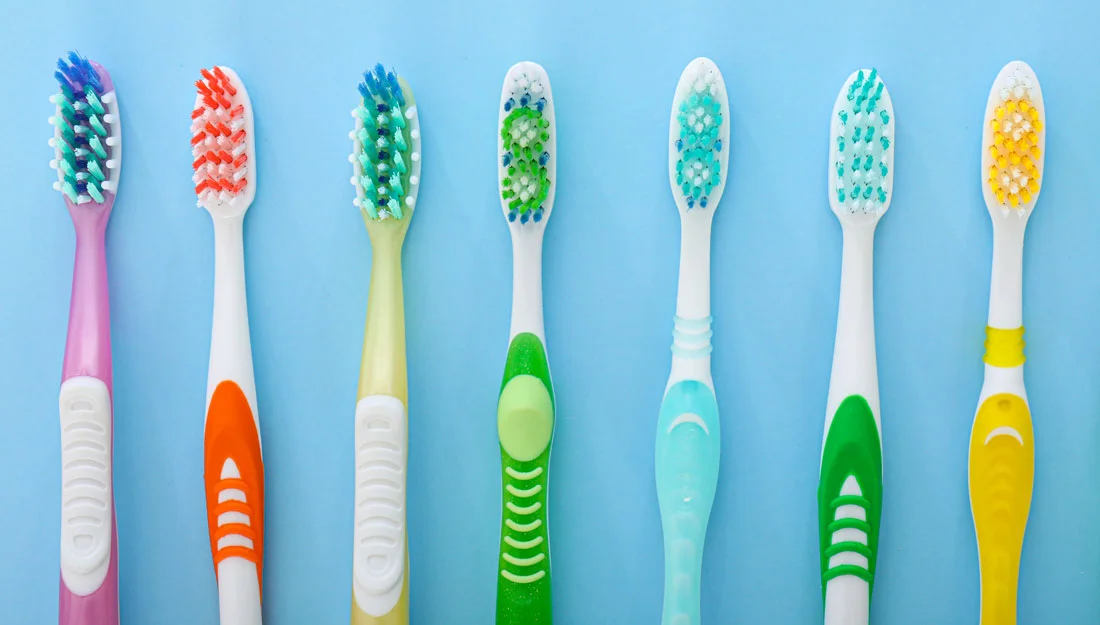
A frequent clinical inquiry is: should a toothbrush be medium or soft?
A persistent and hazardous patient misconception asserts that stiff bristles scour teeth cleaner and whiter. Contemporary periodontology establishes a clear consensus: A toothbrush must feature soft or ultra-soft filaments.
Why must medium and hard bristles be avoided?
- Plaque Biofilm Is Soft: Uncalcified dental plaque possesses a soft, gel-like viscosity. Dislodging it requires gentle mechanical sweeping and angled positioning (45 degrees), not abrasive scouring.
- Filament Elasticity: Soft bristles bend flexibly, penetrating subgingival sulcular spaces and interproximal margins. Rigid bristles cannot bend into narrow crevices, contacting only bulbous crown contours while missing interdental plaque.
- Cervical Abrasion Risks: Stiff bristles behave like fine sandpaper, carving deep V-shaped notches into root cementum and prompting irreversible gingival recession. Hard bristles are suitable solely for cleaning removable acrylic prostheses outside the mouth.
How to Choose a Toothbrush: Anatomy and Selection Standards
When evaluating options, understanding how to choose a toothbrush and how to select a toothbrush requires assessing four key design parameters:
1. Compact Head Dimension
Bulky brush heads cannot maneuver within the narrow corridors of the posterior oral vestibule. The ideal adult brush head measures approximately 2.0 to 2.5 centimeters in length and 1.0 centimeter in width (covering no more than two adjacent teeth simultaneously), enabling unhindered movement around third molars.
2. End-Rounded Filaments
In low-cost toothbrushes, nylon filaments are sheared flat with mechanical blades, leaving razor-sharp microscopic edges that slice gingival sulcular epithelium. High-performance brushes undergo secondary micro-polishing, creating smooth, end-rounded filament tips that preserve soft tissue integrity.
3. Filament Density
Brushes featuring densely packed filament tufts (often containing thousands of ultra-fine fibers) distribute applied hand pressure evenly across the dental arch, maximizing cleaning contact area while dampening tissue trauma.
4. Handle Ergonomics
Select a brush with a non-slip, rubberized handle and a semi-flexible neck that facilitates stable positioning at a 45-degree angle toward the gingival margin.
Electric Toothbrush Selection: Oscillating-Rotating vs. Sonic
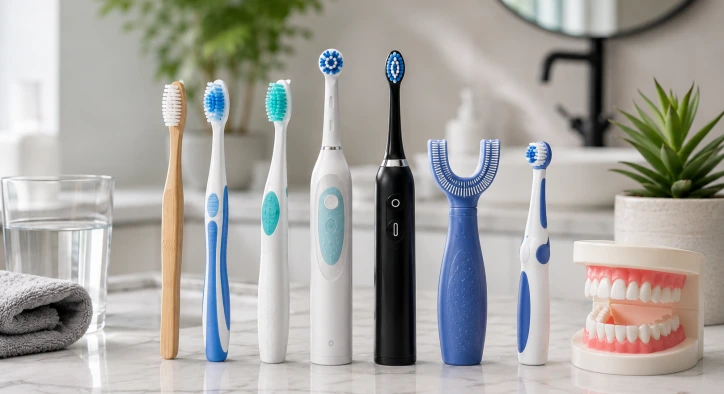
Navigating an electric toothbrush selection involves comparing two core technological designs:
1. Oscillating-Rotating Powered Brushes
Featuring small, round brush heads, these units combine high-speed rotational sweeps with gentle high-frequency pulsations to cup each tooth individually. They offer clinical advantages for individuals with limited manual dexterity, orthodontic appliances, or difficulty mastering manual techniques.
2. Sonic Powered Brushes
Shaped like conventional manual brushes, sonic units operate at frequencies generating 30,000 to 60,000 vibrations per minute. This acoustic velocity produces dynamic fluid agitation, propelling salivary fluids and toothpaste deep into interdental gaps beyond direct mechanical bristle reach. They are exceptionally gentle on sensitive gingival margins.
Critical Features in Powered Toothbrushes:
- Integrated Pressure Sensors: Units that automatically flash warning lights or reduce motor speed when excessive force is detected prevent toothbrush abrasion.
- Two-Minute Quadrant Timers: Built-in timers that pulse every 30 seconds ensure balanced attention across all four oral quadrants.
Which Is the Best Toothbrush?
When asked which is the best toothbrush, dental professionals avoid naming a single universal product. The best toothbrush is: One that matches your oral anatomy, features soft or ultra-soft rounded bristles, and is used consistently for two full minutes twice daily with gentle technique.
- For Orthodontic Braces: Specialized V-trimmed orthodontic brushes paired with interdental cleaners deliver the best clearance around brackets.
- For Gum Recession and Dentin Sensitivity: Ultra-soft brushes with filaments under 0.10 millimeters in diameter or sonic brushes set to sensitive mode are ideal.
- For Dental Implants and Fixed Bridges: Single-tuft compact brushes combined with soft-bristled electric brushes ensure pristine subgingival hygiene.
Comparative Matrix: Manual vs. Electric Toothbrushes
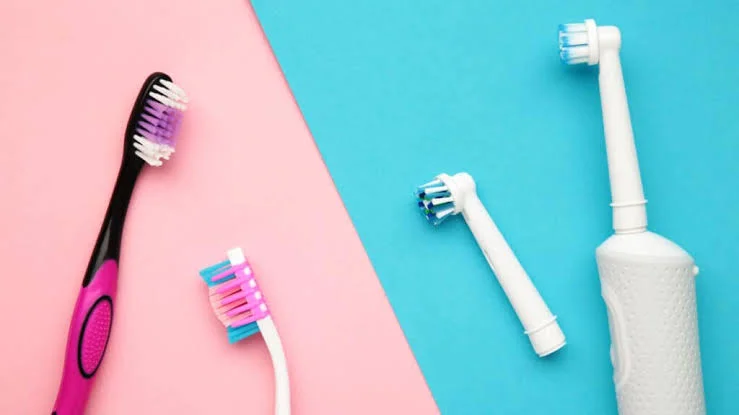
|
Performance Criteria |
Manual Toothbrushes |
Electric / Sonic Toothbrushes |
|
Technique Dependency |
Entirely dependent on user hand skill |
Motor delivers uniform cleaning movements |
|
Plaque Clearance Efficiency |
Highly effective with perfect technique |
Removes 20% to 30% more plaque in trials |
|
Pressure Regulation |
Prone to unmonitored excessive pressure |
Smart pressure sensors halt tissue abrasion |
|
Cost and Accessibility |
Low acquisition cost, universally accessible |
Higher initial unit and replacement head cost |
|
Travel Convenience |
Lightweight, requires no electrical power |
Requires charging travel cases or cables |
|
Special Indications |
Suitable for healthy, non-compromised arches |
Superior for braces, implants, and arthritis |
Frequently Asked Questions
How often should a toothbrush or brush head be replaced?
According to American Dental Association (ADA) guidelines, a manual toothbrush or electric brush head must be replaced every 3 months. If bristles splay outward, bend, or fade earlier, replace it immediately; flared filaments lose plaque removal efficiency and abrade the gums.
Does brushing with a hard toothbrush make teeth whiter?
No. Hard bristles do not remove deep intrinsic stains; instead, they strip away external white enamel. Thinning enamel exposes the darker yellow dentin beneath, making teeth appear more yellow while inducing permanent thermal sensitivity.
Should you wet your toothbrush before applying toothpaste?
No. Pre-wetting the brush reduces filament stiffness excessively, causes toothpaste to foam prematurely, and diminishes mechanical sweeping efficiency. Apply paste to a dry brush and begin brushing directly.
What should parents look for when choosing a child's toothbrush?
Select pediatric brushes featuring age-appropriate ultra-small heads, extra-soft filaments, and chunky, non-slip handles tailored to smaller hands. Pair with appropriate low-fluoride or fluoride-free pastes as guided by age.
About the Author