


What Causes Mouth Sores? How to Get Rid of Canker Sores: Medications and Treatment
Don't put off your smile. Message us now to discuss your treatment options with our expert dentists.
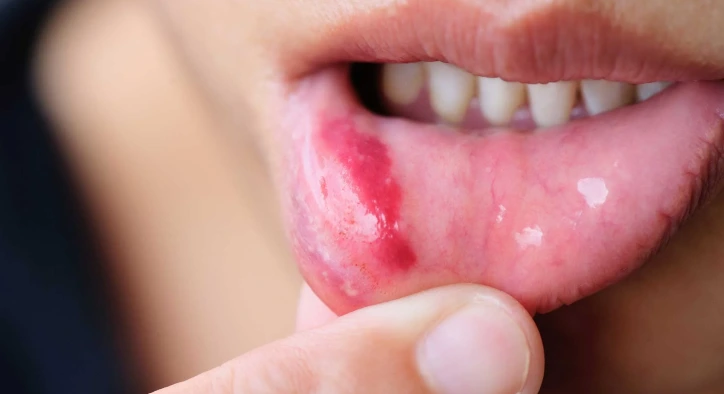
WhatsAppThe oral cavity is lined with a delicate, rapidly regenerating mucosal epithelium that acts as the body's primary barrier against ingested irritants and opportunistic microflora. However, when this protective epithelial barrier is disrupted by mechanical trauma, immunological downregulation, trace micronutrient deficiencies, hormonal swings, or systemic disease, intensely painful lesions can develop. Presenting as shallow, round or ovoid craters with a necrotic whitish-yellow pseudomembrane surrounded by an erythematous inflammatory halo on the buccal mucosa, tongue, or lips, these conditions are clinically diagnosed as aphthous ulcers or collectively referred to as a mouth sore.
Because oral tissues are constantly exposed to mechanical movement, saliva, and food acids, an intraoral ulcer creates sharp stinging discomfort during speech, mastication, and hydration. While standard lesions resolve spontaneously within 7 to 10 days, investigating persistent mouth sore causes is critical when an ulcer exceeds two weeks, as it may signal systemic conditions such as Behcet disease, celiac sprue, or early-stage oral carcinoma. This comprehensive clinical guide explores what causes a mouth sore, contrasts an aphthous mouth sore with viral cold sores, details how to heal a mouth sore, assesses what is good for a mouth sore at home, reviews targeted prescription medication for mouth sore options, and outlines in-office therapies.
Table of Content
- What Causes a Mouth Sore?
- Persistent Mouth Sore Causes: Clinical Red Flags
- Aphthous Mouth Sore vs. Cold Sore: Key Differences
- What Is Good for a Mouth Sore? Home Care & Symptom Relief
- Medication for Mouth Sore: Gels, Rinses & Clinical Protocols
- Comparative Matrix: Intraoral Ulcerative Lesions
- Frequently Asked Questions
What Causes a Mouth Sore?
In oral pathology, primary variables answering what causes a mouth sore include:
- Mechanical Micro-Trauma: Accidental cheek or tongue biting during mastication, sharp fractured restorations, abrasive toothbrush bristles, ill-fitting prostheses, or sharp orthodontic brackets rubbing against loose mucosa.
- Micronutrient Deficiencies: Sub-optimal systemic serum levels of Vitamin B12 (cobalamin), ferritin (iron), folate, and zinc inhibit mucosal re-epithelialization.
- Psychological Stress and Immune Dysregulation: Severe emotional stress, sleep deprivation, and transient immune suppression trigger a localized T-cell-mediated autoimmune attack against mucosal keratinocytes.
- Dietary Sensitivities & Organic Acids: Consuming citrus fruits, vinegar, spicy peppers, chocolate, walnuts, tomatoes, and gluten-heavy diets strips the mucosal barrier.
- Detergents (Sodium Lauryl Sulfate - SLS): Common surfactant foaming agents in retail toothpastes strip protective mucin layers, increasing ulcer frequency.
- Endocrine Fluctuations: Shifts in progesterone and estrogen ratios during the luteal phase of menstruation or pregnancy.
Persistent Mouth Sore Causes: Clinical Red Flags
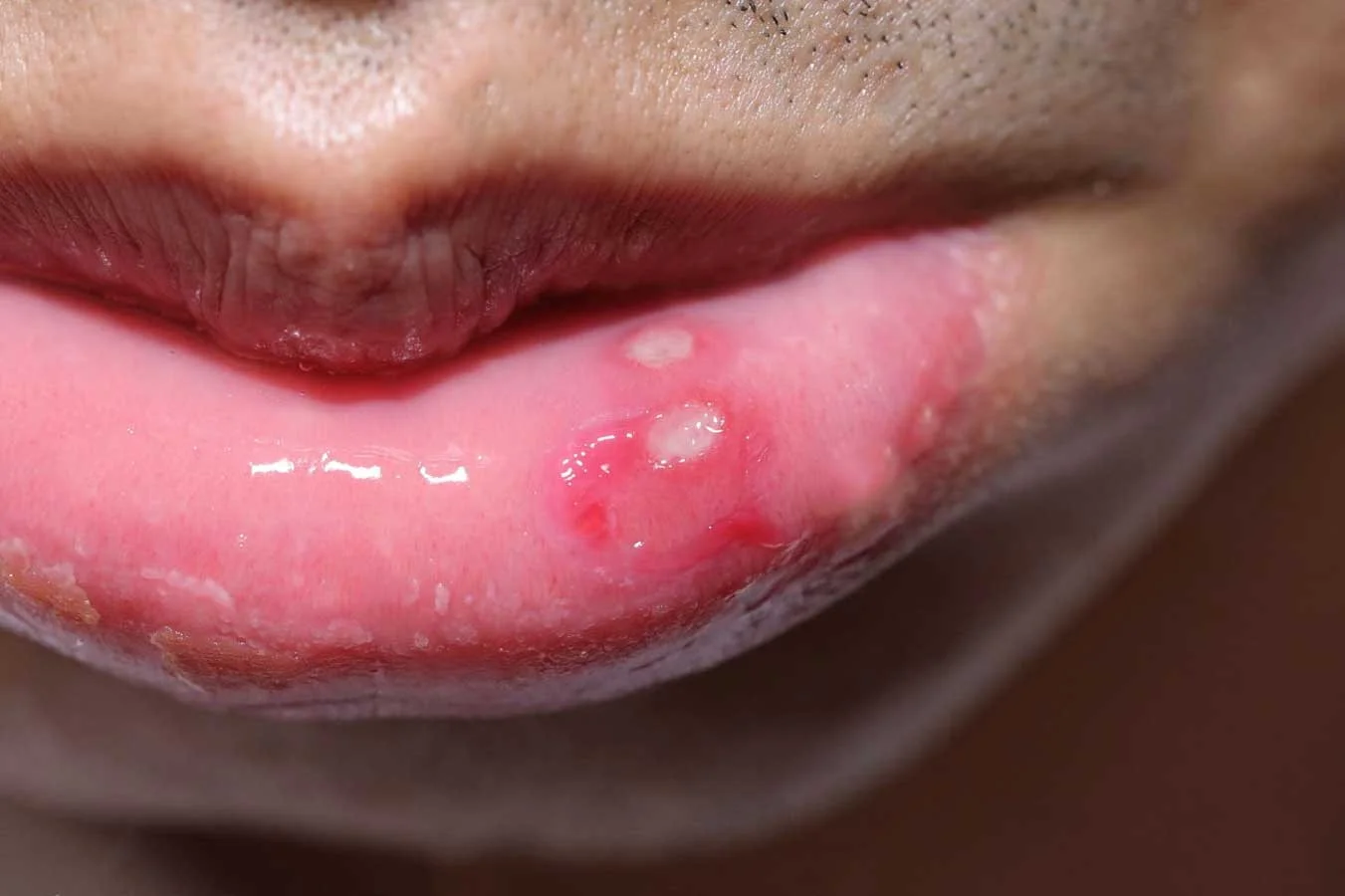
Evaluating persistent mouth sore causes requires an evidence-based timeline. Normal minor aphthae resolve within 10 to 14 days. If a mucosal sore remains unhealed beyond 14 days, the following diagnostic possibilities must be investigated:
- Autoimmune and Systemic Disorders: When recurrent oral ulcers coexist with genital lesions and ocular uveitis, Behcet disease is suspected; when accompanied by chronic diarrhea or nutrient malabsorption, Crohn disease or Celiac sprue must be ruled out.
- Chronic Traumatic Decubitus Ulcers: A chronically jagged cusp or denture flange impinging repeatedly on the same tissue site promotes reactive cellular hyperkeratosis and dysplasia.
- Oral Leukoplakia & Erythroplakia: Persistent, non-wipeable white or velvety red patches represent premalignant mucosal conditions.
- Oral Squamous Cell Carcinoma (OSCC): In patients with tobacco or heavy alcohol exposure, an unhealed ulcer on the lateral tongue border, floor of the mouth, or retromolar trigone presenting with indurated (hard) rolled margins and painless bleeding warrants an immediate scalpel biopsy.
Aphthous Mouth Sore vs. Cold Sore: Key Differences
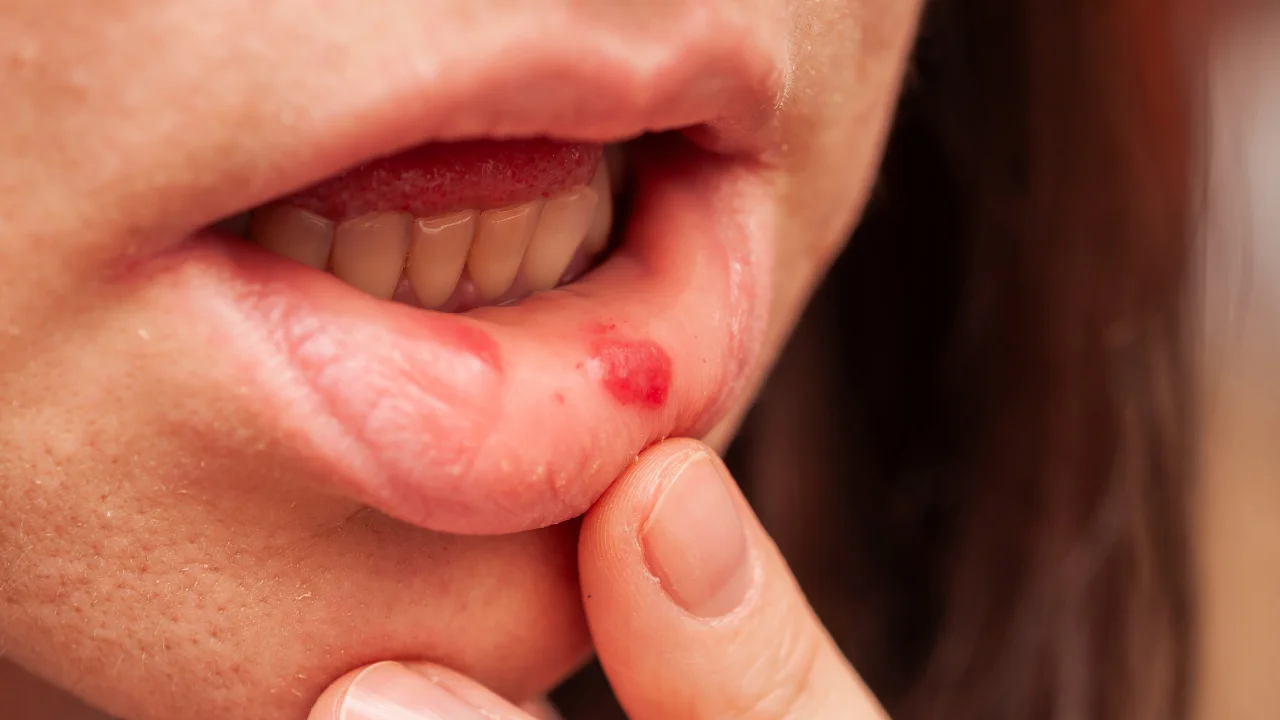
The most frequent ulceration is an aphthous mouth sore (recurrent aphthous stomatitis). Patients often confuse canker sores with herpes labialis (cold sores):
- Anatomical Site: Canker sores form exclusively on non-keratinized, movable intraoral tissues (inner cheeks, vestibule, ventrolateral tongue, soft palate). Cold sores appear primarily on keratinized tissues, such as the vermilion border of the lips or the hard palate.
- Contagion: Canker sores are non-infectious and cannot be transmitted through kissing or shared utensils. Cold sores are caused by the Herpes Simplex Virus (HSV-1) and are highly contagious.
- Vesicular Precursor: Cold sores initiate as fluid-filled clusters that rupture and crust over; canker sores emerge directly as crateriform ulcers without preceding blisters.
What Is Good for a Mouth Sore? Home Care & Symptom Relief
For immediate palliative support, here is what is good for a mouth sore and how to heal a mouth sore safely:
- Warm Salt and Baking Soda Rinses: Dissolving half a teaspoon of salt and one teaspoon of sodium bicarbonate in warm water buffers oral pH, minimizes bacterial load, and eases tissue edema.
- Raw Medical-Grade Honey: Direct application of honey provides an osmotic, antimicrobial protective barrier that reduces ulcer discomfort.
- Sage and Chamomile Infusions: Lukewarm rinses containing natural anti-inflammatory polyphenols soothe denuded connective tissue.
- Targeted Cryotherapy (Ice Chips): Allowing a small ice cube to melt over the lesion temporarily numbs exposed pain receptors and reduces local erythema.
- Elimination Diet: Suspend all acidic, salty, sharp, and high-temperature foods during the active inflammatory phase.
Medication for Mouth Sore: Gels, Rinses & Clinical Protocols
Clinical management using proven medication for mouth sore protocols includes:
1. Topical Corticosteroid Pastes
Triamcinolone acetonide in an adhesive dental paste (e.g., Kenalog in Orabase) coats the ulcer in a protective gelatinous shield. Applying it after meals suppresses localized immune destruction, shrinking the sore within 24 to 48 hours.
2. Local Anesthetic Gels
For patients struggling with mastication, viscous lidocaine or benzocaine (20%) gels applied 10 minutes prior to meals temporarily numb peripheral nociceptors.
3. Antimicrobial Mouth Rinses
Chlorhexidine gluconate (0.12%) or benzydamine hydrochloride rinses prevent secondary bacterial contamination across the denuded connective tissue bed.
4. Low-Level Laser Therapy (LLLT)
In modern dental operatories, non-thermal diode laser irradiation seals exposed nerve endings instantly without local anesthesia, terminating pain and accelerating cellular wound closure within hours.
Comparative Matrix: Intraoral Ulcerative Lesions
|
Lesion Classification |
Defining Clinical Features |
Typical Anatomical Site |
Contagion Potential |
Resolution Timetable |
|
Minor Aphthous Ulcer |
Small (under 1 cm), yellowish crater, red halo |
Buccal mucosa, lips, tongue |
Zero (Non-contagious) |
7 to 10 Days |
|
Major Aphthous Ulcer |
Deep, irregular (over 1 cm), may scar |
Soft palate, tonsillar pillars |
Zero (Non-contagious) |
2 to 6 Weeks |
|
Herpetic Cold Sore |
Fluid-filled vesicles that rupture and crust |
Lip vermilion, hard palate |
Extremely Contagious |
7 to 12 Days |
|
Oral Candidiasis (Thrush) |
Curd-like white plaques that wipe off leaving erythema |
Dorsal tongue, inner cheek |
Zero (Non-contagious) |
1 to 2 Weeks (Antifungals) |
|
Oral Carcinoma Ulcer |
Painless, indurated, rolled edges, spontaneous bleed |
Lateral tongue, mouth floor |
Zero (Non-contagious) |
Non-healing (Requires Surgery) |
Frequently Asked Questions
Should antibiotics be taken for an aphthous mouth sore?
No. Aphthous ulcers are not initiated by bacterial infections; they are primarily driven by localized cell-mediated immune responses or trauma. Systemic antibiotics will not speed healing and can disrupt normal oral microflora, potentially inducing fungal candidiasis. Antibiotics are prescribed only if a severe secondary bacterial infection develops.
Is it safe to burn or cauterize a mouth sore with salt or lemon juice?
No, this is a harmful misconception. Applying pure salt or raw citrus juice directly onto an open ulcer causes immediate chemical burns to exposed connective tissue, kills regenerating epithelial cells, deepens the wound bed, and significantly delays natural healing.
Which vitamin deficiencies cause recurrent mouth sores?
Recurrent aphthae are strongly correlated with deficiencies in Vitamin B12, serum folate (Vitamin B9), iron (low ferritin stores), and zinc. Patients experiencing frequent flare-ups should undergo comprehensive diagnostic hematology panels.
When does a mouth sore indicate a risk of oral cancer?
Any solitary intraoral ulcer that fails to show signs of healing after 14 days, exhibits firm or hard rolled margins, bleeds spontaneously, or is accompanied by unilateral regional lymphadenopathy must be evaluated by an oral surgeon for an incisional biopsy.
About the Author