


What Is a Snoring Appliance? What Does It Do, and How Is It Used?
Don't put off your smile. Message us now to discuss your treatment options with our expert dentists.
WhatsAppDuring sleep, the musculature of the human body relaxes completely, causing soft tissues (including the base of the tongue, the soft palate, and the uvula) to sag backward under gravity. This physical constriction of the upper pharyngeal airway forces inspired air through a narrowed passage, triggering turbulent airflow and high-frequency soft tissue vibrations. This acoustic vibration is clinically recognized as snoring. When the airway collapses entirely, airflow ceases for 10 seconds or longer, precipitating obstructive sleep apnea (OSA), a serious medical condition linked to hypertension, cardiovascular disease, and stroke.
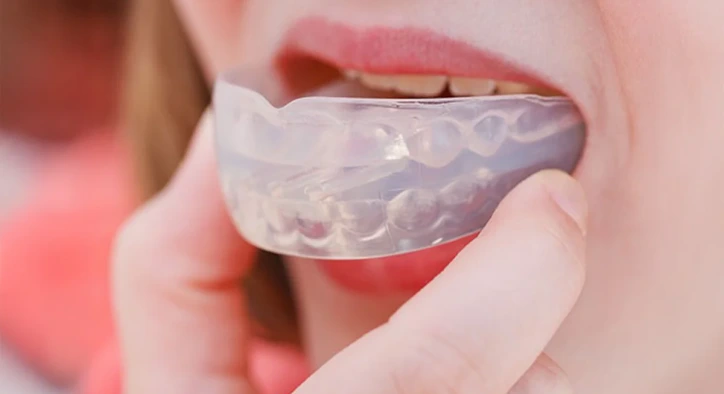
Serving as a proven non-surgical alternative to invasive soft tissue surgery and cumbersome CPAP machines, the snoring appliance (mandibular advancement device / MAD) represents a highly effective intervention from dental sleep medicine. Worn intraorally over the teeth during sleep, this custom-crafted medical appliance repositions the mandible forward and downward by precise millimeters, mechanically maintaining airway patency throughout the night.
Table of Content
- What Is a Snoring Appliance?
- How to Use a Snoring Appliance: Clinical Steps and Daily Care
- Snoring Appliance Reviews: Success Rates and Patient Feedback
- Who Is an Ideal Candidate for a Snoring Appliance?
- What Determines Snoring Appliance Cost?
- Comparative Matrix: Mandibular Advancement Device vs. CPAP Therapy
- Frequently Asked Questions
What Is a Snoring Appliance?
In dental sleep medicine and prosthodontics, the clinical definition of what is a snoring appliance is: A custom-fabricated, adjustable two-piece intraoral medical device designed to reposition and stabilize the mandible in an anterior position during sleep, enlarging the retroglossal airway and preventing soft tissue flutter.
How does it function, and what does a snoring appliance do overnight?
- Mandibular Advancement: Advances the lower jaw forward by approximately 4 to 8 millimeters beyond its resting position.
- Tongue Base Clearance: Because the genioglossus muscle attaches directly to the inner mandible, advancing the jaw simultaneously pulls the base of the tongue forward, preventing retropalatal airway collapse.
- Pharyngeal Wall Tension: Increases lateral pharyngeal wall tension, stabilizing floppy soft palate tissues against vibration.
- Airway Widening: Maximizes pharyngeal cross-sectional diameter, ensuring unobstructed, quiet airflow to the lungs.
How to Use a Snoring Appliance: Clinical Steps and Daily Care
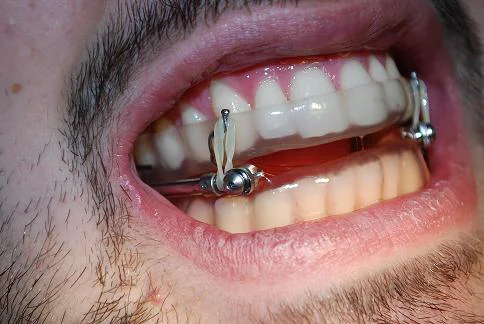
To achieve high compliance and tissue adaptation, follow these standardized clinical steps when using a snoring appliance:
- Pre-Insertion Hygiene: Thoroughly brush and floss teeth prior to placement to prevent trapping bacterial plaque beneath appliance trays.
- Appliance Seating: Seat the maxillary (upper) arch first, followed by the mandibular (lower) arch, pressing firmly with index fingers until fully engaged.
- Overnight Wear: Wear the device consistently throughout the sleep period; remove gently upon waking.
- Morning Repositioning Exercises: Perform 1 to 2 minutes of gentle jaw clenching and retraction exercises as instructed by your dentist to reset normal resting occlusion.
- Cleaning & Storage: Clean the device using lukewarm water and mild liquid soap with a soft toothbrush. Store dry in its ventilated protective case.
Snoring Appliance Reviews: Success Rates and Patient Feedback
Clinical studies and documented snoring appliance reviews demonstrate clear therapeutic outcomes:
- Over 90% Reduction in Snoring: Patients and bed partners report immediate, substantial elimination of disruptive snoring from the first night of wear.
- Restorative Sleep Architecture: Eliminates nocturnal micro-arousals and hypoxemia, reversing daytime fatigue, brain fog, and chronic morning headaches.
- Initial Adaptation Window: Mild morning jaw stiffness or transient hypersalivation is normal during the first 3 to 5 days; masticatory muscles adapt fully within one week.
- Portability: Requires no electrical cords, compressors, or water reservoirs, fitting easily into pocket-sized travel cases.
Who Is an Ideal Candidate for a Snoring Appliance?
- Primary Snorers: Individuals with non-apneic habitual snoring impacting relationship quality and sleep architecture.
- Mild to Moderate Obstructive Sleep Apnea (OSA): Patients presenting with an Apnea-Hypopnea Index (AHI) between 5 and 30 on polysomnography.
- CPAP-Intolerant Individuals: Severe apnea patients unable to tolerate pressurized mask therapy due to claustrophobia, noise, or mucosal dryness.
- Non-Surgical Candidates: Patients seeking conservative alternatives to invasive pharyngeal or uvulopalatopharyngoplasty (UPPP) surgery.
What Determines Snoring Appliance Cost?
Factors influencing snoring appliance cost include:
- Custom Dental Lab Precision: Custom appliances fabricated from digital 3D optical scans differ significantly from over-the-counter boil-and-bite plastics.
- Device Mechanism: Basic single-position monobloc splints versus advanced two-piece precision-titratable devices with titanium connectors.
- Biocompatible Materials: High-strength, hypoallergenic, odor-resistant medical polymers and 3D-printed resins.
- Clinical Titration Follow-Ups: Periodic adjustment visits to calibrate the optimal advancement distance for clinical efficacy and joint comfort.
Comparative Matrix: Mandibular Advancement Device vs. CPAP Therapy
|
Clinical Parameters |
Custom Snoring Appliance (MAD) |
CPAP Mask & Machine |
|
Patient Comfort |
Very High (Slim intraoral splint) |
Moderate / Low (Facial straps and mask) |
|
Noise Level |
Zero Decibels (Completely silent) |
Continuous motor and airflow noise |
|
Travel Convenience |
Maximum (Fits in pocket case) |
Low (Requires bulky machine and hoses) |
|
Power Dependency |
None (100% Non-electric) |
Requires continuous electrical outlet |
|
Primary Snoring Efficacy |
Over 90-95% from first night |
High, but excessive for simple snoring |
|
Mild / Moderate OSA Relief |
Clinically Proven & First-Line |
Clinically Proven |
Frequently Asked Questions
Do over-the-counter boil-and-bite snoring mouthguards work?
No, they are strongly discouraged by dental sleep medicine associations. Generic store-bought mouthguards apply uncontrolled, uneven forces across the dental arches, which can cause tooth movement, bite changes, and irreversible temporomandibular joint (TMJ) dysfunction. Only custom-titrated appliances made by a qualified dentist are safe and effective.
Will a snoring appliance permanently shift my teeth or jaw?
When designed and monitored by a qualified dentist, custom snoring appliances do not cause permanent tooth movement. Performing brief morning jaw repositioning exercises resets the condyle into its natural fossa.
What is the average lifespan of a custom snoring appliance?
With proper daily cleaning and maintenance, a high-quality medical-grade snoring appliance lasts between 3 to 5 years.
Can completely edentulous patients wear a snoring appliance?
A snoring appliance requires a minimum number of stable natural teeth or dental implants per arch to achieve mechanical retention. Completely edentulous individuals wearing full dentures cannot wear standard dental appliances and generally require CPAP therapy or implant-retained designs.
About the Author