


What Is Digital Smile Design? How Does It Work?
Don't put off your smile. Message us now to discuss your treatment options with our expert dentists.
WhatsAppOur smile is our most vital identity in connecting with the outside world, setting us apart in both social and professional lives. However, many individuals who are dissatisfied with the color, alignment, or size of their teeth tend to hide their smiles. In traditional cosmetic dentistry, the biggest concern for patients was the heavy uncertainty encapsulated in the question: "What will I look like when the treatment is finished?" Thanks to the modern dental technology we implement at Avrupa Sağlık Diş clinics, this uncertainty is now a thing of the past. With digital smile design, you can see exactly how your new teeth will blend with your facial symmetry before any irreversible procedure begins.
Table of Content
What is Digital Smile Design?
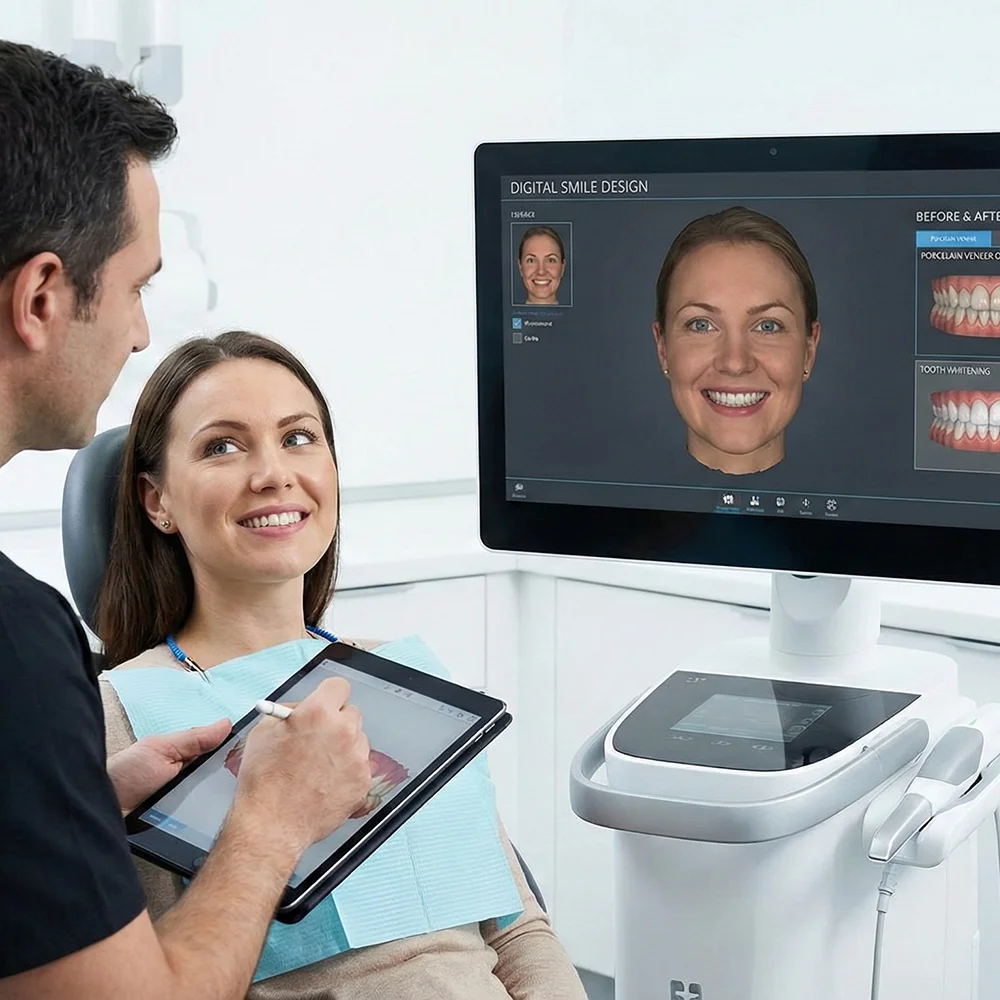
Digital smile design (DSD) is a state-of-the-art diagnostic and planning process where a patient’s teeth, gingival lines, lips, and facial proportions are evaluated using specialized computer software and high-resolution digital photography. This methodology is not a basic tooth-whitening or straightening patch; it creates a highly customized smile by considering the patient's gender, skin tone, facial geometry (round, square, oval), and even facial expressions according to golden ratio metrics.
How is Digital Smile Design Done?
At Avrupa Sağlık Diş clinics, the smart smile design pathway is executed with digital comfort and artistic sensitivity across the following clinical stages:
Comprehensive Examination and Photography
The patient's high-resolution photographs and studio videos are recorded from multiple angles (smiling, talking, and at structural rest). These records establish the baseline for analyzing teeth alignment alongside dynamic facial muscle movements.
Three-Dimensional Intraoral Scanning (Digital Impression)
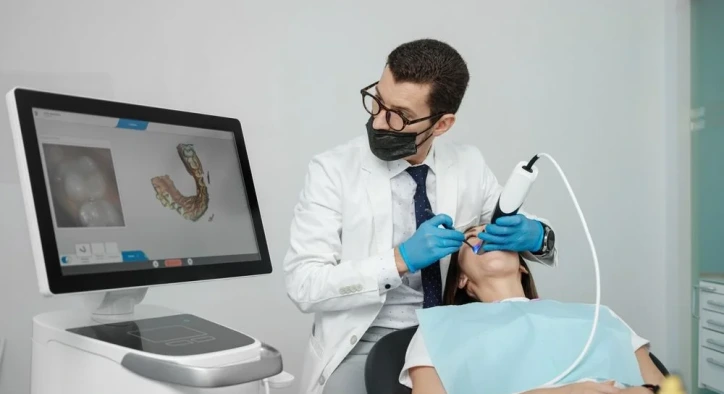
Instead of traditional, gag-reflex-inducing messy impression trays, an advanced intraoral scanner is used. A highly precise 3D digital model of the teeth and adjacent soft tissues is uploaded to the screen within seconds.
Computer-Aided Smart Simulation
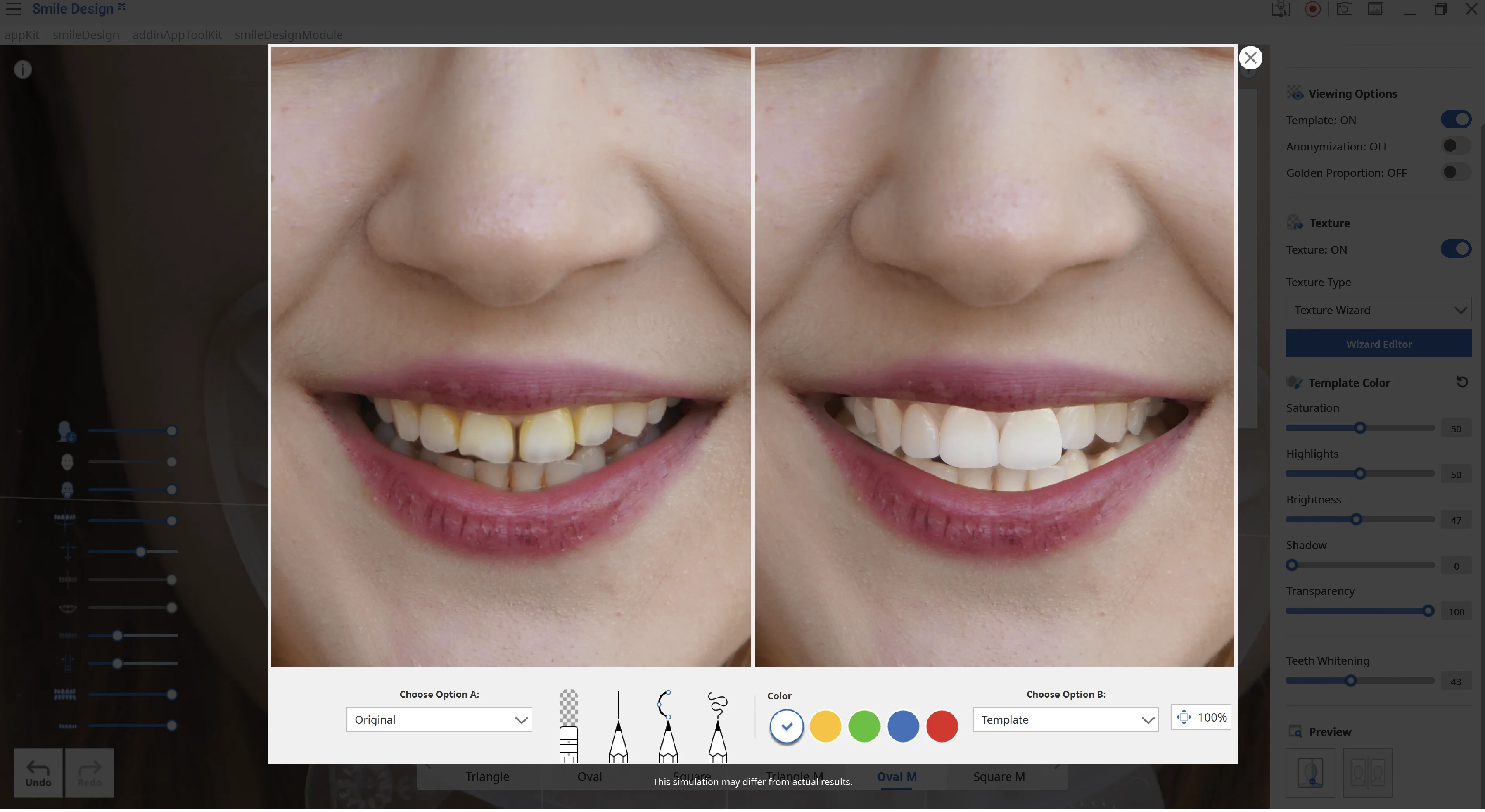
The compiled 3D models and facial graphics are introduced into the smile design software. Our aesthetic specialists and prosthodontists trace the anatomical reference lines of the face to calibrate the ideal tooth dimensions down to the millimeter.
The Mock-Up (Live Trial) Stage
The finalized computer design is converted into a physical model using precision 3D printers. A customized matrix derived from this model is placed into the patient's mouth using a temporary biocompatible material without any teeth shaving. Looking into a mirror, the patient experiences their future smile live and requests adjustments if needed.
Definitive Restorations and Attachment
Once the temporary simulation is approved, the final clinical preparations begin. The digital blueprints are sent to automated in-house CAD/CAM milling units, which fabricate the permanent porcelain or zirconium structures with zero error margin before they are bonded securely.
How Many Sessions Does Digital Smile Design Take?
If the patient's oral anatomy does not require additional surgical extensions or orthodontic preparation, digital smile design is typically completed within 2 to 3 clinical sessions.
- Session 1 (Data Collection): Studio photography, high-definition video capture, and 3D intraoral scanning are performed to secure all digital metrics.
- Session 2 (Mock-Up & Preparation): The prepared design is tested live in the mouth using temporary materials. Once the patient approves the aesthetics, tooth preparations are carried out.
- Session 3 (Final Delivery): The definitive porcelain veneers or zirconium structures, custom-milled in the laboratory, are securely bonded, completing the makeover.
Which Procedures Are Included in Digital Smile Design?
A smile design is not a singular treatment; it is a fluid combination of multiple dental disciplines tailored to individual needs:
Zirconium or E-Max Crowns
These crowning methods deliver advanced translucent aesthetics closest to natural teeth due to high light reflection. They are safely used for both front cosmetic enhancements and heavy rear chewing loads.
Porcelain Veneers (Laminates)
Ultra-thin porcelain shells that require a microscopic preparation of only 0.3 to 0.5 mm from the front surface of the tooth. They are designed to correct severe discoloration and minor structural misalignment.
Gingivectomy (Gum Contouring)
A laser-assisted soft tissue reshaping procedure performed to correct asymmetrical gumlines or reduce excessive gingival display, commonly known as a gummy smile.
Teeth Whitening (Bleaching)
A cosmetic procedure where professional-grade whitening gels and specialized light sources are used to brighten the baseline shade of adjacent teeth before final restorations are matched.
Dental Implants and Restorations
Missing teeth within the smile zone are populated securely using premium titanium dental implants, while outdated, discolored silver fillings are replaced with aesthetic composite fillings.
In Which Situations is Digital Smile Design Performed?
Digital smile design can be safely performed for any patient experiencing one or more of the following cosmetic or functional dental issues:
- When teeth exhibit severe intrinsic staining, graying, or discoloration caused by historical antibiotic use,
- If teeth present structural asymmetry, uneven lengths, or heavy wear from grinding,
- When front teeth are fractured, chipped, or have congenital shape defects,
- To close spaces between teeth, clinically known as diastemas,
- If gums appear excessively prominent when smiling or the gingival borders are uneven,
- When mild crowding needs to be corrected aesthetically for patients who reject traditional orthodontic braces.
How Much is Digital Smile Design Cost?
Answering "how much is smart smile design cost?" with a single flat rate is medically impossible. Digital smile design is not a standard standalone product; it is a customized sequence of multiple synchronized operations.
Final investments track the pricing framework of the Turkish Dental Association alongside these variables:
- The Choice of Restorative Materials: Opting for premium E-max glass-ceramics, layered zirconium, or micro-hybrid composite resins changes raw manufacturing costs.
- The Number of Treated Teeth: The overall budget scales depending on how many teeth are included in the transformation zone (typically the front 6 to 10 teeth).
- Surgical and Extra Therapy Needs: If crown lengthening (gingivectomy), dental implants, or bone grafting are required, the comprehensive plan is adjusted accordingly.
Frequently Asked Questions
Does digital smile design change the shape of the face?
Yes, it indirectly affects the shape of the face positively. Adjusting the vertical dimension of the teeth, filling in sunken lip corners, and reducing wrinkles give the face a younger, more dynamic (anti-aging) expression.
Are teeth heavily cut during smile design?
No, in modern aesthetic dentistry, the goal is minimal tissue loss. In porcelain veneer (lamina) applications, only a microscopic filing of 0.3 - 0.5 mm is done on the front surface of the teeth. In some cases (Non-Prep Laminate), the design can even be applied without touching the teeth at all.
Will the smile design look artificial when finished?
No, the aim of digital smile design is to mimic the natural look. Since your facial proportions are calculated by computer, a result that is completely harmonious with your face and far from artificial is obtained.
How long do the designed teeth last?
With proper oral care, brushing twice a day and flossing, porcelain structures maintain their original aesthetics for 10 to 15 years.
Can the designed smile be replicated in my mouth?
Yes, that's the biggest advantage of digital smile design. Because the permanent restorations produced in the laboratory are created from the same digital data (STL file) as the design you approve on the computer, you won't encounter any surprises; the image on the screen will be reflected in your mouth exactly as it is.
About the Author