


What Is Jawbone Resorption? Symptoms, Causes and Treatment
Don't put off your smile. Message us now to discuss your treatment options with our expert dentists.
WhatsAppThe anatomical foundation of the human face comprising the upper jaw (maxilla) and lower jaw (mandible) contains a specialized bony architecture known as the alveolar bone. The existence and structural density of the alveolar bone depend directly on the presence of natural tooth roots and the biomechanical forces (piezoelectric effect) transmitted during mastication. When we chew food, mechanical forces travel down the tooth roots into the surrounding bone cells, continuously stimulating bone modeling and osteoblastic activity. However, when a tooth is extracted or lost, the underlying bone loses this essential mechanical stimulation and begins to resorb rapidly, much like an unused muscle undergoing atrophy.
In oral surgery and periodontology, this progressive loss is termed jawbone resorption (alveolar bone atrophy). Jawbone loss is not triggered solely by tooth extractions; chronic periodontal disease (periodontitis), ill-fitting removable dentures, and facial trauma can also cause progressive bone destruction. As jawbone volume diminishes, facial height collapses, the lips sink inward, cheeks sag, and the patient takes on a prematurely aged facial appearance. This comprehensive YMYL master guide explores what causes jawbone resorption, outlines key jawbone resorption symptoms and lower jawbone resorption symptoms, details how to stop jawbone resorption, explains advanced jawbone resorption treatment protocols including lower jawbone resorption treatment.
Table of Content
- What is Jawbone Resorption?
- What Causes Jawbone Resorption? Etiology and Triggers
- Jawbone Resorption Symptoms: Clinical Indicators
- How to Stop Jawbone Resorption
- How to Treat Jawbone Resorption: Upper & Lower Jaw Protocols
- Dental Implants in Resorbed Jawbones
- Comparative Matrix: Surgical Interventions by Resorption Severity
- Frequently Asked Questions
What is Jawbone Resorption?
In oral and maxillofacial surgery literature, the exact scientific definition of jawbone resorption is: The progressive cellular loss of alveolar bone height (vertical) and width (horizontal) across the maxilla or mandible resulting from tooth extraction, inflammatory tissue destruction, or a lack of mechanical functional stimulation.
Following a tooth extraction, approximately 40% to 60% of the surrounding alveolar bone volume is lost to natural resorption within the first 6 to 12 months. As resorption progresses, the lower jaw nerve canal (inferior alveolar nerve) moves closer to the crestal surface, while the maxillary sinuses in the upper jaw pneumatize (expand downward), severely reducing available bone height.
What Causes Jawbone Resorption? Etiology and Triggers

Analyzing what causes jawbone resorption requires evaluating both mechanical and biological risk factors:
1. Unreplaced Tooth Extractions and Missing Teeth
Failing to place a dental implant or prosthesis promptly following tooth extraction deprives the bone of functional stimulation. Unstimulated alveolar bone undergoes rapid disuse atrophy.
2. Advanced Periodontal Disease (Periodontitis)
Untreated bacterial gum inflammation spreads deep into the underlying supporting bone. Bacterial toxins combined with the body's inflammatory response trigger osteoclast activity, resorbing alveolar bone matrix.
3. Ill-Fitting Removable Dentures
Wearing ill-fitting removable complete or partial dentures for years exerts unnatural, horizontal friction forces across the bony ridge. This excessive mechanical pressure accelerates underlying bone loss.
4. Systemic Conditions and Hormonal Imbalances
Postmenopausal osteoporosis, uncontrolled diabetes mellitus, and hyperthyroidism impair bone mineral density systemic-wide, including the jawbones.
5. Facial Trauma and Tobacco Use
Physical jaw fractures, jaw cysts, and toxins from tobacco smoke impair micro-vascular blood supply to the bone, accelerating bone loss.
Jawbone Resorption Symptoms: Clinical Indicators
Jawbone atrophy progresses silently without early pain. Recognizable jawbone resorption symptoms include:
- Apparent Tooth Elongation: As the gums and underlying bone recede, root surfaces become exposed, making teeth appear unnaturally long.
- Tooth Mobility and Drifting: Losing bone support causes adjacent healthy teeth to loosen, tilt, or develop spaces (diastemas).
- Facial Structural Collapse: As bone height decreases, the lips thin and sink inward, the vertical distance between the nose tip and chin shortens, and deep perioral wrinkles develop.
- Denture Instability: Previously comfortable removable dentures become loose, cause painful sore spots, and slip during speech or mastication.
- Lower Lip Numbness (Paresthesia): A key lower jawbone resorption symptom involves altered sensation or tingling in the lower lip and chin as bone loss exposes the inferior alveolar nerve canal.
- Masticatory Jaw Pain: Decreased bone height alters joint mechanics, precipitating temporomandibular joint (TMJ) discomfort during chewing.
How to Stop Jawbone Resorption
A primary concern for affected individuals is how to stop jawbone resorption.
Halting bone loss relies on restoring mechanical function and eliminating inflammation:
- Early Periodontal Therapy: Eliminating active bacterial infections through deep scaling, root planing, and laser therapy halts inflammatory osteoclast activity.
- Prompt Dental Implant Placement: Placing titanium or zirconia dental implants directly into the jawbone restores functional chewing forces, stopping bone resorption by 100%.
- Nutritional & Systemic Support: Supporting bone metabolism with Vitamin D, calcium, and systemic health management.
How to Treat Jawbone Resorption: Upper & Lower Jaw Protocols
Addressing how to treat jawbone resorption requires advanced guided bone regeneration techniques to rebuild lost skeletal volume:
A. Upper Jawbone Resorption Treatment (Sinus Lifts & Grafting)
In the posterior upper jaw, pneumatized maxillary sinuses collapse into the empty ridge. Upper jawbone resorption treatment includes:
- Sinus Lift Surgery: The sunken sinus membrane is gently elevated upward.
- Bone Grafting: Synthetic, bovine, or autogenous bone graft material combined with protective collagen membranes is placed beneath the elevated membrane to generate new living bone.
B. Lower Jawbone Resorption Treatment (Guided Bone Regeneration & Block Grafts)
The dense cortical lower jaw requires targeted augmentation. Lower jawbone resorption treatment involves:
- Horizontal and Vertical Ridge Augmentation: Bone graft particles sealed under titanium-reinforced membranes expand thin bony ridges.
- Autogenous Block Grafting: For cases of severe jawbone resorption, solid bone blocks harvested from the chin or ramus are screwed onto the resorbed mandible to rebuild structural volume.
Dental Implants in Resorbed Jawbones
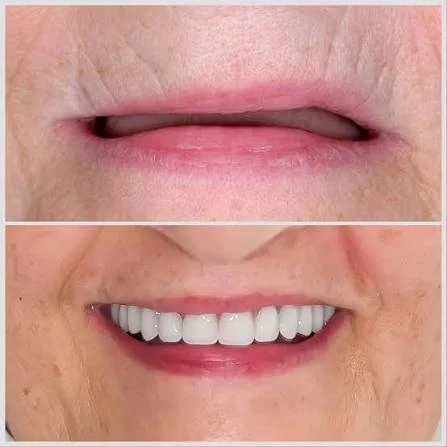
For patients told they lack sufficient bone for implants, modern jawbone resorption implant protocols offer predictable solutions:
- Simultaneous Grafting and Implant Placement: In mild to moderate bone loss, bone graft material and dental implants are placed in a single surgical session.
- All-on-4 and All-on-6 Protocols: For fully edentulous patients with severe posterior bone loss, implants are placed at precise 30-degree angles in the anterior jaw where bone density remains highest, supporting immediate fixed teeth.
- Zygomatic Implants: When the upper jaw suffers extreme bone loss, extra-long zygomatic implants are anchored directly into the cheekbones (zygoma), eliminating the need for extensive bone grafting.
- Short Implants: Specially engineered 4 mm to 6 mm short implants avoid the lower jaw nerve canal in moderately resorbed mandibles.
Comparative Matrix: Surgical Interventions by Resorption Severity
Compare surgical protocols based on jawbone loss severity below:
|
Resorption Severity Level |
Anatomical Presentation |
Surgical & Prosthetic Solution |
|
Mild Jawbone Loss |
Adequate height; minor horizontal thinning |
Standard Dental Implants + Localized Grafting |
|
Moderate Jawbone Loss |
Noticeable loss of ridge height and width |
Sinus Lift + Bone Grafting + Implants |
|
Severe Loss (Lower Jaw) |
Bone loss approaching nerve canal |
Block Bone Grafting / Short Implants / All-on-4 |
|
Severe Loss (Upper Jaw) |
Fully pneumatized sinuses; zero ridge |
Open Sinus Lift / Zygomatic (Cheekbone) Implants |
Frequently Asked Questions
Can resorbed jawbone fully regenerate?
Yes. Modern guided bone regeneration protocols using biocompatible bone grafts, growth factors (PRF), and barrier membranes successfully rebuild lost jawbone volume with high predictability and success rates exceeding 90%.
Is bone graft surgery for jawbone resorption painful?
No. The surgical procedure is completely painless because high-potency local anesthetics or IV sedation fully numb the surgical site. Post-operative swelling or minor soreness is easily managed with prescribed anti-inflammatory medications and antibiotics.
Can someone with severe jawbone resorption wear complete dentures?
They can, but with significant discomfort. As the jawbone resorbs, the anatomical ridge needed to retain a denture disappears, causing the denture to slip, rub, and create painful ulcers. Implant-retained overdentures or fixed All-on-4 restorations are strongly recommended.
How many months after bone grafting can dental implants be placed?
If bone loss is severe and grafting was performed as a separate initial stage, a healing period of 4 to 6 months is required for the graft material to integrate into solid living bone before implants are placed.
About the Author