


What Is Tartar Removal? Does It Hurt and Does It Damage the Teeth?
Don't put off your smile. Message us now to discuss your treatment options with our expert dentists.
WhatsAppOral bacteria constantly interact with salivary proteins and dietary sugars to form a soft, sticky, transparent film across tooth surfaces known as bacterial plaque. When this unattached biofilm is not thoroughly disrupted by daily toothbrushing and flossing within 24 to 72 hours, it absorbs calcium and phosphate minerals from saliva, undergoing calcification. This petrified, rock-hard mineral matrix is colloquially known as dental calculus or tartar.
Once calcified, no residential toothbrush, specialized paste, or chemical rinse can dislodge the deposits. Professional tartar removal (scaling and root planing) performed in a dental clinic serves as the primary clinical defense against periodontal disease. Unaddressed tartar spreads subgingivally beneath the gingival margin, detaching the soft tissue attachment from alveolar bone, triggering chronic gingivitis, bone resorption, and ultimately tooth loss (periodontitis).
Table of Content
- What Is Dental Tartar? Supragingival vs. Subgingival Calculus
- How Tartar Removal Is Done: Clinical Step-by-Step
- Does Tartar Removal Hurt?
- Does Tartar Removal Damage Teeth?
- Pain and Sensitivity After Tartar Removal: What to Expect
- Tartar Removal Aftercare Guidelines
- Tartar Buildup After Cleaning: Can It Recur?
- Frequently Asked Questions
What Is Dental Tartar? Supragingival vs. Subgingival Calculus
Periodontal science categorizes the deposits requiring dental tartar removal into two distinct clinical presentations:
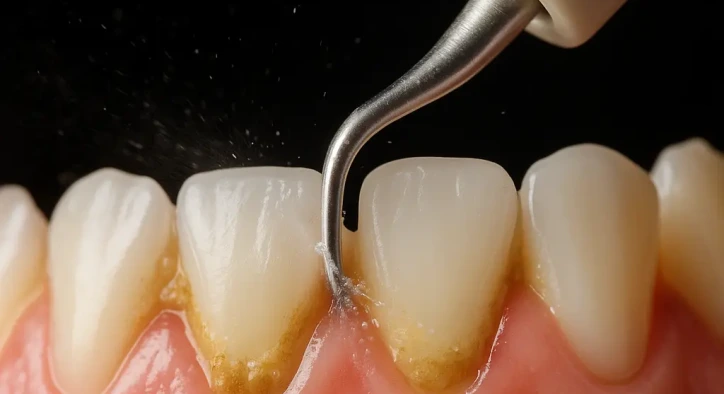
- Supragingival Calculus: Visible mineral deposits located coronal to the gingival margin, displaying a chalky yellow or cream hue. It deposits heavily on the lingual surfaces of mandibular incisors and the buccal surfaces of maxillary molars adjacent to major salivary duct orifices.
- Subgingival Calculus: Dark brown or black calcified deposits nestled deep within periodontal pockets below the gumline. Firmly adhered to root cementum, subgingival calculus is directly responsible for pocket formation, chronic bleeding, and alveolar bone destruction.
How Tartar Removal Is Done: Clinical Step-by-Step
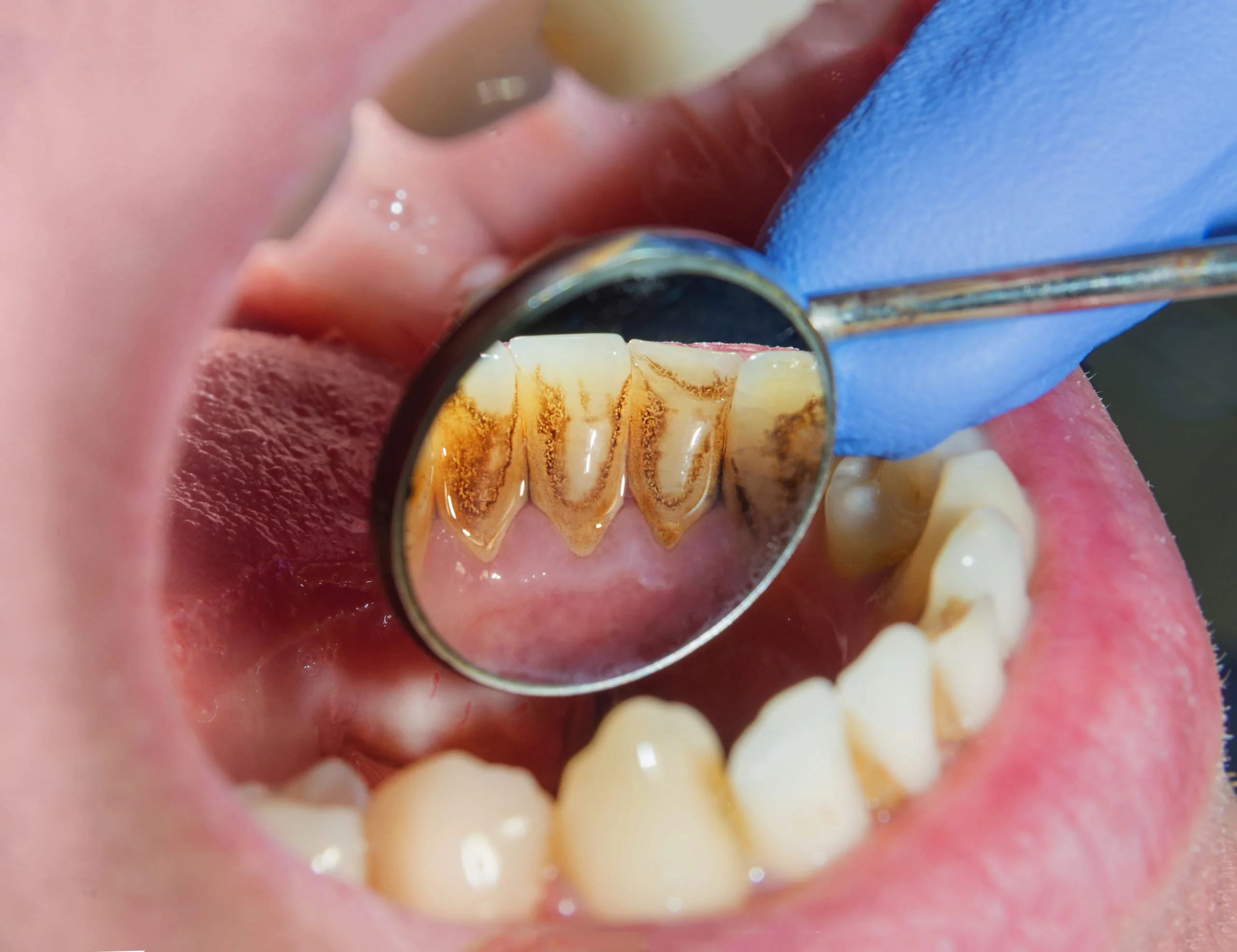
Understanding how tartar removal is done involves standard clinical prophylactic protocols utilizing modern, tissue-sparing instrumentation:
- Periodontal Probing & Assessment: The clinician evaluates periodontal pocket depths, soft tissue inflammation, and the distribution of supra- and subgingival deposits.
- Ultrasonic Scaling: Scaler tips vibrating at 25,000 to 30,000 Hz are applied against calculus deposits. Pressurized coolant water creates acoustic cavitation, dislodging brittle calculus from enamel and root surfaces in seconds without blade scraping.
- Manual Hand Scaling (Curettes): Specialized Gracey curettes are used to meticulously plane and debride narrow root furcations and deep subgingival margins where required.
- Air-Powder Polishing (Air-Flow): A fine aerosol mixture of warm water, air, and low-abrasive glycine or sodium bicarbonate powder gently removes extrinsic coffee, tea, and tobacco stains.
- Prophylaxis Pasting & Polishing: Rotating rubber cups and fine polishing pastes smooth micro-irregularities across the enamel to delay future biofilm adherence.
- Fluoride Protection: A protective fluoride varnish is applied to seal exposed dentin tubules and prevent transient post-scaling sensitivity.
Does Tartar Removal Hurt?
Prospective patients frequently ask with hesitation: does tartar removal hurt?
- Standard Presentation: In patients with healthy or mildly inflamed gums, ultrasonic scaling is entirely painless; patients feel only mild vibration and water cooling.
- Severe Inflammation and Receding Gums: In individuals with exposed root cementum, active periodontitis, or deep pockets, temperature changes from the water coolant may trigger temporary sensitivity or tingling.
- Painless Clinical Options: For patients with severe dental anxiety or acute sensitivity, dentists apply topical numbing gels or localized dental anesthesia to make the scaling appointment completely comfortable.
Does Tartar Removal Damage Teeth?
The pervasive folk myth that "scaling scrapes away enamel, weakens tooth structure, or creates gaps between teeth" is scientifically false. So, does tartar removal damage teeth?
- Enamel Is Untouched: Ultrasonic scalers do not scrape or grind dental enamel; microscopic sound wave vibrations shatter only the calcified tartar deposits without eroding underlying hydroxyapatite crystals.
- The "New Gap" Illusion: Spaces felt with the tongue following tartar removal are not newly created defects. Tartar had previously filled these interdental spaces while eroding underlying bone and gum tissue; removing the mineral slab exposes the pre-existing tissue loss.
- The "Loose Tooth" Myth: In cases of severe periodontitis, heavy calculus acts as a rigid, artificial bridge splinting compromised teeth together. Once the infection source is eliminated, underlying mobility caused by pre-existing bone loss becomes noticeable. Leaving the calculus in place would inevitably lead to full tooth loss from advancing infection.
Pain and Sensitivity After Tartar Removal: What to Expect
Experiencing mild pain after tartar removal and transient thermal sensitivity is a standard biological adaptation:
- Initial 2 to 5 Days of Sensitivity: Removing calculus exposes root cementum and dentinal tubules to cold air and fluids for the first time in months or years, causing temporary tooth sensitivity.
- Gingival Tissue Healing: As congested inflammatory fluid drains from the sulcus, gums may feel slightly sore or tender for 24 to 48 hours.
- Resolution: Salivary minerals naturally remineralize exposed areas, and gingival fibers re-tighten against the tooth, resolving all sensitivity within 7 to 10 days.
Tartar Removal Aftercare Guidelines
To support tissue healing, follow these aftercare recommendations for the first 24 to 48 hours:
- Initial Eating Window: If fluoride varnish was applied, avoid eating for 30 minutes; otherwise, wait at least 2 hours before consuming meals.
- Avoid Temperature Extremes: Avoid freezing iced drinks or piping hot soups during the first 48 hours to minimize dentin sensitivity.
- Refrain from Chromogenic Substances: Freshly polished enamel is temporarily receptive to stains; avoid tobacco, coffee, black tea, and red wine for 24 hours.
- Maintain Gentle Oral Hygiene: Continue gentle brushing and daily flossing; stopping hygiene practices allows bacteria to immediately re-infect healing gingival pockets.
- Use Desensitizing Toothpaste: Utilize toothpastes containing potassium nitrate or stannous fluoride to soothe sensitive nerve endings.
Tartar Buildup After Cleaning: Can It Recur?
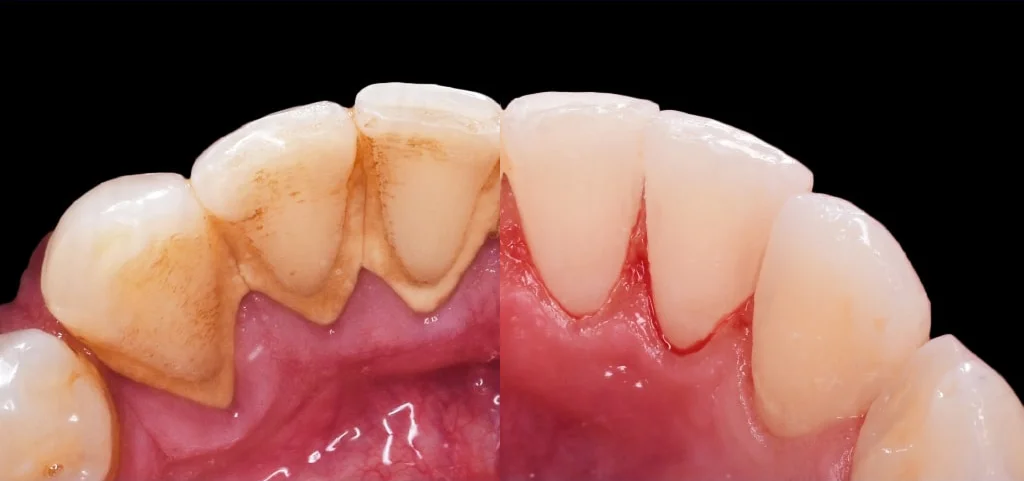
Patients often ask whether tartar buildup after cleaning is inevitable.
Because human saliva naturally contains calcium and phosphate ions, calculus formation is an ongoing biological process. However, the accumulation rate is governed strictly by personal hygiene:
- Individuals brushing twice daily and practicing meticulous interdental flossing prevent plaque from ever mineralizing into calculus.
- Neglecting oral hygiene will allow soft plaque to harden back into calculus within 2 to 3 months.
- Therefore, receiving professional dental cleanings and periodontal checks every 6 months is mandatory to preserve long-term oral health.
Comparative Matrix: Bacterial Plaque vs. Tartar
|
Clinical Parameters |
Bacterial Plaque (Biofilm) |
Dental Calculus / Tartar |
|
Physical Texture |
Soft, sticky, transparent biofilm |
Hard, petrified calcified mineral |
|
Visibility |
Colorless or pale yellow (Difficult to spot) |
Chalky yellow, brown, or black deposits |
|
Home Removability |
100% Removable via brush and floss |
Impossible at home! (Requires dental scaling) |
|
Formation Timeline |
Accumulates 4 to 12 hours post-meal |
Mineralizes within 24 to 72 hours if unbrushed |
|
Pathological Risk |
Early reversible gingivitis |
Irreversible bone loss and periodontitis |
|
Clinical Treatment |
Routine daily home care |
Professional Ultrasonic Dental Scaling |
Frequently Asked Questions
Can tartar be removed at home using baking soda or lemon juice?
Absolutely not! Calcified dental tartar is as hard as stone; scrubbing it with baking soda, lemon juice, or abrasive powders will not remove it. Instead, acidic and abrasive mixtures severely scratch dental enamel, erode root surfaces, and cause chemical burns to gingival tissues. Tartar can only be removed safely using professional ultrasonic scalers.
How often should professional tartar removal be performed?
For optimal periodontal health, professional scaling should be performed every 6 months during routine dental checkups. However, for smokers, patients with rapid calculus formation, or individuals with active periodontal maintenance needs, cleanings every 3 to 4 months may be recommended.
Does dental tartar removal whiten the teeth?
Tartar removal is not a chemical bleaching treatment. However, by removing thick yellow/brown mineral crusts and surface tea, coffee, and tobacco stains, teeth immediately appear visibly cleaner, brighter, and return to their natural baseline shade.
What happens if dental tartar is never removed?
Neglected tartar deposits migrate subgingivally, where bacterial colonies release destructive toxins that destroy periodontal fibers and alveolar bone. Gums recede, root surfaces become exposed, chronic halitosis develops, and intact, non-decayed teeth eventually become mobile and fall out due to complete periodontal bone loss.
About the Author