


Can a Crowned Tooth Decay? Causes, Pain, Smells & Treatment
Don't put off your smile. Message us now to discuss your treatment options with our expert dentists.
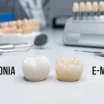
WhatsAppIn restorative dentistry, dental crowns represent one of the most reliable modalities for preserving structurally compromised, fractured, endodontically treated, or severely worn teeth. Fabricated from high-strength materials such as monolithic zirconia, lithium disilicate (E-Max), or porcelain-fused-to-metal (PFM), these prosthetic caps encase the prepared tooth to distribute masticatory forces evenly. However, patients often assume that a crowned tooth is completely immune to tooth decay. Discovering an unpleasant taste, persistent halitosis, or a sharp throb when drinking hot or cold liquids can therefore cause understandable concern.
Table of Content
- Can a Crowned Tooth Decay?
- Can a Zirconia or Porcelain Crowned Tooth Decay?
- Why Does Tooth Structure Decay Under a Crown?
- Why Does a Crowned Tooth Smell?
- Pain and Thermal Sensitivity Under a Crown
- How to Detect Decay Under a Crown
- How to Treat a Decaying Crowned Tooth
- Does a Tooth Under a Crown Need Extraction?
- Comparative Matrix: Healthy Crown vs. Decaying Crown
- Frequently Asked Questions
Can a Crowned Tooth Decay?
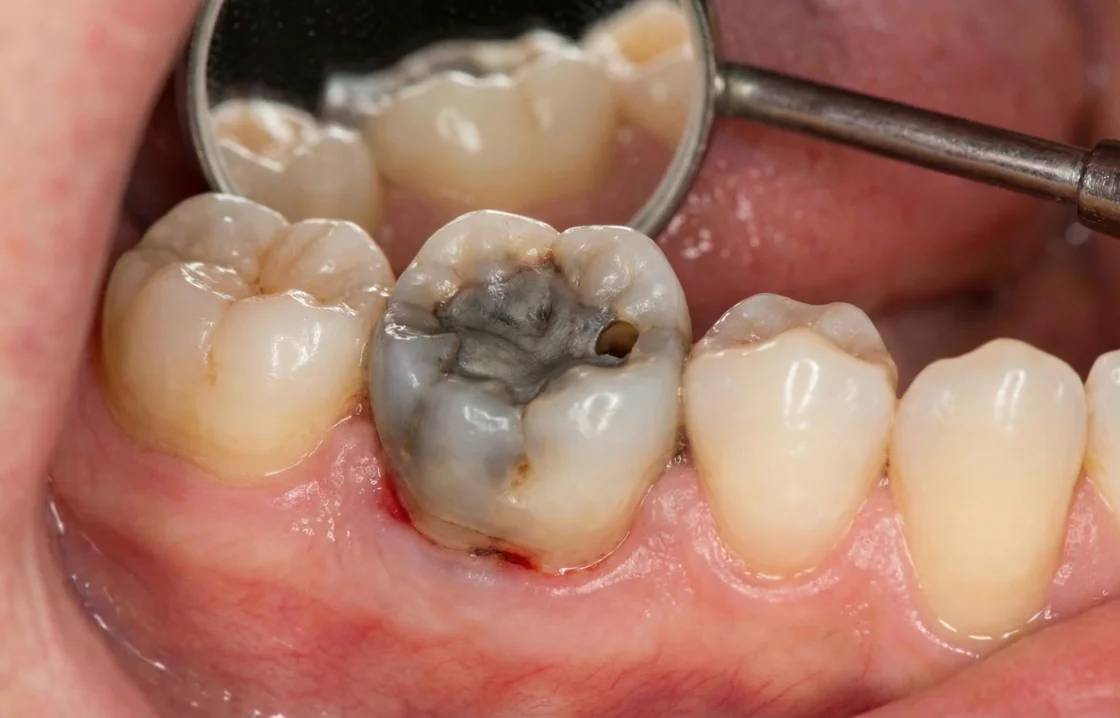
The clear clinical answer is: Yes, the natural tooth structure beneath a dental crown can decay.
The distinction lies in understanding the materials involved:
- Prosthetic materials, whether zirconia, feldspathic porcelain, or metal alloys, are inorganic. Microorganisms cannot metabolize, demineralize, or degrade these materials, so the crown itself never decays.
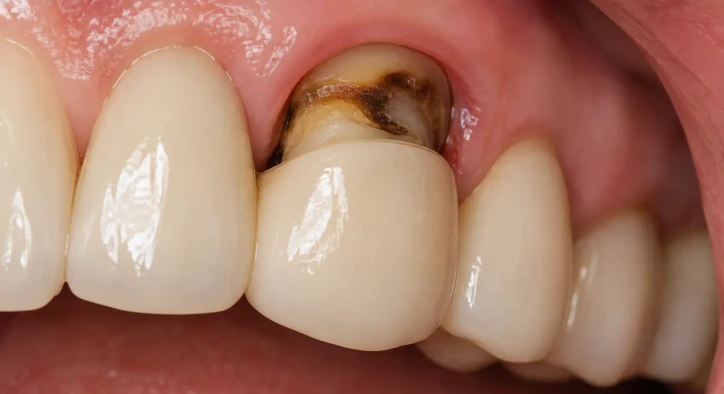
- However, the underlying natural tooth structure (coronal dentin and root cementum) remains organic. If oral bacteria penetrate the microscopic margins where the crown meets the tooth, the underlying tooth will demineralize. In restorative dental literature, this condition is classified as recurrent caries or secondary marginal decay.
Can a Zirconia or Porcelain Crowned Tooth Decay?
Patients often ask whether specific materials are more prone to decay: can a zirconia crowned tooth decay versus can a porcelain crowned tooth decay?
- Zirconia Restorations: Milled using high-precision CAD-CAM digital technology, modern zirconia crowns offer marginal adaptation measured in microns. This precise fit reduces the microleakage gap compared to older techniques. However, if interdental flossing is neglected, plaque accumulates at the restorative margin, allowing decay to develop on the root surface below.
- Porcelain-Fused-to-Metal (PFM) Crowns: Fabricated using traditional casting, PFM margins can show higher long-term discrepancy. If gingival recession exposes the metal collar, plaque retention increases, making the underlying dentin more vulnerable.
- Regardless of whether zirconia or porcelain is selected, neglecting daily plaque removal leaves the underlying biological tooth vulnerable to caries.
Why Does Tooth Structure Decay Under a Crown?
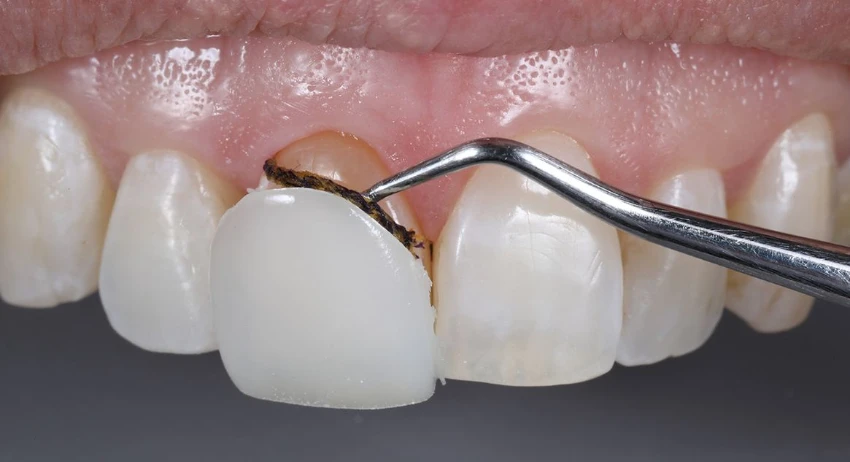
Five primary mechanisms contribute to decay beneath a dental crown:
- Luting Cement Dissolution: Dental cements bonding the crown to the preparation undergo slow hydrolytic degradation over time due to oral acids and salivary enzymes. Micro-voids form along the interface, allowing saliva and bacteria to seep underneath.
- Gingival Recession: Natural aging, aggressive horizontal toothbrushing, or periodontitis causes the gingival margin to recede apically. This exposes the unshielded root cementum below the crown margin, which is softer and more acid-soluble than enamel.
- Marginal Inaccuracies (Overhangs or Open Margins): If a crown has an open margin or overhanging ledge, it creates a plaque trap that cannot be cleaned with standard brushing.
- Neglected Interproximal Hygiene: Omitting daily interdental brushes or flossing allows sticky biofilms to stagnate at the contact zone between adjacent teeth.
- Structural Fractures: Clenching or biting hard items can cause microscopic craze lines in the ceramic or cement seal, facilitating bacterial ingress.
Why Does a Crowned Tooth Smell?
A frequent patient complaint is: why does a crowned tooth smell? Odors emanating from a crowned tooth typically trace to three sources:
- Active Bacterial Demineralization: As anaerobic bacteria break down collagen within the dentin beneath the crown, they release volatile sulfur compounds and acidic byproducts that produce a chronic foul smell and bitter taste.
- Impacted Food Remnants: Open interproximal contacts allow meat fibers and complex carbohydrates to pack between teeth, where they ferment under the action of salivary bacteria.
- Localized Marginal Periodontitis: Subgingival calculus deposits irritate the pocket, causing chronic inflammation, bleeding, and localized purulent exudate that creates persistent malodor.
Pain and Thermal Sensitivity Under a Crown
Patients frequently seek to understand why pain under crowned tooth develops or what causes crowned tooth sensitivity:
- Pulpitis in Vital Teeth: If the underlying tooth remains vital, bacteria approaching the pulp chamber irritate internal nerve endings, triggering sharp, prolonged sensitivity to thermal extremes.
- Occlusal Interferences (High Bite): Even a discrepancy of a fraction of a millimeter creates premature contact during chewing. This mechanical overload traumatizes the periodontal ligament, causing sharp pain upon occlusal loading.
- Periapical Abscess Formation: In endodontically treated teeth, pain upon biting or a localized gum boil indicates chronic reinfection at the root apex or an inflammatory bone lesion.
How to Detect Decay Under a Crown
Because decay is hidden beneath the restorative material, it often advances undetected. Key clinical signs include:
- Dental floss catching, shredding, or snapping when passed along the crown margin.
- Noticeable mobility or rocking of the crown during mastication.
- A visible dark brown, gray, or black line emerging at the gumline.
- Lingering pain provoked by sweet foods or cold beverages.
- Radiographic evidence showing localized radiolucencies beneath the restorative margin on bite-wing or periapical X-rays.
How to Treat a Decaying Crowned Tooth
When determining how to treat a decaying crowned tooth, clinicians follow four structured steps based on the depth of tissue breakdown:
1. Crown Removal and Disassembly
Decay beneath a crown cannot be treated with a simple surface filling; the entire margin must be evaluated to confirm how far caries has spread. The existing crown is carefully sectioned and removed using specialized rotary burs.
2. Caries Excavation and Disinfection
All softened, infected dentin is excavated down to sound, hard tooth structure, and the preparation is thoroughly disinfected.
3. Endodontic Therapy and Core Build-Up (When Indicated)
If decay reaches the pulp chamber or the clinical crown is heavily broken down, root canal therapy is performed. A quartz fiber post is cemented within the root canal to retain a composite core build-up.
4. Prosthetic Crown Replacement
Once the tooth and gingival tissues are stable, digital impressions are captured to fabricate a new precision-milled zirconia or ceramic crown with tight marginal adaptation.
Does a Tooth Under a Crown Need Extraction?
When evaluating does a tooth under a crown need extraction, clinical decisions depend on structural integrity:
- Restorable Teeth: If decay remains supragingival or slightly subgingival with adequate sound tooth structure above the alveolar crest (satisfying biological width principles), the tooth can be saved through endodontic therapy, crown lengthening, and a new crown.
- Hopeless Teeth Requiring Extraction: If decay extends deeply down the root surface, the root wall has perforated, or a vertical root fracture is identified, the tooth cannot support a new restoration. Extraction followed by bone grafting and dental implant placement is required to resolve the infection.
Comparative Matrix: Healthy Crown vs. Decaying Crown
|
Diagnostic Parameter |
Healthy Functioning Crown |
Decaying Crowned Tooth |
|
Oral Odor and Taste |
Completely neutral, clean |
Persistent foul odor and bitter taste |
|
Floss Progression |
Glides smoothly through contact |
Floss frays, catches, or tears |
|
Thermal Reaction |
Asymptomatic |
Sharp, lingering sensitivity to hot/cold |
|
Biting and Chewing |
Comfortable, stable loading |
Pain upon biting or sensation of movement |
|
Gingival Architecture |
Stippled, pale coral pink |
Marginal erythema, edema, or recession |
|
Radiographic Appearance |
Continuous, sealed margin |
Dark radiolucent void beneath margin |
Frequently Asked Questions
Can decay under a crown be fixed without removing the crown?
In almost all cases, no. Attempting to patch decay through the side of a crown leaves residual bacteria underneath. The crown must be removed to verify that all infected dentin is excavated before a new restoration is fabricated.
Can a crowned tooth with a root canal still decay without causing pain?
Yes. A tooth that has undergone root canal therapy has no sensory nerve supply, meaning it cannot perceive hot, cold, or pain from decay. The decay can destroy the internal tooth structure completely without discomfort, highlighting the need for regular routine dental checkups and X-rays.
Can antimicrobial mouthwashes stop decay under a crown?
No. Mouthwashes only reach superficial oral surfaces and cannot penetrate the closed micro-gap between the crown and the tooth. Mechanical removal of infected dentin by a dentist is required.
Does a zirconia crown protect against cavities better than porcelain?
Zirconia crowns milled with modern CAD-CAM technology offer superior marginal adaptation, reducing the microleakage gap compared to older methods. While this provides a more precise seal, the underlying tooth still requires daily interdental cleaning to prevent cervical decay.
About the Author