


How Is Laser Teeth Whitening Performed? Longevity and Prices
Don't put off your smile. Message us now to discuss your treatment options with our expert dentists.
WhatsAppSmile aesthetics play a central role in facial harmony, self-confidence, and interpersonal communication. However, over time, the habitual consumption of coffee, tea, red wine, and tobacco, alongside aging and genetic factors, leads to persistent intrinsic chromogenic staining embedded deep within the microscopic pores of dental enamel. While routine toothbrushing and professional dental prophylaxis remove superficial extrinsic stains, they cannot eliminate deep-seated intrinsic discoloration within the enamel and dentin layers.
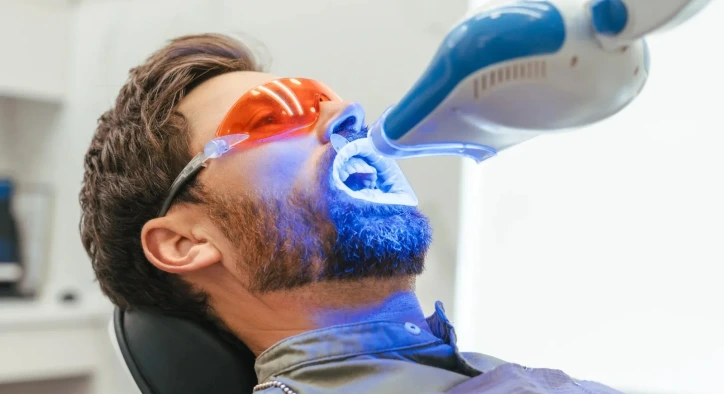
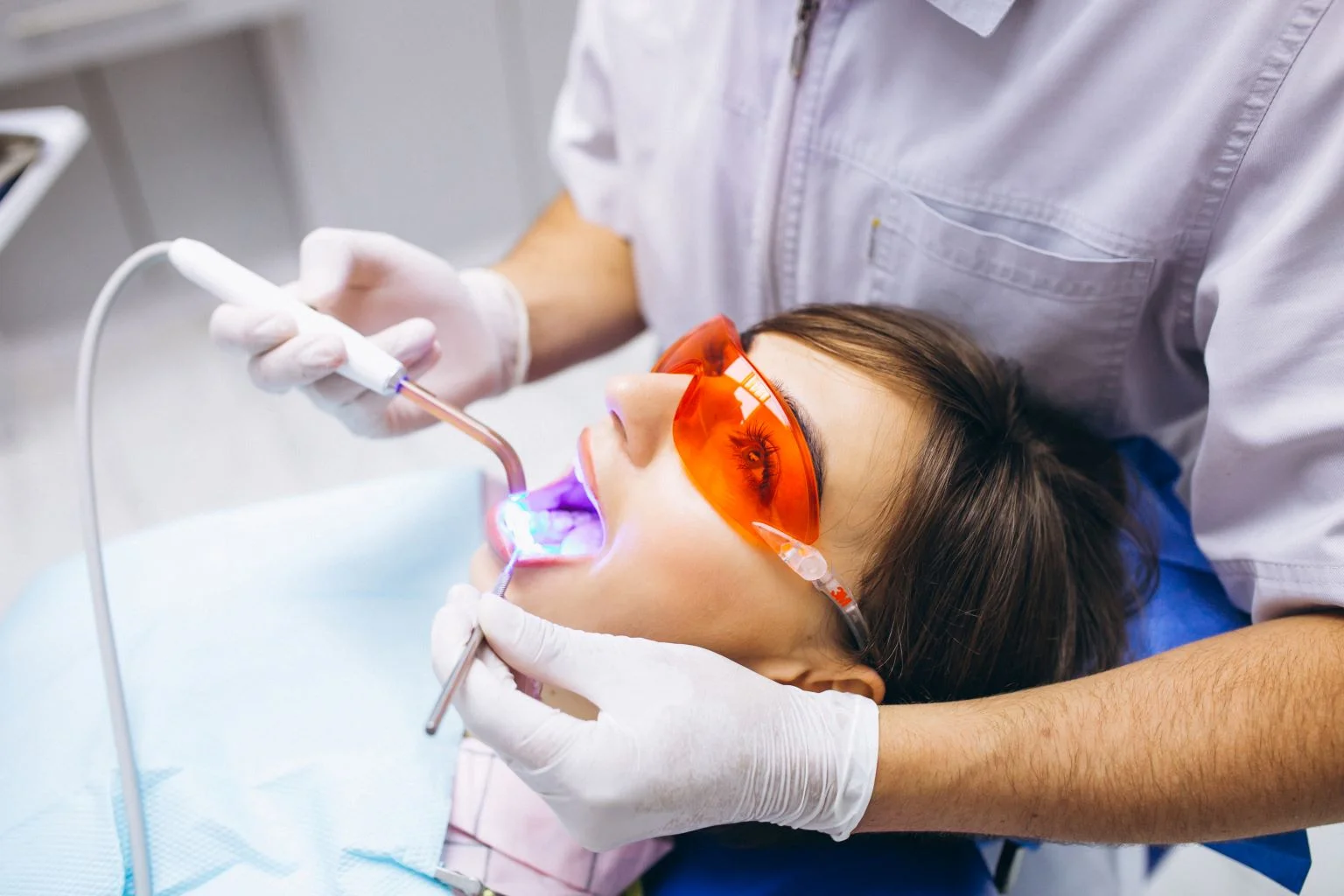
In cosmetic dentistry, laser teeth whitening (in-office laser-assisted dental bleaching) represents the gold standard for patients seeking rapid, maximum shade improvement. By photo-chemically activating concentrated hydrogen peroxide gels using calibrated laser or high-intensity LED light wavelengths, deep organic pigment molecules are rapidly oxidized and broken down, achieving a lightening of 6 to 8 shades in a single clinical appointment.
Table of Content
- What Is Laser Teeth Whitening and How Does It Work?
- How Long Does Laser Teeth Whitening Take?
- Does Laser Teeth Whitening Hurt?
- Duration of Pain and Sensitivity After Treatment
- Is Laser Teeth Whitening Safe?
- How Long Does Laser Teeth Whitening Last? Before and After Expectations
- Laser Teeth Whitening Aftercare
- What Determines Laser Teeth Whitening Cost?
- Comparative Matrix: In-Office Laser vs. Home Trays vs. OTC Strips
- Frequently Asked Questions
What Is Laser Teeth Whitening and How Does It Work?
In restorative dental science, the precise definition of laser teeth whitening is: The clinical application of high-potency medical-grade hydrogen peroxide (H2O2) or carbamide peroxide bleaching gel onto enamel surfaces, followed by targeted irradiation with specific laser light wavelengths (such as diode lasers or specialized light activators) to catalyze the rapid release of free oxygen radicals that break down complex stain molecules without altering enamel mineral matrices.
How is professional laser teeth whitening performed in the dental clinic? The procedure follows structured clinical steps:
- Clinical Assessment & Baseline Shade Mapping: The dentist examines the dentition for active caries, micro-fractures, and gingival health. Baseline shade is recorded and photographed using a standard VITA shade guide.
- Surface Prophylaxis: Enamel surfaces are cleaned using ultrasonic scalers and polished to remove all plaque and pellicle layers, ensuring unhindered gel contact.
- Gingival & Soft Tissue Isolation: Retractors are placed to protect lips and cheeks. Critically, a light-cured liquid resin (gingival barrier) is applied along the entire gumline to isolate the gingiva completely from the caustic bleaching gel.
- Bleaching Gel Application: A layer of medical hydrogen peroxide gel (typically 25% to 40% concentration) is evenly applied to the facial surfaces of the teeth.
- Laser Light Activation: The laser handpiece is calibrated and aimed at the prepped teeth. Laser energy photo-activates the catalyst within the gel, accelerating oxygen radical penetration.
- Multi-Cycle Application: The protocol typically consists of 2 to 3 consecutive cycles of 15 minutes each. Between cycles, expired gel is suctioned away and fresh gel is reapplied before reactivating the laser.
- Final Rinsing & Remineralization: Once the target shade is achieved, the gel is evacuated, the gingival barrier is peeled away, and a desensitizing remineralization agent or fluoride varnish is applied to soothe the teeth.
How Long Does Laser Teeth Whitening Take?
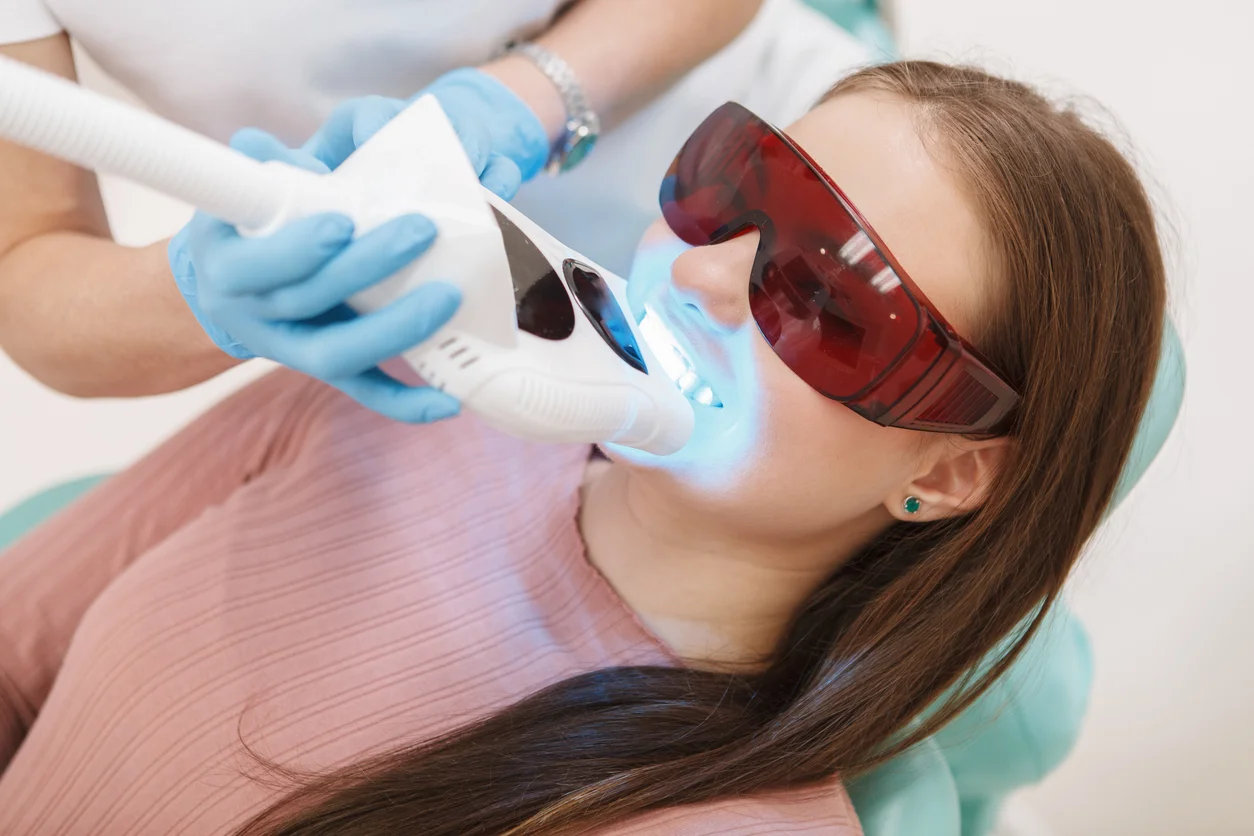
For patients scheduling their appointments, how long does laser teeth whitening take is typically 45 to 60 minutes total chair time.
- Preparation, soft tissue retraction, and gingival barrier placement take approximately 15 minutes.
- Active laser irradiation cycles (2 to 3 sets of 15 minutes) take 30 to 45 minutes.
- In under an hour, patients walk out of the clinic with an immediately visible, radiant smile.
Does Laser Teeth Whitening Hurt?
A primary concern voiced by prospective patients is: does laser teeth whitening hurt?
The procedure itself requires no local anesthesia and is essentially painless. However, as oxygen radicals navigate through open dentinal tubules toward the pulp chamber, some patients may experience mild sensitivity after laser teeth whitening or brief, transient shooting sensations ("zings").
Duration of Pain and Sensitivity After Treatment
- Experiencing mild to moderate pain after laser teeth whitening or thermal sensitivity for the first 24 to 48 hours is a normal biological response.
- After 48 hours, dentinal tubules naturally re-plug with salivary minerals, completely eliminating sensitivity.
- Brushing with potassium nitrate-based desensitizing toothpaste and taking mild over-the-counter analgesics (such as acetaminophen or ibuprofen) manages post-treatment discomfort effectively.
Is Laser Teeth Whitening Safe?
Patients frequently search online: is laser teeth whitening safe?
When performed under the direct supervision of a qualified dental professional, laser teeth whitening is completely safe and non-damaging to dental enamel.
- Professional bleaching systems do not etch, erode, abrade, or thin enamel architecture.
- The reaction is strictly a chemical oxidation that targets organic stain pigments without altering the inorganic hydroxyapatite crystal lattice.
- Risks occur only when non-professionals use unapproved DIY kits or when bleaching is performed over untreated, active cavities and exposed roots.
How Long Does Laser Teeth Whitening Last? Before and After Expectations
Reviewing clinical laser teeth whitening before and after results demonstrates an immediate improvement ranging between 3 to 8 shades lighter, depending on baseline enamel saturation.
How durable are these results, and how long does laser teeth whitening last?
- Results typically last between 1.5 to 3 years.
- Longevity depends on patient oral hygiene and dietary discipline.
- Heavy smokers or individuals consuming multiple cups of dark coffee daily may see color regression within 12 months, whereas patients who maintain good hygiene and follow the "White Diet" retain their bright shade for over 3 years.
- Periodic short touch-up sessions at home using custom trays can maintain peak brightness indefinitely.
Laser Teeth Whitening Aftercare
For the first 48 hours post-treatment, microscopic enamel pores remain temporarily open, making teeth uniquely vulnerable to rapid restaining. Strict adherence to laser teeth whitening aftercare is essential:
- Strict 48-Hour "White Diet": Avoid all chromogenic (staining) foods and beverages. Strictly eliminate black tea, coffee, red wine, colas, dark juices, soy sauce, curry, tomato sauce, chocolate, and dark berries.
- Total Tobacco Abstinence: Refrain from smoking cigarettes, cigars, or vapes for at least 48 hours. Tobacco tar rapidly penetrates open enamel pores, causing rapid yellowing.
- Avoid Temperature Extremes: Consume lukewarm foods and drinks at room temperature to avoid triggering transient dentin sensitivity.
- Avoid Colored Rinses: Do not use red or blue chemical mouthwashes; use colorless rinses or warm salt water instead.
- Avoid Abrasive Pastes: Use gentle, fluoride-rich desensitizing toothpaste rather than gritty, abrasive charcoal whitening pastes that could scratch delicate post-bleaching enamel.
What Determines Laser Teeth Whitening Cost?
Variables governing laser teeth whitening cost include:
- Laser Technology & Equipment: Advanced diode lasers or specialized photo-activating systems reflect clinical overhead and precision.
- Quality of Bleaching Materials: Premium, medical-grade, internationally certified (FDA/CE) bleaching gels command higher material costs.
- Single vs. Dual Arch & Session Count: Full-mouth dual-arch treatments versus single-arch applications, or requiring a second session for deep tetracycline stains.
- Combination Whitening Packages: Inclusion of custom-made take-home trays and maintenance gels alongside the in-office laser procedure.
Comparative Matrix: In-Office Laser vs. Home Trays vs. OTC Strips
Compare the clinical efficacy of different teeth whitening modalities below:
|
Feature & Clinical Parameter |
In-Office Laser Whitening |
Custom Take-Home Trays |
Over-the-Counter Whitening Strips |
|
Treatment Setting |
Dental Clinic Chairside |
Home (Dentist-Prescribed) |
Unsupervised at Home |
|
Duration & Frequency |
Single Session (45-60 min) |
4-6 hours daily for 2-3 weeks |
30 min daily for 14-21 days |
|
Shade Improvement |
6 to 8 Shades (Maximum) |
3 to 5 Shades |
1 to 2 Shades (Superficial) |
|
Gingival Protection |
Maximum (Liquid light-cured barrier) |
Moderate (Risk of tray overflow) |
Low (Risk of burning gums) |
|
Longevity |
1.5 to 3 Years |
1 to 2 Years |
2 to 4 Months |
|
Professional Supervision |
100% Expert Dentist Monitored |
Periodic Checkups |
Zero Dental Supervision |
Frequently Asked Questions
Can crowns, veneers, or composite fillings be whitened with a laser?
No. Bleaching agents and laser light oxidize organic pigments within natural enamel and dentin only. Prosthetic restorations like porcelain veneers, zirconia crowns, and composite resin fillings do not change color. If you have visible anterior restorations, undergo whitening first; your dentist will subsequently replace existing restorations to match your new bright enamel shade.
When does the final, true tooth shade stabilize after laser whitening?
Teeth appear exceptionally bright immediately after treatment partly due to transient enamel dehydration. As enamel reabsorbs moisture and minerals from saliva over the subsequent 48 to 72 hours, the true, natural, and stabilized final white shade emerges.
What is the minimum age for laser teeth whitening?
Laser teeth whitening is safely performed from age 18 onward, once permanent teeth have fully matured and pulp chamber volume has stabilized. In individuals under 18, large pulp chambers carry an elevated risk of severe pulpitis and hypersensitivity.
Does laser whitening thin or weaken dental enamel?
No. Laser teeth whitening is not a mechanical abrasive or acid-etching procedure. Zero enamel structure is removed or thinned. The process is strictly a chemical oxidation reaction targeting chromogenic pigments locked within enamel pores.
About the Author