


What Is a Black Triangle Between Teeth? Causes and Treatment
Don't put off your smile. Message us now to discuss your treatment options with our expert dentists.
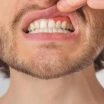
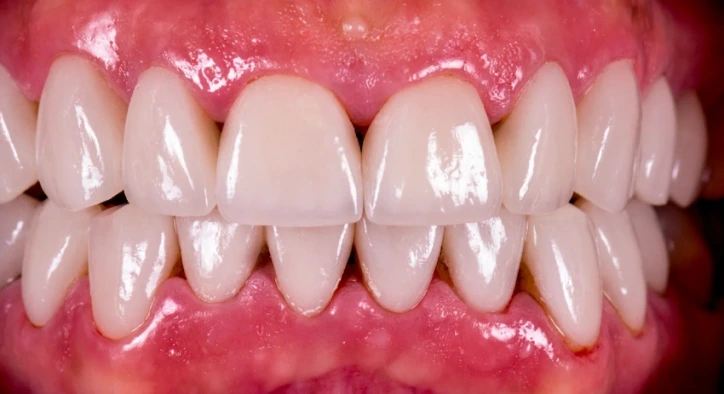
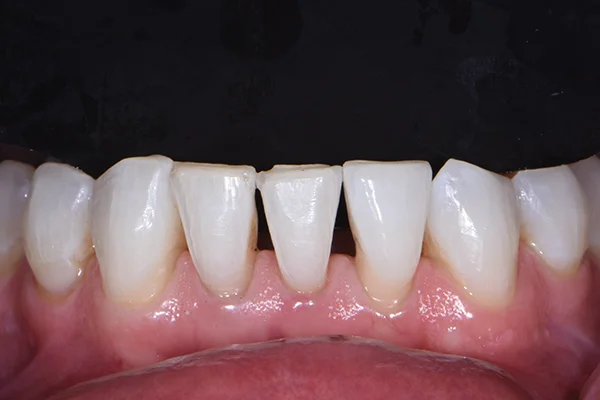
WhatsAppA harmonious smile requires more than aligned, radiant enamel crowns. "White aesthetics" (tooth morphology and shade) must integrate with "pink aesthetics" (healthy gingival contours framing cervical margins). In a healthy dentition, the triangular interdental papilla fills the cervical embrasure space beneath the interproximal tooth contact point. When this delicate soft tissue architecture recedes due to periodontitis, bone loss, or orthodontic alignment, dark voids appear. Clinically classified as open gingival embrasures, this presentation is widely known as a black triangle between teeth.
Localizing predominantly along anterior incisors, an open black space between teeth can impart an aged facial appearance and compromise smile confidence. Beyond cosmetics, these voids create persistent food traps, alter speech acoustics by allowing air leakage that produces whistling lisps, and cause inadvertent saliva spraying.
Table of Content
- What Is a Black Triangle Between Teeth?
- What Causes Black Triangle Between Teeth?
- Clinical Complications Associated with Open Embrasures
- How to Close Black Triangle Between Teeth: Treatment Protocols
- Comparative Matrix: Black Triangle Closure Modalities
- Preventative Strategies to Halt Black Triangle Progression
- Frequently Asked Questions
What Is a Black Triangle Between Teeth?
In restorative periodontology, a black triangle between teeth is an open cervical space resulting from the partial or total absence of the interdental papilla beneath the interproximal contact zone.
Under Tarnow's physiological principles, when the distance from the apical contact point to the crest of the interdental alveolar bone is five millimeters or less, the gingival papilla completely fills the interdental embrasure in nearly one hundred percent of cases. When periodontal bone loss or gingival recession widens this distance beyond five millimeters, the papilla loses biological vascular support, creating an open black space between teeth.
What Causes Black Triangle Between Teeth?
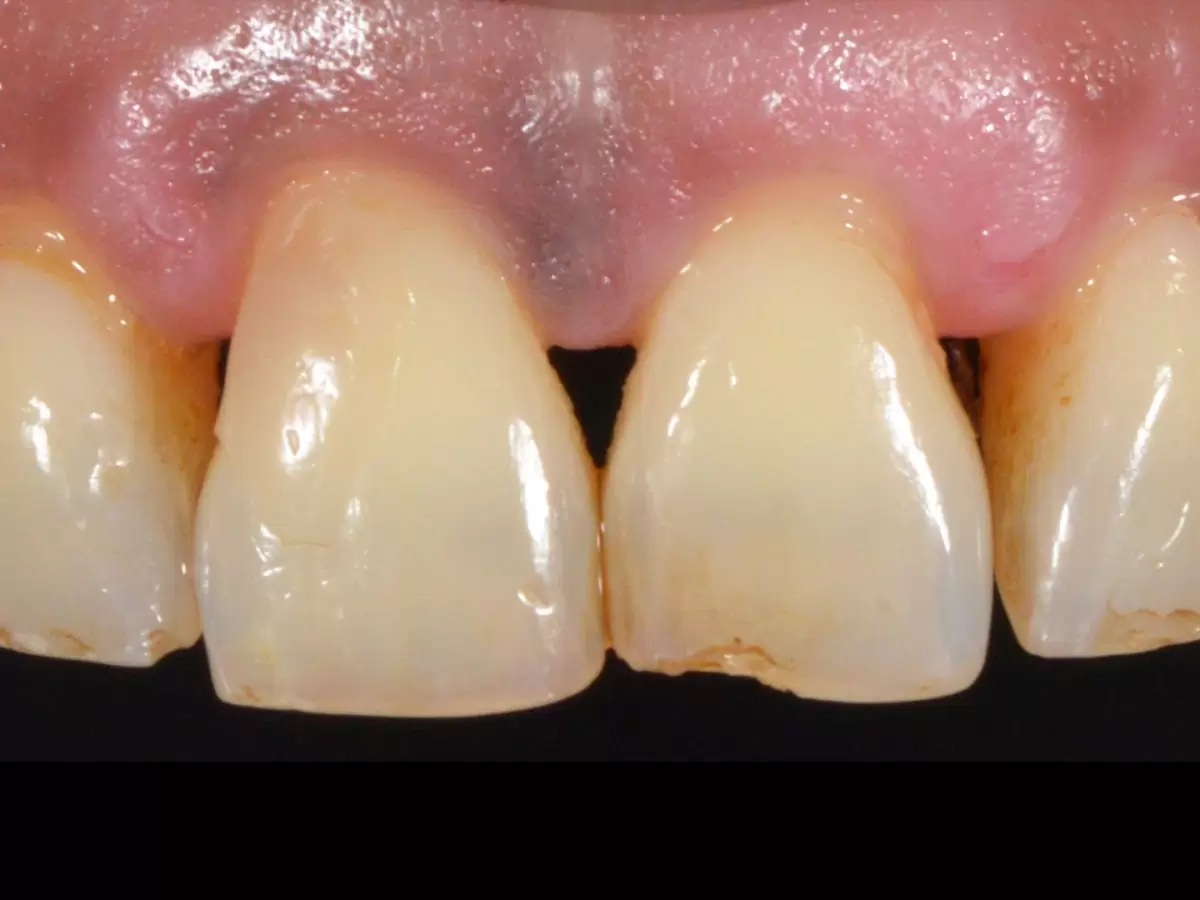
Understanding what causes black triangle between teeth involves evaluating six primary variables:
- Periodontitis and Alveolar Crest Resorption: As pathogenic bacterial plaque colonizes below the gumline, chronic inflammatory cascades resorb alveolar crestal bone. As underlying bone height diminishes, the overlying interdental papilla collapses, making this the primary driver of a gum recession black triangle.
- Post-Orthodontic Realignment: A frequent clinical presentation is developing a black triangle after braces or clear aligner therapy. Severely crowded, overlapping incisors share compressed, deficient interdental bone. Once orthodontic forces align the crowns into proper position, the pre-existing papilla deficiency is unmasked, exposing open embrasures.
- Triangular Tooth Morphology: Natural tooth forms vary between square, ovoid, and triangular configurations. Individuals with tapered, triangular incisors exhibit high, incisally placed contact points, widening the gingival embrasure space that the papilla must fill.
- Aggressive Wooden Toothpick and Floss Usage: Forcefully wedging rigid wooden toothpicks into interdental spaces or snapping dental floss down onto the papilla induces mechanical blunting and permanent soft tissue loss.
- Physiological Age-Related Atrophy: Aging leads to thinning of the oral epithelium, reduced mucosal vascularity, and gradual gingival recession across healthy dentitions.
- Defective Overhanging Dental Restorations: Crowns or class-two composite margins impinging on the biological width provoke localized inflammation and chronic papillary recession.
Clinical Complications Associated with Open Embrasures
Beyond cosmetic dissatisfaction, open gingival embrasures create functional and biological concerns:
- Chronic Food Impaction: Fibrous food debris repeatedly packs into the embrasure, generating pressure and localized inflammation.
- Phonetic and Speech Disturbances: Unsealed cervical spaces allow air escape during pronunciation of sibilants ("s", "z"), inducing lisping or unwanted saliva ejection.
- Elevated Interproximal Caries Risk: Accumulating food traps accelerate plaque stagnation along exposed root cementum, predisposing to root caries.
- Psychological Inhibitions: Patients frequently conceal their smile behind their hands or avoid uninhibited laughter in social settings.
How to Close Black Triangle Between Teeth: Treatment Protocols
Determining how to close black triangle between teeth involves structured clinical approaches within modern black triangle between teeth treatment:
1. The Bioclear Method (Black Triangle Composite Bonding)
The gold standard for non-invasive embrasure closure is the Bioclear Matrix Method.
- Requires zero drilling or cutting of healthy natural enamel.
- Anatomically curved, transparent 360-degree matrices slip subgingivally between teeth.
- Warmed, flowable and paste micro-hybrid composite resins are injected simultaneously to form a monolithic, void-free restoration.
- Recontours the root emergence profile, closing the open embrasure in a single visit without local anesthesia.
2. Custom Porcelain Veneers (E-Max Ceramics)
When open embrasures are accompanied by severe incisal wear, multiple restorations, or deep intrinsic discoloration, ceramic veneers offer an aesthetic solution. Lab technicians extend porcelain margins interproximally, moving the contact zone apically toward the gingiva to eliminate the black triangle.
3. Interproximal Enamel Reduction (IPR) with Orthodontic Retreatment
When triangular tooth morphology creates dark spaces during active orthodontic treatment, the orthodontist can perform minimal interproximal reduction (0.2 to 0.3 mm of enamel from contact zones). Orthodontic forces then draw the teeth together, converting a point contact into a broad surface contact that closes the triangle.
4. Hyaluronic Acid Dermal Papilla Injections
For minor volume deficiencies, cross-linked, high-viscosity hyaluronic acid gels can be injected directly into the interdental papilla. The gel binds water and inflates the soft tissue volume, closing the triangle for six to twelve months before natural enzymatic resorption requires retreatment.
5. Microsurgical Papilla Reconstruction
Surgical tunneling and subepithelial connective tissue grafting harvested from the palate can attempt papillary augmentation. However, without underlying interdental bone support, surgical predictability remains limited.
Comparative Matrix: Black Triangle Closure Modalities
|
Treatment Modality |
Enamel Reduction |
Clinical Appointments |
Longevity |
Optimal Indication |
|
Bioclear Composite Bonding |
Zero Reduction (Non-invasive) |
1 Visit (45-60 Minutes) |
5 to 10 Years |
Post-orthodontics and recession cases |
|
Porcelain Veneers (E-Max) |
Minimal (0.3 - 0.5 mm) |
2 to 3 Visits (1 Week) |
10 to 15 Years |
Discolored, worn, or fractured teeth |
|
IPR + Orthodontic Retraction |
Micro-reduction of enamel |
2 to 4 Months |
Permanent (With Retainers) |
Active braces with triangular teeth |
|
Hyaluronic Acid Injections |
Zero Reduction |
15 Minutes |
6 to 12 Months |
Non-surgical trial for small voids |
|
Microsurgical Tissue Grafting |
Zero Reduction (Surgical) |
1 Surgery + Healing |
Variable |
Complex periodontal reconstructive cases |
Preventative Strategies to Halt Black Triangle Progression
To prevent minor open embrasures from enlarging:
- Eliminate Rigid Wooden Toothpicks: Wooden picks crush delicate papillae; replace them with soft, silicone-tipped interdental brushes.
- Select Correct Interdental Brush Dimensions: Never force an oversized interdental brush into tight gaps; utilize brush sizes calibrated by your dentist.
- Master C-Shape Flossing: Avoid snapping floss vertically down into the gumline; hug the tooth surface in a smooth "C" configuration and sweep upward.
- Maintain Regular Periodontal Maintenance: Uncontrolled calculus drives progressive crestal bone resorption; professional scaling every six months stabilizes bone margins.
Frequently Asked Questions
Can a black triangle between teeth heal or close on its own?
No. Once the interdental papilla recedes following bone loss or soft tissue trauma, it lacks the vascular scaffold to regenerate independently. Natural closure does not occur; professional restorative intervention (such as Bioclear bonding or veneers) is required to seal the embrasure.
Will Bioclear composite bonding chip, stain, or pop off?
When applied using proper rubber dam isolation, total-etch adhesive chemistry, and heated composite, Bioclear restorations bond micromechanically to enamel and rarely chip. Highly polished nano-composites resist dietary stains from coffee or wine, maintaining gloss over years with routine cleanings.
Did my braces cause my black triangles?
No, the braces themselves did not destroy the tissue. Severe crowding previously concealed an underlying lack of interdental bone and papilla tissue. Once orthodontic mechanics properly straightens the teeth, the pre-existing tissue deficit simply becomes visible.
Can gum surgery reliably restore missing papilla tissue?
Surgical reconstruction of the interdental papilla remains challenging because transplanted tissue requires a vascular bed and underlying bone crest to survive. For predictable aesthetic outcomes in anterior teeth, restorative closure with Bioclear composite bonding is favored over surgery.
Can I have Bioclear bonding performed during a cold or the flu?
Bioclear bonding requires isolation with a dental rubber dam to prevent moisture contamination. Because rubber dam placement restricts mouth-breathing, patients suffering from severe nasal congestion, coughing, or systemic flu should postpone restorative appointments until airway patency returns.
About the Author