


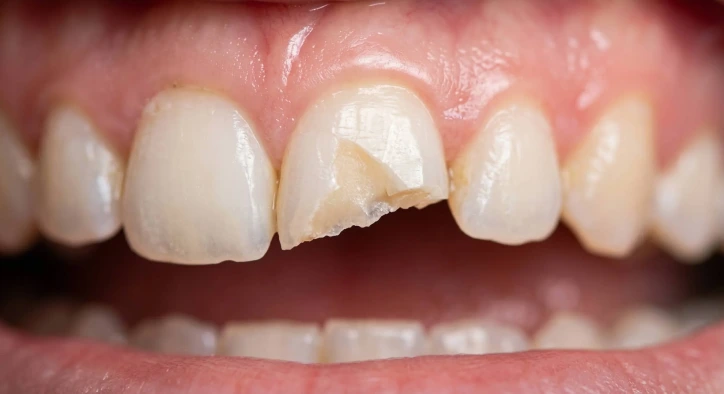
What Causes a Tooth to Break? Does It Cause Pain and How Is It Treated?
Don't put off your smile. Message us now to discuss your treatment options with our expert dentists.
WhatsAppAlthough dental enamel represents the most mineralized and hardest biological substance in the human body, it remains vulnerable to fracture when subjected to unexpected physical trauma, biting on hard objects, internal structural weakening from extensive decay, or chronic mechanical overload from nocturnal bruxism. Experiencing a sudden tooth fracture (often heralded by a hard fragment in the mouth or a razor-sharp edge felt with the tongue) is a dental emergency requiring rapid clinical intervention to prevent bacterial invasion of the dental pulp.
A traumatic front tooth fracture instantly impacts smile aesthetics, speech articulation, and social confidence, while posterior fractures severely impair mastication. Patients facing a broken tooth often ask: "Can my broken tooth fragment be reattached?", "Can this tooth be saved, or must it be extracted?" The answers depend entirely on fracture depth and root involvement.
Table of Content
- What Causes Tooth Fracture?
- Can a Sudden Tooth Fracture Occur Without Warning?
- Decayed Tooth Fracture: Pathophysiological Mechanics
- Front Tooth Fracture: Aesthetic and Psychological Impact
- Emergency First Aid for a Broken Tooth
- How to Treat a Tooth Fracture: Clinical Procedures
- Comparative Matrix: Fracture Types and Clinical Solutions
- Frequently Asked Questions
What Causes Tooth Fracture?
In dental traumatology literature, primary factors answering what causes tooth fracture include:
- Direct Physical Trauma: Sports impacts, motor vehicle accidents, falls, or sudden blows to the mandible that fracture clinical crowns or roots.
- Masticating Hard Foreign Bodies: Biting down unexpectedly on hard nutshells, fruit pits, unpopped popcorn kernels, ice cubes, or using teeth as tools.
- Extensive Pre-Existing Restorations: Large amalgam or composite restorations leave thin, unsupported peripheral enamel cusps that fracture under normal chewing pressures.
- Brittleness of Endodontically Treated Teeth: Teeth that have undergone root canal therapy lose internal moisture and vascular nutrition; without full-coverage crown protection, they become brittle and prone to structural failure.
- Nocturnal Bruxism & Clenching: Heavy, non-functional lateral shear forces generated during nocturnal grinding fatigue enamel crystalline matrices over time.
Can a Sudden Tooth Fracture Occur Without Warning?
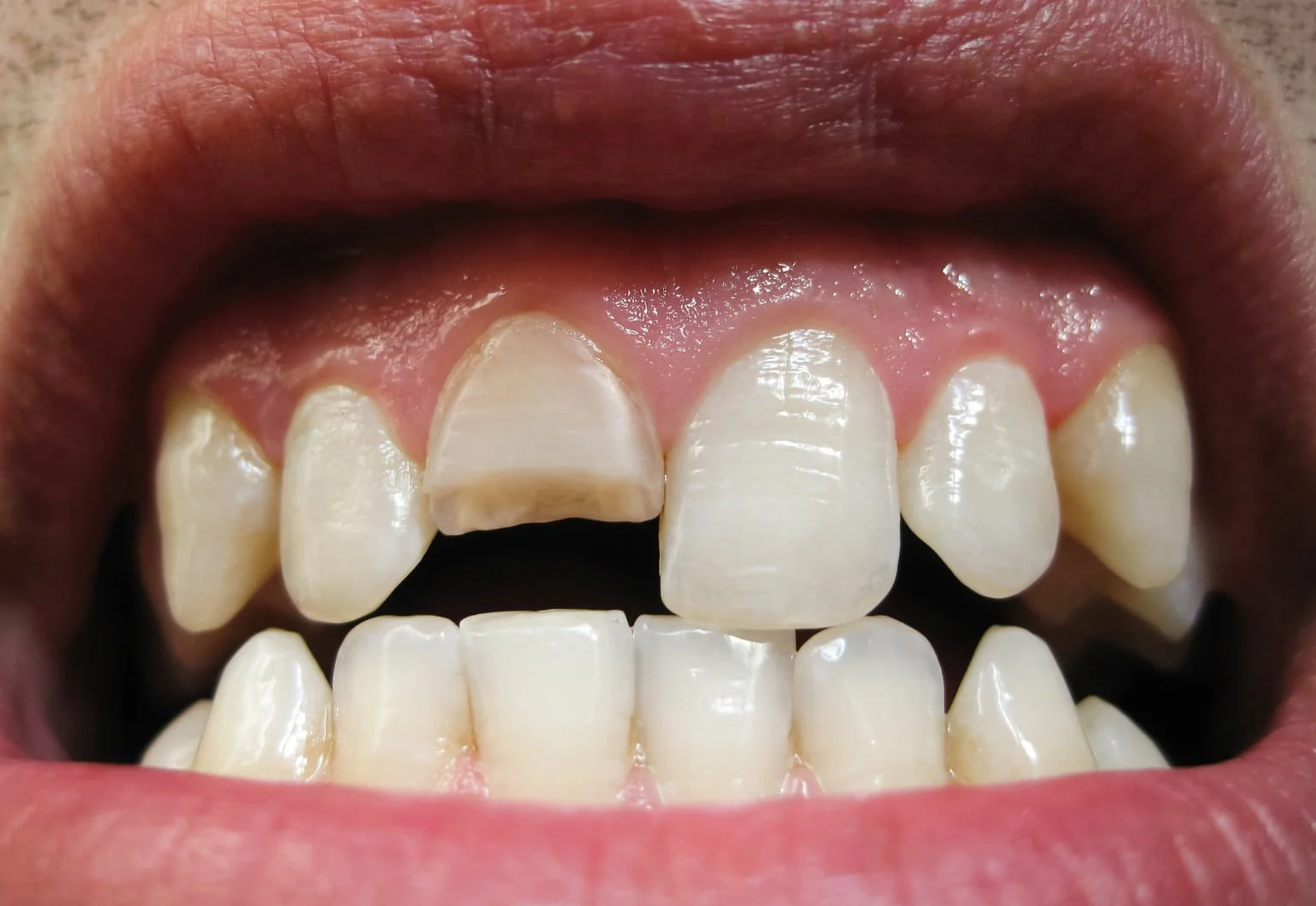
Patients often arrive at emergency clinics stating: "I was only chewing soft bread when my tooth suddenly snapped." How does a sudden tooth fracture occur?
Teeth do not fracture spontaneously without pre-existing pathology. Common hidden precursors include:
- Undetected Interproximal Caries: Bacterial decay undermines inner dentin while leaving the superficial enamel intact like an empty shell. The unsupported enamel suddenly collapses under minor chewing force.
- Propagating Micro-Cracks: Sub-clinical enamel micro-fissures caused by thermal cycling or years of bruxism merge, causing a sudden cusp fracture.
Decayed Tooth Fracture: Pathophysiological Mechanics
When bacterial acids demineralize dentin beneath enamel, internal tooth architecture collapses, precipitating a decayed tooth fracture. Softened necrotic dentin cannot support masticatory loads, causing functional cusps to shear off. Because decay typically extends deep into the pulp chamber, restoring a decayed broken tooth usually requires root canal therapy before final restoration.
Front Tooth Fracture: Aesthetic and Psychological Impact
A traumatic front tooth fracture in the aesthetic zone causes immediate psychological distress and cosmetic compromise. Common in children and young adults from falls or sports accidents, front tooth fractures require tailored approaches:
- Enamel-Only Fractures: Restored in a single 30-minute appointment using aesthetic composite bonding.
- Extensive Crown Fractures (Intact Pulp): Restored with custom lithium disilicate (E-Max) porcelain veneers or crowns.
- Fragment Reattachment: If the fractured tooth fragment is retrieved and kept hydrated, dentists can bond the original fragment back onto the tooth.
Does a Tooth Fracture Hurt? Pain Assessment by Fracture Depth
Patients frequently ask: does a tooth fracture hurt?
Pain severity corresponds directly to anatomical depth:
- Enamel-Only Chips: Cause no pain because enamel lacks nerves; patients only feel a rough edge with their tongue.
- Fractures Involving Dentin: Exposed fluid-filled dentinal tubules trigger sharp, localized sensitivity to cold water, hot drinks, air, and sweets.
- Fractures Exposing the Pulp: Direct exposure of vascularized nerve tissue causes severe, continuous throbbing pain and bleeding.
- Fractured Root Canal Treated Teeth: No thermal sensitivity occurs due to prior nerve extirpation; however, chewing pressure on mobile cusp fragments wedging into gingival tissue causes localized pressure pain.
Emergency First Aid for a Broken Tooth
Follow these steps immediately after sustaining a tooth fracture:
- Retrieve and Preserve the Fragment: Locate the broken piece. Do not scrape or clean it with chemicals. Store the fragment in a container of cold milk, saliva, or sterile saline and bring it to your dentist immediately.
- Rinse Gently with Warm Water: Clear oral debris and bacteria from the area using lukewarm water.
- Control Soft Tissue Bleeding: Apply gentle pressure with sterile gauze to bleeding gums for 10 minutes.
- Protect Soft Tissues: Cover razor-sharp edges with orthodontic wax or sugarless gum to prevent tongue lacerations.
- Manage Pain: Take over-the-counter analgesics (ibuprofen or acetaminophen) as directed. (Never place aspirin against the tooth or gum).
How to Treat a Tooth Fracture: Clinical Procedures
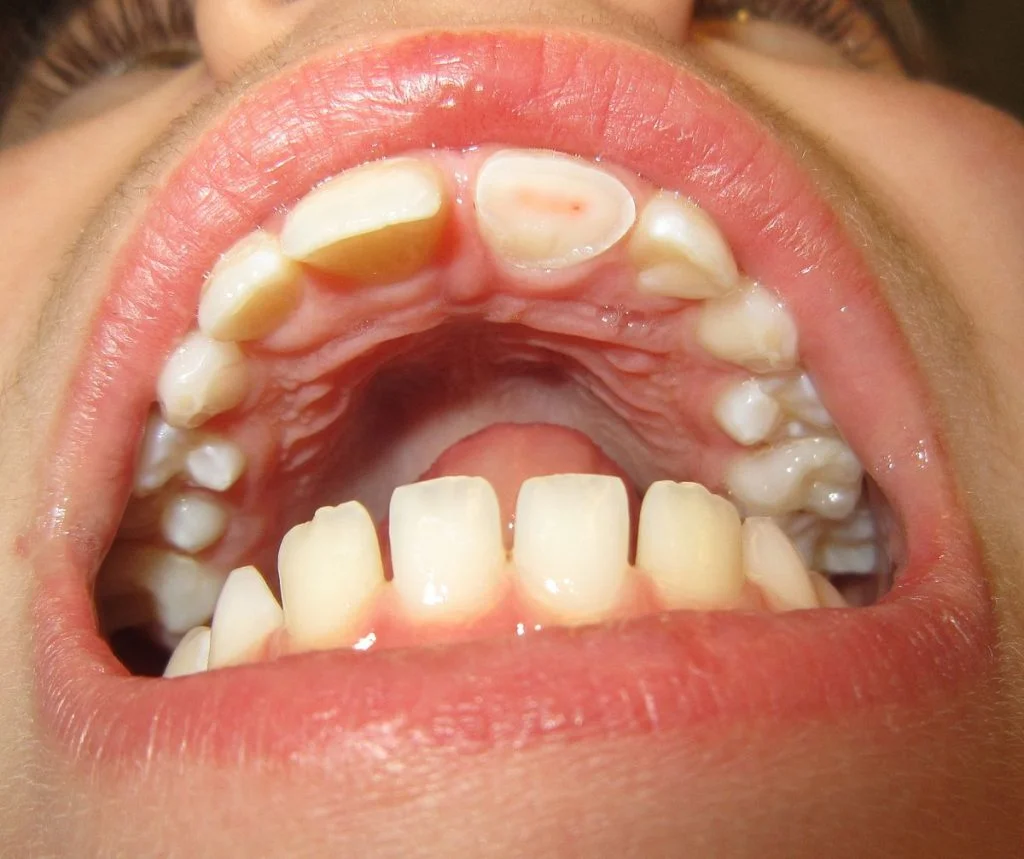
Addressing how to treat a tooth fracture and selecting the definitive tooth fracture treatment depends on fracture classification:
1. Aesthetic Composite Bonding (Minor Chips)
For minor enamel and dentin fractures, dental bonding matches natural tooth shades, layering composite resin to rebuild anatomical contours in a single visit without anesthesia.
2. Porcelain Veneers (E-Max)
For substantial anterior crown fractures with intact pulpal vitality, ultra-thin porcelain veneers provide optimal light translucency and long-term durability.
3. Ceramic Inlays and Onlays
For posterior cusp fractures, lab-fabricated ceramic inlays or onlays restore structural integrity without requiring aggressive circumferential crown reduction.
4. Root Canal Therapy, Fiber Post & Crown
When a fracture exposes the pulp, endodontic therapy clears infected nerves. A fiber post is placed in the root canal to anchor a composite core, followed by a high-strength monolithic zirconia or E-Max crown.
5. Surgical Extraction & Immediate Implant (Vertical Root Fractures)
When a fracture line extends vertically down the root subgingivally (vertical root fracture), the tooth is biologically unrestorable. The tooth is extracted and replaced with an immediate titanium dental implant.
Comparative Matrix: Fracture Types and Clinical Solutions
|
Fracture Severity & Level |
Exposed Tooth Layer |
Clinical Symptoms & Pain |
Definitive Dental Treatment |
|
Superficial Enamel Infraction |
Enamel Only |
Zero pain; rough, sharp edge |
Smoothing (Polishing) / Bonding |
|
Uncomplicated Crown Fracture |
Enamel + Dentin Layer |
Sharp thermal sensitivity |
Composite Bonding / Veneer |
|
Complicated Crown Fracture |
Pulp Chamber Exposed |
Severe throbbing; bleeding pulp |
Root Canal + Zirconia Crown |
|
Vertical Root Fracture |
Subgingival Root Structure |
Sharp pain upon biting release |
Extraction + Immediate Implant |
Frequently Asked Questions
Can a broken tooth fragment be reattached?
Yes! If a clean fractured tooth fragment is retrieved immediately and kept hydrated in milk, dentists can use high-strength adhesive resin bonding agents to reattach the fragment with excellent aesthetic and functional results.
How quickly should you see a dentist after fracturing a tooth?
You should see a dentist within 24 to 48 hours. If the dental pulp is exposed or bleeding, seek emergency treatment within hours. Delaying care allows oral bacteria to infect the pulp, turning a simple restoration into a root canal or extraction.
Can a cracked or broken tooth heal on its own?
No. Enamel and dentin are non-regenerative tissues lacking cellular repair mechanisms like vascularized bone. A broken tooth cannot knit back together; it requires professional restorative intervention.
Can a broken tooth always be saved without extraction?
Over 90% of broken teeth can be saved using modern endodontics, fiber posts, and ceramic crowns, provided the fracture remains supragingival. Only vertical fractures splitting the root beneath the alveolar bone require extraction.
About the Author